

Reviewed · WALKING TOURS
Copenhagen: Highlights and Hidden Gems Walking Tour
Nyhavn’s painted townhouses, royal squares, and old shopping streets give this three-hour walk a fine first look at Copenhagen. I like that the route links postcard sights with useful orientation, and I especially like the chance to ask a guide such as Simona, Mood, or Frédéric for restaurant and weekend advice. The main drawback is simple: this is a sightseeing walk, not a ticketed palace or church tour, so you should not expect long interior visits.
I love the flexible choice between a shared walk and a private group, and the route is easy to follow from Studiestræde 52 through central Copenhagen. I also like the language choice, with English, French, Italian, and Spanish available. Three hours can pass quickly, though, and each listed stop receives roughly half an hour, so the tour favors broad coverage over slow exploration.
Key points at a glance
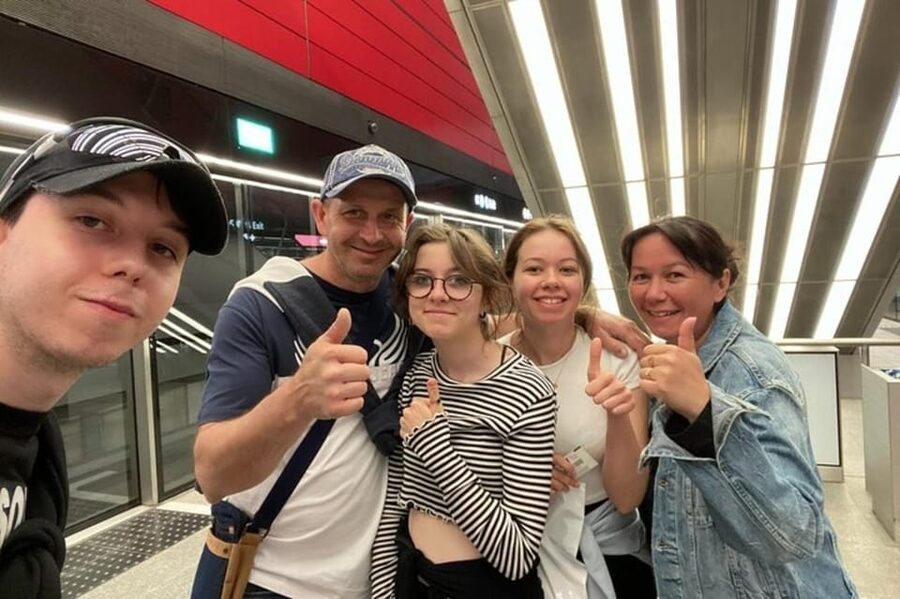
- Nyhavn comes late in the route: Save room for colorful waterfront views, cafes, and photographs near the end.
- Royal Copenhagen in one walk: Amalienborg Palace, Christiansborg Palace, the Royal Danish Theatre, and Frederiks Kirke form the tour’s grandest stretch.
- Strøget adds everyday city life: The famous shopping street helps balance palaces and monuments with Copenhagen’s commercial heart.
- The guide shapes the experience: Simona has been praised for warmth and energy, while Mood and Frédéric have led tours in French and adapted explanations to visitors’ interests.
- Useful advice is part of the value: You can ask for restaurant suggestions and ideas for the rest of your stay.
- Good access and flexible booking: The walk is wheelchair accessible, private groups are available, and cancellation is free up to 24 hours before departure.
A sensible first look at Copenhagen
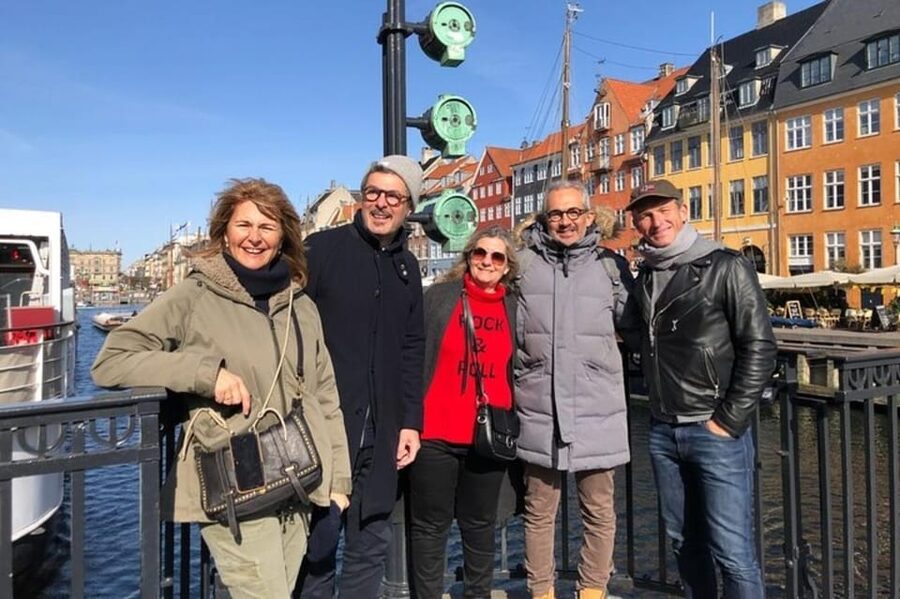
This tour works best as a city introduction. In three hours, you move through the central streets and waterfront rather than spending much time inside one attraction. That makes it useful on a first day, when you want a mental map before choosing where to return.
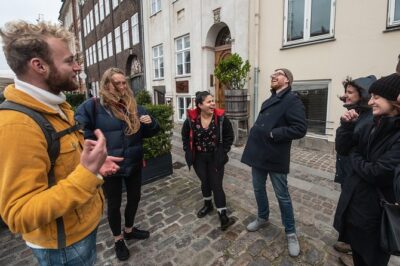
The route begins at Studiestræde 52. From there, your guide takes you toward the main sights on foot. You’ll hear about Danish customs, royal life, architecture, and local landmarks while moving at a steady sightseeing pace.
I would book this early in a Copenhagen stay if possible. The guide’s recommendations can help you decide where to eat and what to see next. Bart from Belgium received a restaurant suggestion from Simona that proved exactly right for his plans, so asking specific questions is part of getting your money’s worth.
The tour is offered as either a shared experience or a private group. The private option should suit families or friends who want to set the tone and ask plenty of questions. A shared walk may be the better value if you mainly want a clear introduction and company along the way.
More first-timer highlights tours in Copenhagen:
- Copenhagen Highlights Walking Tour
★ 5.0 · 2,324 reviews - Copenhagen: Highlights 3 Hour Bike Tour with a Local Guide
★ 4.8 · 2,312 reviews - Politically Incorrect Private Highlights Walking Tour
★ 5.0 · 1,244 reviews
Strøget: Copenhagen’s shopping spine
Strøget is the first major stop, with about 30 minutes for sightseeing, photographs, and explanation. This long shopping street gives you a look at central Copenhagen beyond royal buildings and scenic waterfronts.
You’ll find a mix of everyday city movement, department stores, cafes, and historic facades along the route. Your guide can point out how the street fits into the shape of the city and help you recognize it later when you return on your own.
I like this stop because it provides a practical reference point. If you want gifts, window-shopping, or a simple route through the center, Strøget is easy to remember. It also helps you see that Copenhagen is not only a city of palaces and old harbor views.
The tradeoff is that a shopping street may feel less special than Nyhavn or Amalienborg. Treat it as orientation rather than the emotional high point of the walk. You are here to understand central Copenhagen, not to spend the tour browsing every shop.
Christiansborg Palace and the city’s political heart
Christiansborg Palace receives another 30-minute segment. The palace is one of the route’s key landmarks, and your guide explains its significance from the outside while you take photographs and look at the surrounding area.
Because this is a walking tour, the schedule does not promise an extended palace interior visit. If you want to explore rooms inside, you’ll need separate time and admission plans. That limitation matters, especially if royal interiors are your main reason for coming to Copenhagen.
Still, Christiansborg is a worthwhile stop in a broad city tour. It connects Copenhagen’s royal story with the working center of Danish public life. Your guide can give you the basic setting, then you can decide if you want to return for a longer visit.
This is where a private tour may have a real advantage. You can ask follow-up questions about the building and its role without worrying about holding up a larger group. On a shared tour, keep questions focused so the walk stays on schedule.
Magasin du Nord and a touch of grand city commerce
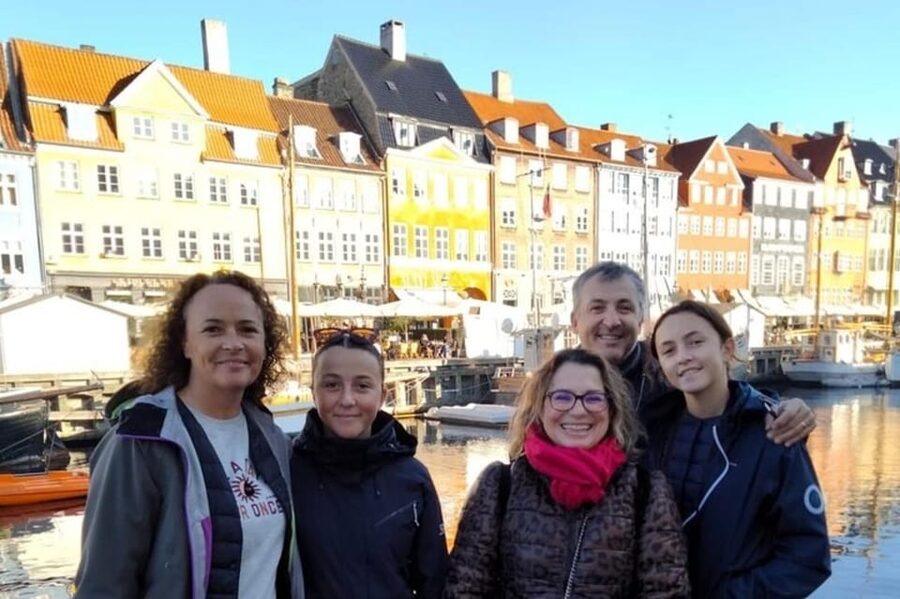
Magasin du Nord is a slightly different stop. This department store brings the tour back to modern Copenhagen and gives you another way to read the city’s center.
You’ll stop for photographs and a guided look at the building and its place near the main shopping streets. The appeal is less about a single dramatic view and more about seeing how older Copenhagen and present-day retail sit close together.
I appreciate this kind of stop because it keeps the tour from becoming a parade of royal names. Copenhagen’s character also comes through in its shops, streets, and daily routines. If you plan to buy Danish design items or simply want a central department store as a reference point, Magasin du Nord is useful to know.
Do not expect a shopping break here. The scheduled visit is part of the walk, not a dedicated retail session. Save purchases for after the tour unless your guide says the timing allows otherwise.
More walking tours in Copenhagen:
- Private Walking Grand Tour of Copenhagen
★ 5.0 · 3,953 reviews - Copenhagen: Group Walking Tour – City Highlights – 2 Hours
★ 4.7 · 1,088 reviews - 3h walking tour, small group max 10 people Copenhagen
★ 5.0 · 686 reviews - Walk & Canal Tour: Copenhagen Highlights + Changing of the Guards
★ 5.0 · 580 reviews
The Royal Danish Theatre and Frederiks Kirke

The route continues to the Royal Danish Theatre, including the Play House area, and then toward Frederiks Kirke. These stops bring architecture into sharper focus.
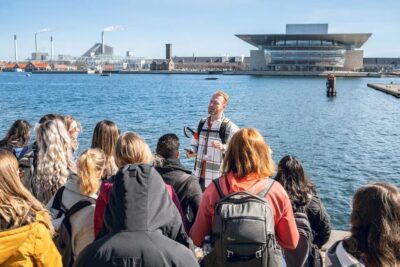
The Royal Danish Theatre adds a cultural note to the tour. Your guide can explain the building’s place in Copenhagen’s performing arts scene while you view it from the route. The Play House also gives the waterfront side of the city a more modern cultural presence.
Frederiks Kirke is better known as The Marble Church. Its rococo architecture gives you one of the route’s grandest visual moments, especially when seen with the royal district nearby. The name is a useful reminder that the building’s appearance, rather than only its religious role, is central to its identity.
Again, the published format is a photo stop and guided sightseeing visit. You should plan on an exterior explanation rather than a guaranteed interior tour. If entering the church matters to you, ask about timing during the walk or return separately.
The sequence works well. The theatre, church, and palace district show three different sides of Copenhagen: public culture, religious architecture, and royal life. Your guide’s comments help connect them rather than leaving you with a string of unrelated photographs.
Amalienborg Palace and the royal quarter

Amalienborg Palace is one of the central highlights. The palace area gives you a chance to see Copenhagen’s royal setting in a formal square, with the surrounding buildings shaping a very different mood from the casual harbor.
Your guide explains the landmark as part of the city’s royal heritage. You’ll have time for photographs and a closer look at the architecture, but the experience remains a walking visit. No interior admission is included in the tour price.
I like this stop for readers who want context without committing half a day to a museum. You get the setting, the key facts, and a chance to decide if the palace deserves a return visit. It also pairs naturally with Frederiks Kirke, since the two sights sit within the same broad area of central Copenhagen.
The amount of detail depends on your guide and group. Simona has been described as especially responsive to questions and able to adjust the information to individual interests. That matters here, since one person may care about architecture while another wants a clearer picture of Danish royal life.
Nyhavn: the colorful finish
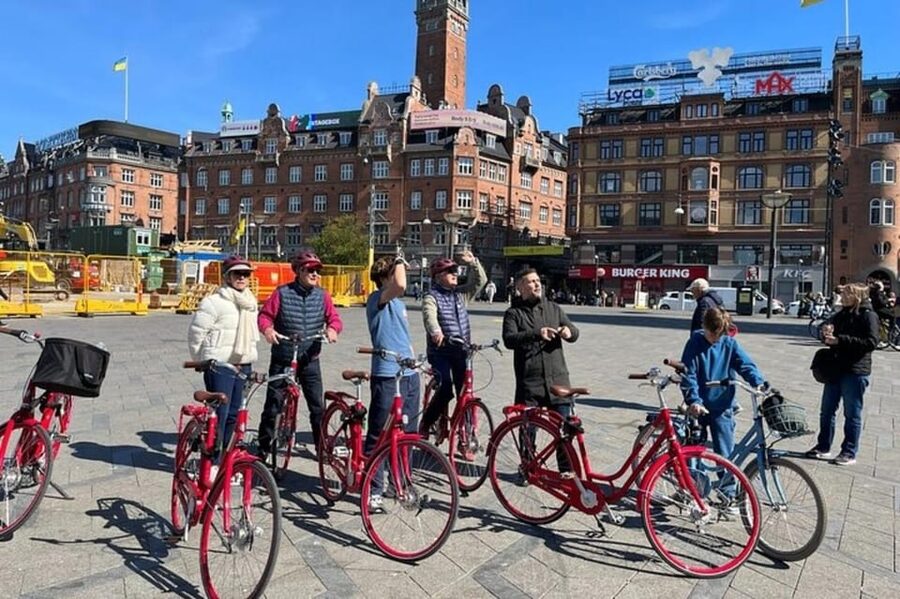
Nyhavn is the most instantly recognizable stop on the route. Its colorful 17th and 18th-century townhouses line the water beside cafes and boats, creating the view many people picture before arriving in Copenhagen.
The tour leaves Nyhavn until near the end, which gives the walk a pleasant finish. You’ll have time for photos, a look along the waterfront, and an explanation of why this area matters to the city. The bright facades are the obvious attraction, but the harbor setting also shows Copenhagen’s long relationship with water and trade.
This is a good place to ask your guide where to go next. You might want a cafe, a restaurant, or a second walk along the water. The tour does not include food or drinks, so any meal or cafe stop comes afterward.
Nyhavn can also be the busiest-feeling part of the route, particularly around the cafes. That is worth remembering if you prefer quiet streets. Still, its visual payoff is strong, and the stop earns its place as the finale.
The Lur Blowers monument and Danish heritage

The Lur Blowers monument beside City Hall gives the tour a less obvious talking point. It is not as famous as Nyhavn or the palaces, but it opens a door to Danish heritage and local symbolism.
Your guide explains the monument and its role in the country’s cultural story. This is the kind of short stop that can make a city walk more useful than a simple checklist of famous buildings. You get a clue about how Denmark presents its past in public spaces.
The supplied route details place this monument among the experiences, while the timed stop list focuses on the main central landmarks. For that reason, treat the Lur Blowers as part of the broader guided route rather than assuming a long standalone visit. Your guide can clarify the exact sequence on the day.
I like having one less expected subject in the mix. It gives you something distinctive to remember and shows why asking questions matters. A good guide can turn a small monument into a memorable part of the walk.
What the guides add
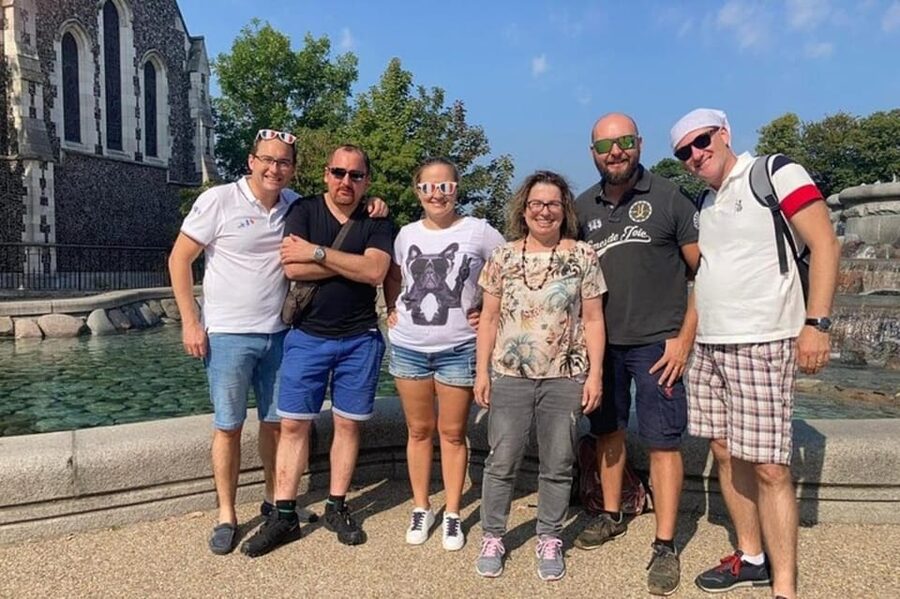
The strongest part of this experience is the human element. Simona has led several of the tours and is described as warm, energetic, prepared, and willing to answer questions on many subjects. That combination suits a city walk, where the best moments often come from adapting the route’s basic facts to your interests.
Mood has guided in English and French. Frédéric has also led French-language walks, with explanations about Copenhagen, Danish customs, and everyday life. If language comfort matters to you, check the available departure before booking.
The guide can also adjust the level of information. A first-time visitor may want clear facts and basic orientation. Someone returning for a weekend may prefer food, neighborhood, and cultural suggestions. Bart’s experience shows the practical benefit of asking directly for a restaurant recommendation rather than waiting for general advice.
The perfect guide is never guaranteed, and a five-star overall rating from 11 reviews is a small sample. I would treat it as a positive signal, not a promise that every departure will feel identical. The named guides have received especially warm praise, but schedules and assignments can change.
Price, pace, and who gets the best value
At $58 per person, this is not the cheapest way to see Copenhagen’s streets. The price makes more sense if you value a live guide, a three-hour route, multilingual support, and advice you can use during the rest of your stay.
You are paying for coverage rather than admissions. The tour does not include entry to the palaces, church, or other attractions, and it does not include food or transport. If you want a tour with fewer stops and longer interior visits, this is not the right format.
I see the best value for first-time visitors, short-break visitors, cruise passengers with limited time, and anyone who prefers context over navigating alone. It also suits people who like to ask questions and want practical recommendations.
Wheelchair access is available, which is an important advantage. Since this is a walking tour across central streets, confirm the specific route and meeting details when you book if you have particular mobility needs. The meeting point is Studiestræde 52.
The walk lasts three hours, so wear comfortable shoes and allow enough time to move between stops. The tour is available in English, French, Italian, and Spanish. You can reserve now and pay later, and cancellation is free up to 24 hours before the start, which helps if your Copenhagen plans are still shifting.
Should you book this Copenhagen walk?
Book it if you want a well-spaced introduction to Copenhagen’s central sights, especially Nyhavn, Amalienborg Palace, Christiansborg Palace, Strøget, and The Marble Church. It is also a good choice if restaurant suggestions, Danish customs, and personal questions matter as much to you as photographs.
Skip it if your main goal is detailed interior access or a slow museum-style visit. The tour moves through many landmarks in three hours, so you will see more from the outside than inside.
For the best result, take it near the start of your stay, ask the guide to tailor the conversation to your interests, and save time afterward for a return to any place that catches your eye. At $58, the experience earns its value through orientation and human guidance, not included admissions. For many visitors, that is a fair trade.
FAQ
Where does the Copenhagen walking tour begin?
The meeting point is Studiestræde 52 in Copenhagen.
How long does the tour last?
The walking tour lasts three hours.
What sights are included?
The route includes Strøget, Christiansborg Palace, Magasin du Nord, the Royal Danish Theatre, Amalienborg Palace, and Nyhavn. It also includes information about Frederiks Kirke and the Lur Blowers monument beside City Hall.
Is the tour private or shared?
You can select a shared walking tour or a private group, depending on the option available when you book.
What languages are offered?
Live guides are available in English, French, Italian, and Spanish.
Is the walking tour wheelchair accessible?
Yes, the activity is listed as wheelchair accessible.
Does the price include admission to the palaces or church?
No admission tickets are listed as included. The experience covers a guided walking tour with photo stops and sightseeing.
Can I cancel the booking?
Yes. You can cancel up to 24 hours in advance for a full refund. You can also reserve now and pay later.
Just added around Copenhagen
- Copenhagen Walking Tour with Food Testing (smorrebrod dish & snap)★ 4.5 · 10 reviews
- a day at North Zealand Castle Tour★ 4.5 · 19 reviews
- walking tour – Copenhagen and Christiansborg 3 hours★ 4.0 · 7 reviews
- Small Group Guided Food Tour and Street Art Visit to Norrebro★ 5.0 · 9 reviews
- The Philosopher’s Last Walk: An audio tour on the life of Søren Kierkegaard★ 4.5 · 5 reviews
- The Six Forgotten Giants Trolls Hunt with Minibus★ 4.5 · 27 reviews
- The Foodie Tour of Copenhagen★ 5.0 · 14 reviews
- The Forgotten Giants Private Tour★ 5.0 · 3 reviews
Walking Tours, compared.
Group Walking Tour – City Highlights – 2 Hours
Read our review →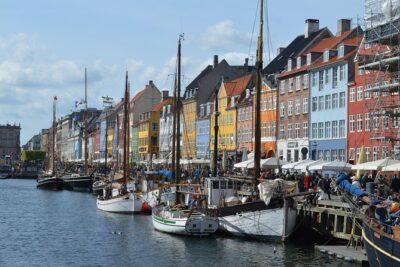
3h walking tour, small group max 10 people Copenhagen
Read our review →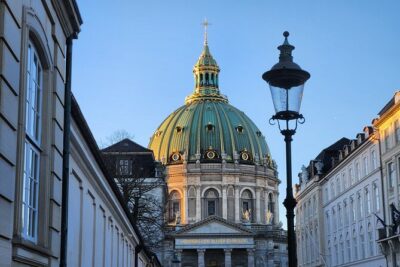
Walk & Canal Tour: Copenhagen Highlights + Changing of the Guards
Read our review →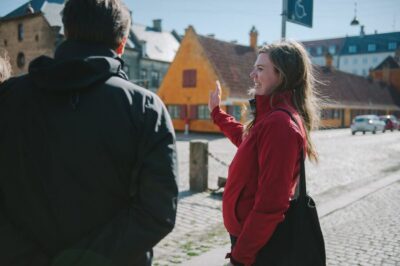
Browse the lists this tour appears in