
Reviewed · CITY TOURS
Odense: City walk – The new green Odense – City development
Odense’s most interesting story is not only H.C. Andersen. It is the city’s decision to change how people move, live, and meet. This two-hour walk follows that change from the old center to the harbor, then through former industrial land and a new urban district.
I like the small-group format, which gives you room to ask real questions instead of listening from the back of a crowd. I also like the guide’s use of old photos to show what stood in each place before the rebuilding began. Guide Jørn Asmussen is praised for his friendly manner and strong German, while one English-language account identifies the guide as Johan.
The main consideration is simple: this is not a highlights tour built around grand interiors or postcard views. You walk about 4 kilometers, or roughly 5,500 steps, and spend much of the time discussing planning, housing, transport, education, and the economy.
Key points to know before you book
- A city tour about change: Follow Odense from industrial past to planned green future.
- A real round trip: Begin and end at Overgade 3, passing the old center, harbor, new districts, and rebuilt streets.
- Small groups matter: The format makes it easier to ask about Danish life and city policy.
- Old photos add clarity: See how major streets and districts looked before redevelopment.
- English or German guiding: The tour is available in both languages.
- A walking commitment: Plan on 4 kilometers over two hours, mostly outdoors.
Why this Odense walk is different
Most first visits to Odense focus on the old center, the cathedral area, H.C. Andersen, and pleasant pedestrian streets. Those places matter, but they do not explain how the modern city works. This walk takes a wider view.
You learn why Odense wanted to move beyond its industrial identity and create a greener city with room for new ideas, younger residents, and more affordable housing in the center. The guide connects physical changes to everyday questions: How do people get around? How does the Danish education system work? What does city-center housing cost in practical terms? How does the local economy shape new construction?
That makes the experience useful even if you have already spent several days exploring on your own. One of the strongest reasons to book it late in your stay is that it can pull separate sights into one larger picture. The old center, the harbor, the street-food hall, and the new districts stop feeling like unrelated places.
I also appreciate that the tour does not treat urban development as a simple success story. A city changing its roads and industrial land affects residents, businesses, transport, and housing. The value here is in hearing how those choices connect, not just in seeing newly built streets.
More walking tours in Denmark:
- Private Walking Grand Tour of Copenhagen
★ 5.0 · 3,953 reviews - Copenhagen Highlights Walking Tour
★ 5.0 · 2,324 reviews - Politically Incorrect Private Highlights Walking Tour
★ 5.0 · 1,244 reviews
Meeting at the old ruin on Overgade
The walk begins at Overgade 3, on the pedestrian street. Look for the small ruin, along with the guide holding a KnowledgeWalks sign. The meeting area is small, so finding the group should be straightforward.
Starting in the old part of Odense is a smart choice. You first get the traditional city setting, then move outward toward the areas that show the newer Odense. That contrast gives the tour its structure.
The guide is central to the experience. This is not an audio tour or a route where you simply receive dates and names. You can ask about the city, Danish society, and the choices behind the redevelopment. The guide also brings insider information that is not normally found in a standard tourist brochure.
If you want a polished performance with a fixed script, this may feel more conversational than expected. That is a benefit for curious visitors, but the amount of detail can vary with your questions and the interests of the group.
Albani Torv and the shift from old city to new city
The first major stop is Albani Torv, where the walk spends about 30 minutes. This is where the tour begins to connect the historic center with the modern changes around it.
Rather than rushing through the square for a quick photograph, you use it as a starting point for understanding Odense’s structure. The guide explains how the city has changed and why particular parts of the center were redesigned.
This is also a good point to ask questions about daily life. The tour is not limited to buildings and roads. It can include the Danish education system, infrastructure, the economy, and how changing conditions affect residents. One German-language account found the discussion useful far beyond Odense, linking the city’s approach to similar problems elsewhere.
The broad subject matter is one of the tour’s strengths, but it also means the walk is not a specialist architecture tour. If your main interest is architectural detail, you may want to use this experience as a general urban-planning introduction rather than a study of individual buildings.
Donkey Republic and the practical side of moving around
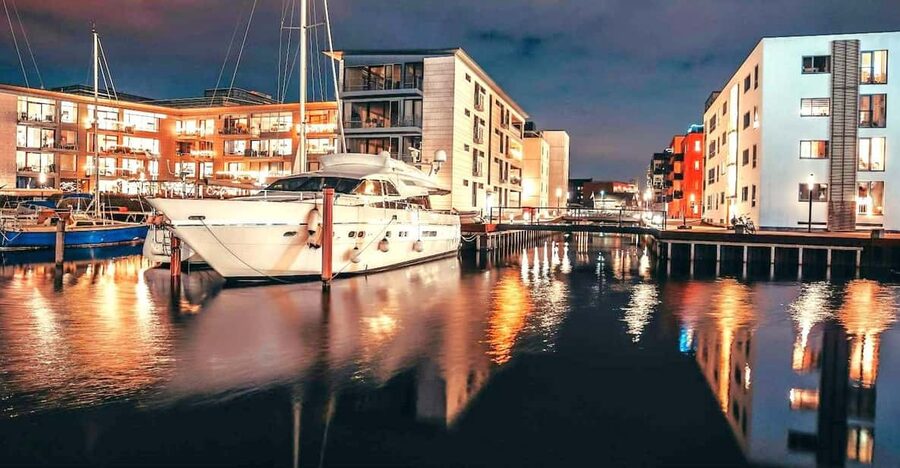
The route then reaches a Donkey Republic stop, with around 30 minutes of guided discussion. The name points to bike rental and urban mobility, which fits the tour’s focus on how a city functions in daily use.
This part helps move the discussion from plans on paper to ordinary movement through Odense. Green city policies only matter if residents can use them. Questions about bikes, roads, pedestrians, and access to the center are easier to understand when you are standing in the city itself.
You do not need to arrive with a background in planning. The guide explains the changes in plain terms and welcomes questions. That makes this a good match for visitors who want to understand why a Danish city may devote space to walking and cycling, or how new development can affect the feel of a central district.
Because the tour covers several subjects quickly, keep your own questions in mind. If cycling, transport, or housing is especially important to you, ask about it while the group is discussing this part of the route.
A few more Denmark half-days to weigh up
- Copenhagen: 3-Hour City Highlights Bike Tour with Guide
★ 4.7 · 1,239 reviews - Copenhagen: Group Walking Tour – City Highlights – 2 Hours
★ 4.7 · 1,088 reviews - City Sightseeing Copenhagen Hop-On Hop-Off Bus Tour
★ 3.5 · 800 reviews - 3-hour Copenhagen City Highlights Bike Tour
★ 5.0 · 757 reviews
The Port of Odense and the industrial past
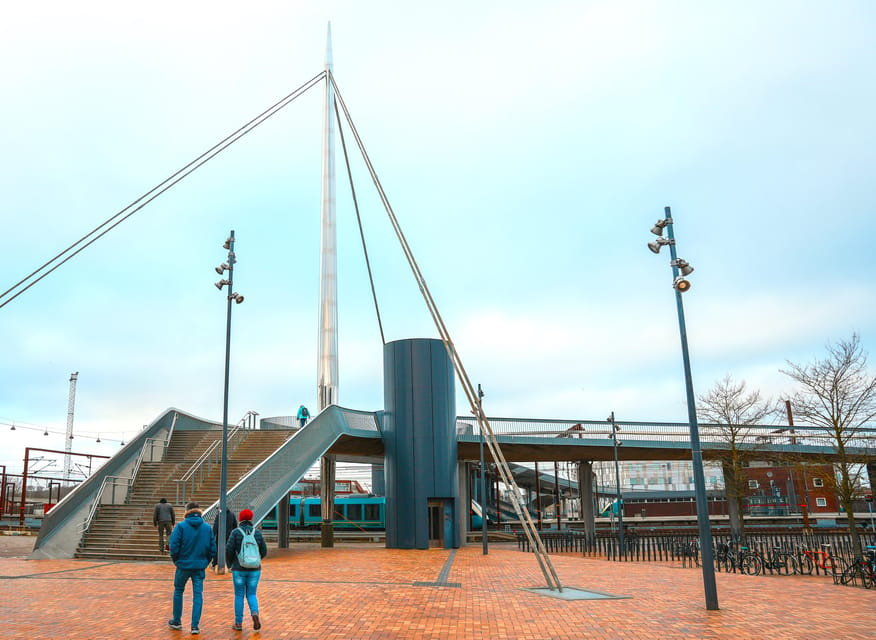
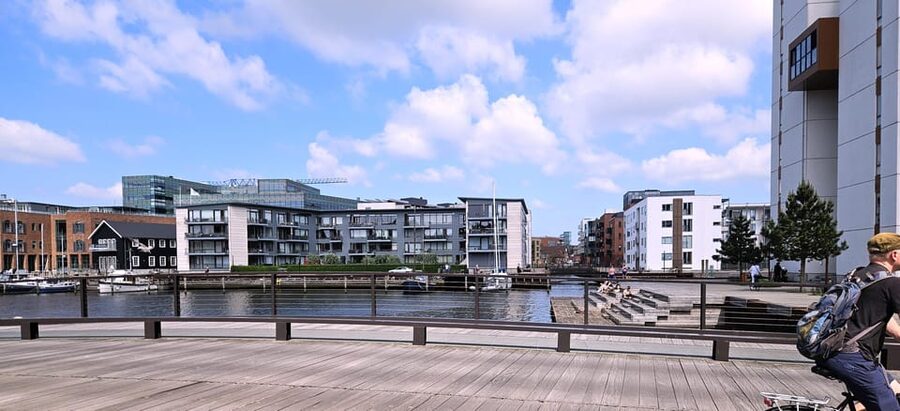
The harbor is the clearest symbol of Odense’s modern transformation. It represents the point where the city’s industrial past meets its plans for new housing, public spaces, and creative activity.
The guide uses the port to explain how Odense has been changing from an old industrial city into a greener center with room for innovation. This is where the tour’s central idea becomes easiest to see. You are not only hearing that the city has changed. You are standing in an area shaped by that change.
The harbor stop lasts about 30 minutes, enough time for a useful explanation without turning the tour into a long lecture. You can expect discussion of development, the economy, and the effort to attract younger people while keeping housing in the center affordable.
The port is also a reminder that redevelopment takes time. Not every part of a changing district will feel finished or uniform. If you prefer historic streets that look much as they did for generations, this section may feel less immediately charming. Its value is in understanding the decisions behind the new Odense.
Former industrial land becoming a new district
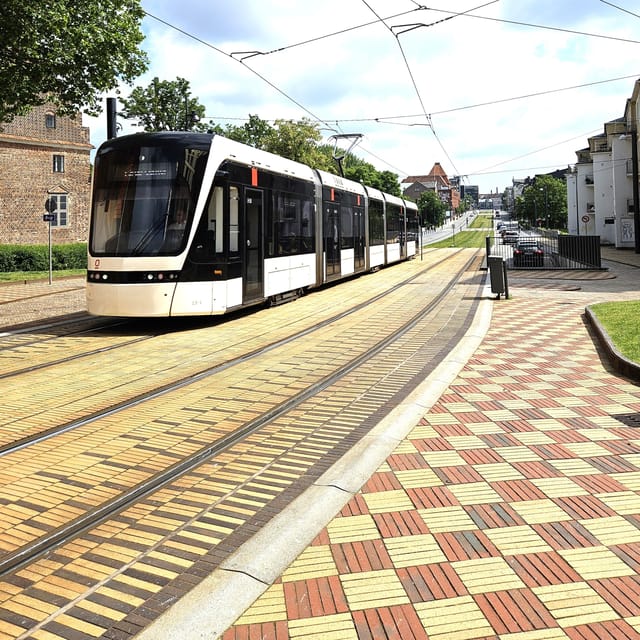
Along the route, you pass a former industrial area where a new district is developing. This is one of the most useful parts for anyone interested in how cities grow.
You see the contrast between land that once served industry and an area planned for present-day urban life. The guide explains how the city is trying to combine new construction, green aims, creative activity, and housing. The discussion also returns to the question of whether younger people can afford to live near the center.
This is not a tour of a finished model neighborhood. Some of what you see is still developing, which means the experience is about process as much as result. I consider that a plus because it lets you think about what the city is trying to achieve, not only admire completed buildings.
The practical lesson is that urban renewal is more than replacing old structures with new ones. It involves transport routes, public space, the local economy, and the daily needs of residents. That wider view is what makes this walk more substantial than a simple stroll through a new district.
Storms Pakhus and the social side of redevelopment
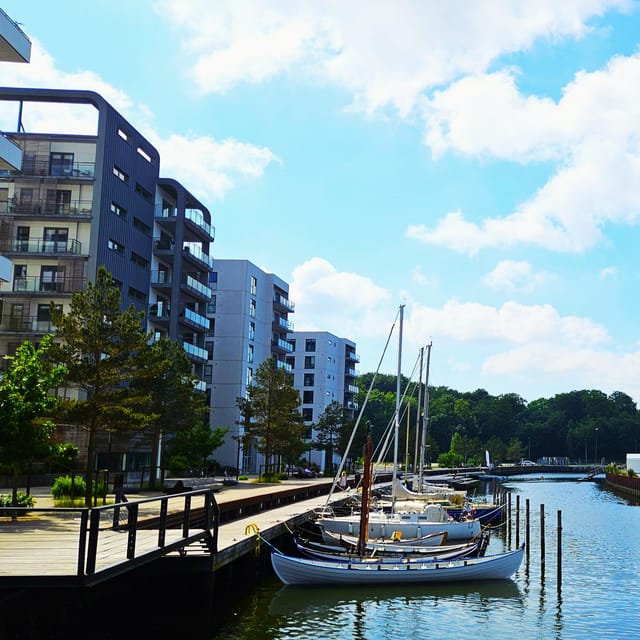
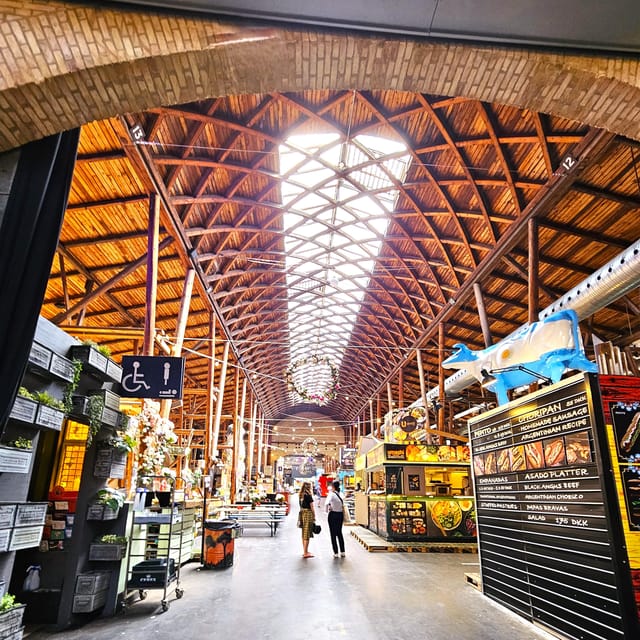
The route includes Storms Pakhus, Odense’s street-food venue, for about 15 minutes. The stop adds a human and social layer to the discussion of redevelopment.
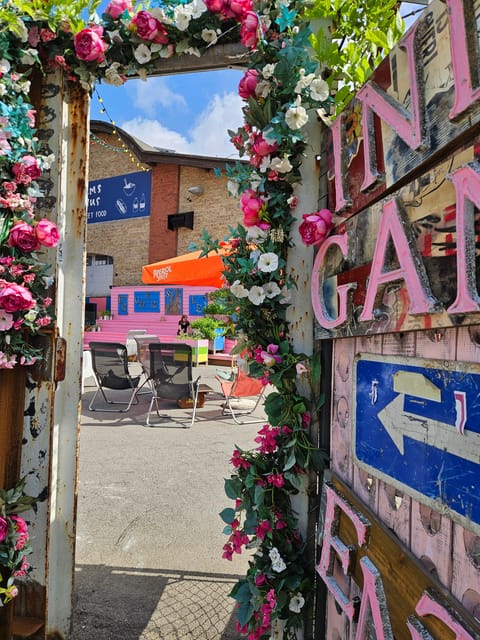
A food hall is not a transport plan or a housing project, but it shows how former industrial or warehouse-style spaces can be used for gathering, eating, and local activity. It gives the group a short break from roads and planning diagrams, while still fitting the larger theme of how the city reuses and reshapes urban space.
Do not expect a full food tour. The visit is part of the walking route, not a meal with tastings included. If you want to eat there, you would need to allow extra time and pay for your own food.
This is a useful stop for visitors who want to see how contemporary Odense feels as well as how it was planned. It helps balance the more technical parts of the walk with a place connected to everyday social life.
H.C. Andersen Haven and the route back
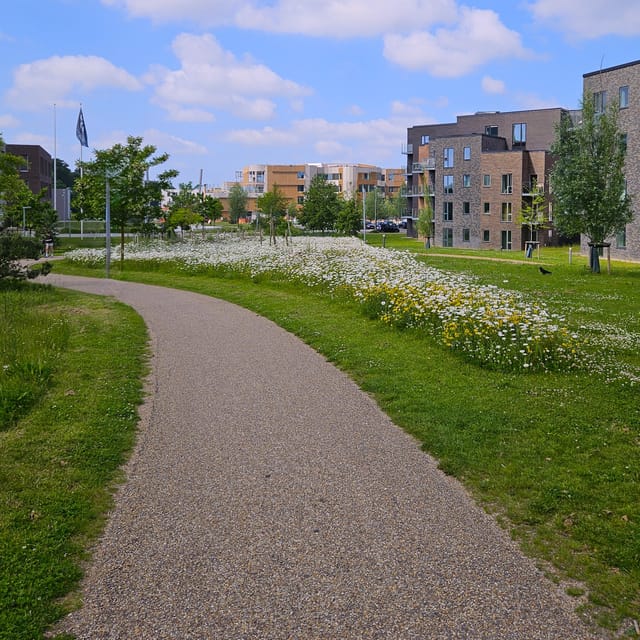
The final listed stop is H.C. Andersen Haven, with about 15 minutes of guided time. It brings the walk back toward the familiar historic center and links modern city planning with Odense’s best-known cultural identity.
The garden is a fitting point near the end because it shows that the city is not trying to replace its old character with a completely new one. Instead, the route presents Odense as a place where historic spaces and new districts sit within the same city.
From there, you return to Overgade 3. The round-trip design is convenient because you finish where you began, without needing to arrange a bus or find your way back from the harbor.
The tour’s listed stops add up to a full two hours, but the route also includes walking between them. Wear comfortable shoes and bring clothing suited to the weather. The activity requires a reasonable ability to walk 4 kilometers, and there is no suggestion that it is designed as a seated or short-distance tour.
What the guide adds
The guide is the reason this experience can go beyond facts you could collect from a map. Jørn Asmussen is specifically associated with the tour, and the supplied information also includes the name Johan in an English account. If you book, check the guide details shown for your chosen departure.
The strongest guide qualities are clear communication, friendliness, and a willingness to discuss more than the basic route. German speakers should find the language especially useful, as Jørn Asmussen is described as having excellent German. English is also available.
The conversation can move beyond Odense. One particularly wide-ranging experience included a short discussion of life in Greenland after the main city-development topics had been covered. That kind of detour will appeal to you if you enjoy social and cultural questions, though it may be less appealing if you want every minute devoted to buildings and streets.
Small groups make a real difference here. You can ask why a road was removed, how new housing is planned, or what the changes mean for local residents. With a large group, that sort of exchange would be harder.
The former six-lane road and the clearest lesson
One of the most striking parts of the route is the completed urban area built where a six-lane main road once cut through the city center. This physical change gives the tour a strong before-and-after moment.
Old photographs help you understand the scale of the earlier road. Without them, it can be hard to picture how much space a major traffic route occupied. With the comparison, the decision to reshape the center becomes easier to grasp.
This stop also brings together the tour’s main subjects: traffic, public space, green planning, access to the center, and the way a city decides what kind of life it wants to support. You are not simply told that Odense is greener. You can see how one major transport choice changed the center.
For me, this is likely to be the most useful stop for visitors who want a clear example of city planning in action. It turns an abstract debate into a visible change in the street.
Is $31 a fair price for two hours?
At $31 per person, the tour is priced above a basic free walk but below many specialist private experiences. The value depends on what you want from a city tour.
If you only need an introduction to Odense’s old center, you can find cheaper ways to walk around. This tour earns its price through the guide’s local perspective, the small group, the old photographs, and the time spent explaining why the city looks the way it does.
It is also good value if you have already seen the standard sights. You are paying for interpretation, not just access to places. The route covers several districts and connects them through one subject, so you leave with a clearer sense of how Odense works.
The reserve-now-and-pay-later option keeps your plans flexible, and cancellation is free up to 24 hours before the tour for a full refund. Starting times depend on availability, so check the date carefully before booking.
Who should book this walk?
I would recommend it to you if you enjoy understanding a place rather than simply photographing it. It suits visitors interested in architecture, transport, housing, sustainability, Danish society, or the way local governments plan for change.
It is also a good choice for repeat visitors and anyone staying several days in Odense. The route adds context to places you may have already passed without understanding their purpose.
Families with older children may find the city-planning topic useful, provided everyone is happy to walk and listen for two hours. The experience is less suitable if you want a fast list of famous sights, a museum visit, or a food-focused outing.
German speakers have a strong reason to consider it, while English speakers can also take the tour. The guide’s conversational style means you should come prepared to participate, not only follow silently.
Final verdict: book for insight, not a checklist
Book this walk if you want the story behind Odense’s streets. The former six-lane road, the harbor, the changing industrial area, and the new housing plans give you specific examples of how a city can rethink itself.
Skip it if your time is very short and you only want the old center or H.C. Andersen-related sights. But if you have two hours and can manage 4 kilometers, the $31 fee buys something many standard tours do not: a clearer understanding of how Odense lives today and where it wants to go next.
FAQ
How long does the Odense city walk last?
The tour lasts two hours.
How far do you walk?
You walk approximately 4 kilometers, which is about 5,500 steps.
Where does the tour meet?
The meeting point is Overgade 3, 5000 Odense, on the pedestrian street. Look for the small ruin and a guide carrying a KnowledgeWalks sign.
Where does the tour finish?
The walk is a round trip and returns to Overgade 3.
Which languages are available?
The live tour is available in English and German.
What places are included on the route?
The route includes Albani Torv, a Donkey Republic location, the Port of Odense, Storms Pakhus, H.C. Andersen Haven, and areas of former industrial land undergoing redevelopment.
Is this a small-group tour?
Yes. A small-group option is available, with opportunities to ask questions and speak with the local guide.
Can I cancel for a full refund?
Yes. You can cancel up to 24 hours in advance for a full refund. You can also reserve now and pay later.
Just added around Denmark
- Wonders of Vágar Island | Private Experience★ 5.0 · 4 reviews
- Understanding Klaksvík: A Self-guided city tour in KlaksvÍk★ 5.0 · 3 reviews
- Faroe Islands: Highlights Tour★ 5.0 · 6 reviews
- Súðuroy Island Day Tour, Faroe Islands★ 4.5 · 3 reviews
- SUP – Stand Up Paddle – Kitesurfing – Wingfoil & Kitefoil courses★ 5.0 · 14 reviews
- E Biking Adventure to Kronborg Castle★ 5.0 · 3 reviews
- Fishing Experience in Faroe Islands★ 4.5 · 7 reviews
- Copenhagen Walking Tour with Food Testing (smorrebrod dish & snap)★ 4.5 · 10 reviews
City Tours, compared.
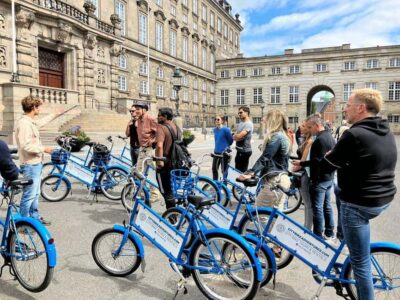
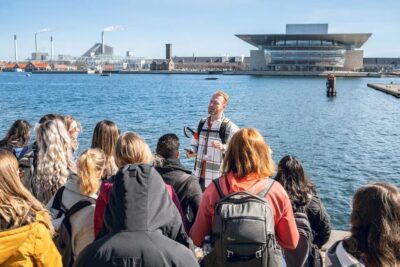
Group Walking Tour – City Highlights – 2 Hours
Read our review →
City Sightseeing Copenhagen Hop-On Hop-Off Bus Tour
Read our review →

Browse the lists this tour appears in