
Reviewed · CITY TOURS
Copenhagen: A guided walk for first-timers in the city
Copenhagen’s center is compact, but its story is not. This 3-kilometer walk links City Hall, Christiansborg, the old harbor, Nyhavn, and Amalienborg, giving you a useful first look before you choose which places deserve a longer visit. Guides such as Jens and Thomas bring in personal stories alongside the big events.
I like the small-group format, with the activity described as limited to 10 people, though another listing states no more than 16. I also like the headset, since it lets you keep walking without crowding around the guide. The main drawback is that you do not enter any sights, and one route may feel more like an overview than a full tour of every landmark named in the description.
Key points at a glance
- A practical 3-kilometer route: Begin at the Andersen statue near City Hall and finish at Amalienborg Palace.
- Strong historical range: Hear about Copenhagen’s medieval power, royal rule, bicycles, and the modern city.
- Small group and headset: The group is limited to 10 in the activity details, with another capacity of 16 also stated.
- Major sights from the outside: See Christiansborg, Børsen, the Black Diamond, Nyhavn, and Amalienborg without entering them.
- Useful ending point: Finish near the royal palace, with a map and suggestions for continuing on your own.
- Best for first visits: The walk helps you understand the central area before returning to places that interest you most.
Why this walk works as a first morning in Copenhagen
The best feature here is the route itself. Copenhagen’s central sights are close enough to connect on foot, yet they represent very different parts of the city: municipal life at City Hall, royal power at Christiansborg and Amalienborg, trade at the old harbor, and modern culture around the Black Diamond.
You cover about 1.8 miles in two hours. That is not a punishing distance, but the walk includes steady movement and several stops. You should be comfortable walking on city streets for the full period. The activity is not suitable for wheelchair users or people with a low level of fitness, so consider that carefully before booking.
I like taking this sort of tour early in a visit because it gives you a mental map. Once you have walked from the center toward the harbor and royal quarter, it is easier to find your way back to Nyhavn, plan a canal trip, or decide which palace or museum deserves your time.
The guide speaks English and can answer questions about both Copenhagen’s past and present. The most praised part of the experience is the guide’s storytelling. Jens is singled out for explaining the city’s history in detail, while Thomas is praised for combining historical information with personal stories. That mix can make a short overview more memorable than a string of dates.
More walking tours in Copenhagen:
- Private Walking Grand Tour of Copenhagen
★ 5.0 · 3,953 reviews - Copenhagen Highlights Walking Tour
★ 5.0 · 2,324 reviews - Politically Incorrect Private Highlights Walking Tour
★ 5.0 · 1,244 reviews
Starting beside Hans Christian Andersen
The meeting point is at the Andersen statue near Copenhagen City Hall. This is a sensible place to begin. Hans Christian Andersen is one of Denmark’s best-known writers, and starting beside his statue gives the walk an immediate connection to Danish culture.
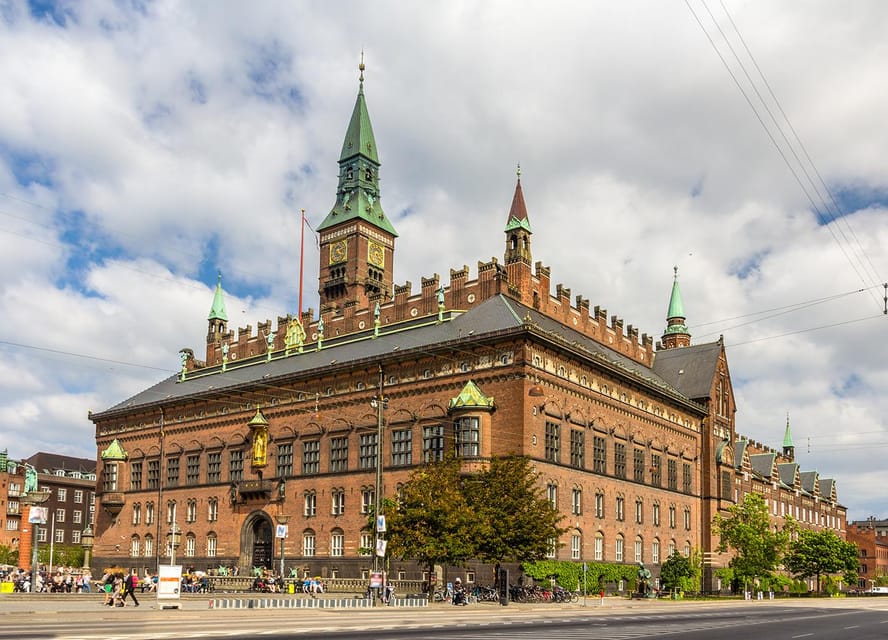
From here, the route moves toward City Hall. You get a brief sightseeing stop of about five minutes, enough for the guide to explain the building and place it within modern Copenhagen. Do not expect an interior visit. The walk is built around outdoor views and explanations, not entry tickets.
City Hall is also a useful orientation point. You are in the heart of the city, close to shopping streets, public squares, and several major routes. If you arrive early, make sure you locate the Andersen statue rather than simply waiting somewhere inside or around City Hall. The guide is expected to be there at the statue when the tour begins.
Christiansborg and the story of royal power
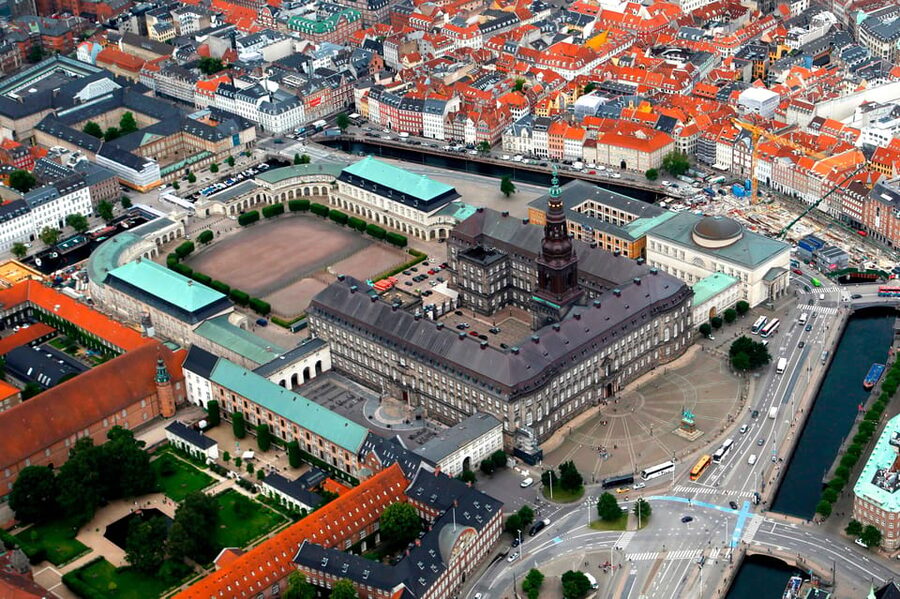
The walk continues to Christiansborg Palace, one of the most important stops on the route. The schedule allows time for both a short walk and about 10 minutes of sightseeing, so this is one of the fuller stops.
Christiansborg is valuable because it brings several layers of Copenhagen together. The guide uses it to explain the city’s political and royal past, while the surrounding area helps you understand how power was organized in the old center. You will view the palace from outside rather than enter it.
The guide also points out Biskop Absalon, with a short two-minute stop. Absalon is tied to the early development of Copenhagen, so this quick pause helps connect the modern capital with its medieval beginnings. The stop is brief, but it gives the larger story a person and a name.
If you hope to see palace rooms, ceremonial spaces, or interior displays, plan a separate visit. This walk tells you what the place is and why it matters, then leaves you free to return later if the building catches your interest.
Børsen, Holmen Church, and Copenhagen’s working waterfront
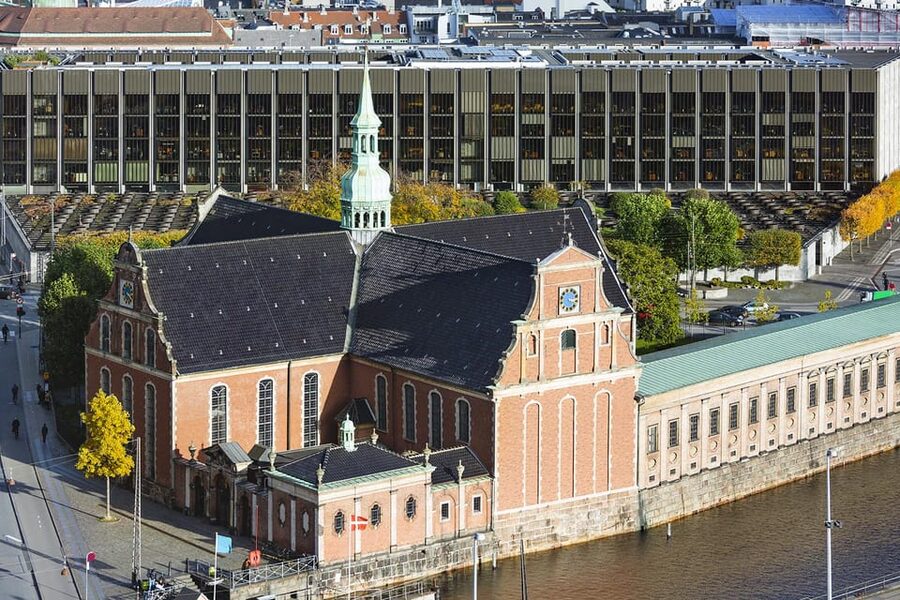
From Christiansborg, the route continues to Børsen, the old stock exchange. You spend about five minutes here, looking at the exterior and hearing about Copenhagen as a trading city. The building’s distinctive appearance makes it an easy landmark to recognize later, even if you do not spend long at the stop.
The walk then reaches the Church of Holmen. Again, the stop lasts about five minutes and remains outside. The church adds a religious and royal dimension to the route, showing how closely civic, commercial, and royal buildings sit together in central Copenhagen.
Christian IV’s Brewhouse follows. Its name points to an older practical side of the city, one concerned with supplying the royal household rather than simply displaying power. The guide’s role is especially useful here because a quick view of an old building may not explain much by itself.
These stops are short, so you should think of them as a connected introduction rather than separate visits. You will hear the reason each place belongs in the story, but you will not have much time for detailed photography or quiet inspection at every site.
A few more Copenhagen half-days to weigh up
- Copenhagen: Canal Cruise with Guide
★ 4.6 · 9,115 reviews - Copenhagen: Hop-On Hop-Off Bus Tour with Boat Tour Option
★ 3.9 · 4,122 reviews - From Copenhagen: Lund and Malmö 2-Country Tour
★ 4.7 · 2,772 reviews - Copenhagen: Highlights 3 Hour Bike Tour with a Local Guide
★ 4.8 · 2,312 reviews
The Black Diamond and a change of pace
The Black Diamond is one of the more modern-looking stops. This striking library building brings the route into contemporary Copenhagen and shows that the city’s center is not only about palaces, churches, and old trading houses.
You have about five minutes for sightseeing. The contrast with the older buildings is part of the appeal. Copenhagen’s center works well as a walking route because new and old buildings appear within a short distance of one another.
The headset matters here. With a small group, you might normally hear a guide without much trouble, but street noise and movement can still get in the way. Being able to listen while walking means you do not have to stop in a tight circle around the guide every time the explanation continues.
From King’s New Square to the Royal Danish Theatre
The route heads toward King’s New Square, known in Danish as Kongens Nytorv. The walk takes about five minutes, followed by a stop at the Royal Danish Theatre.
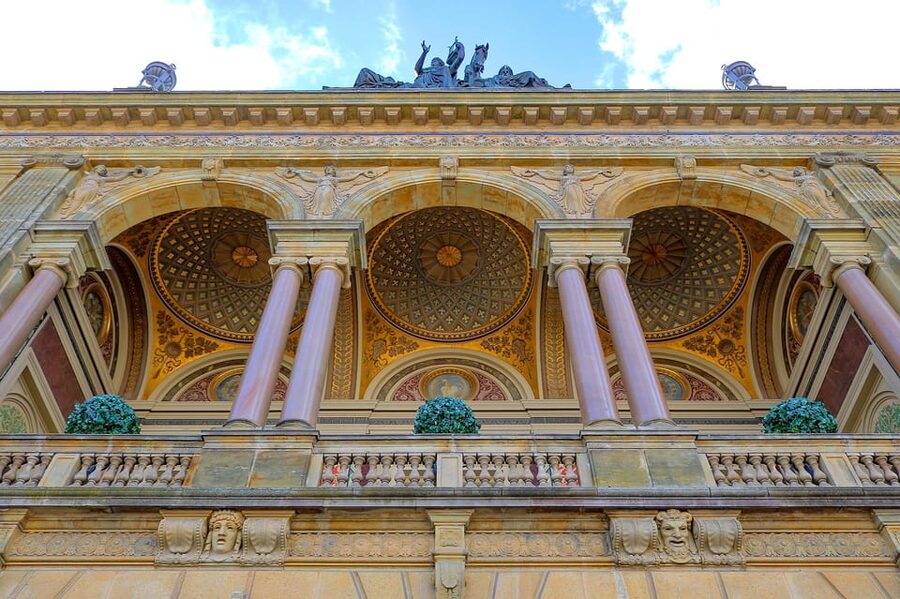
This part of the route shifts attention toward Copenhagen’s cultural life. The theatre is another exterior sight, but its position near the square helps show how the royal quarter developed into a place for performance, ceremony, and public life.
The route is not designed as a museum tour. You will not sit inside a theatre or spend long periods studying architecture. Instead, you get a series of useful reference points. Afterward, you can decide if the theatre, palace, harbor, or another site deserves a closer look.
I find that approach helpful on a first day. Two hours is enough to gather a sense of direction, but not so much time that the walk takes over the whole day.
Nyhavn brings the route to the water
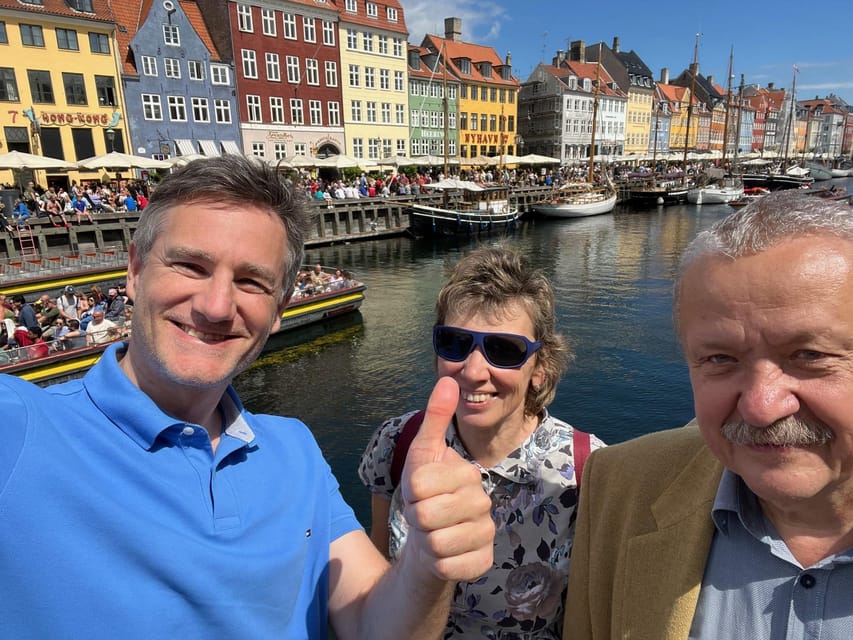
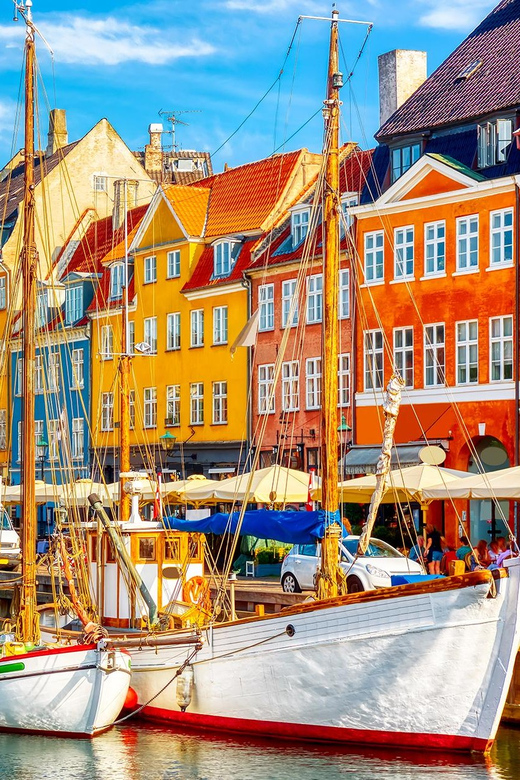
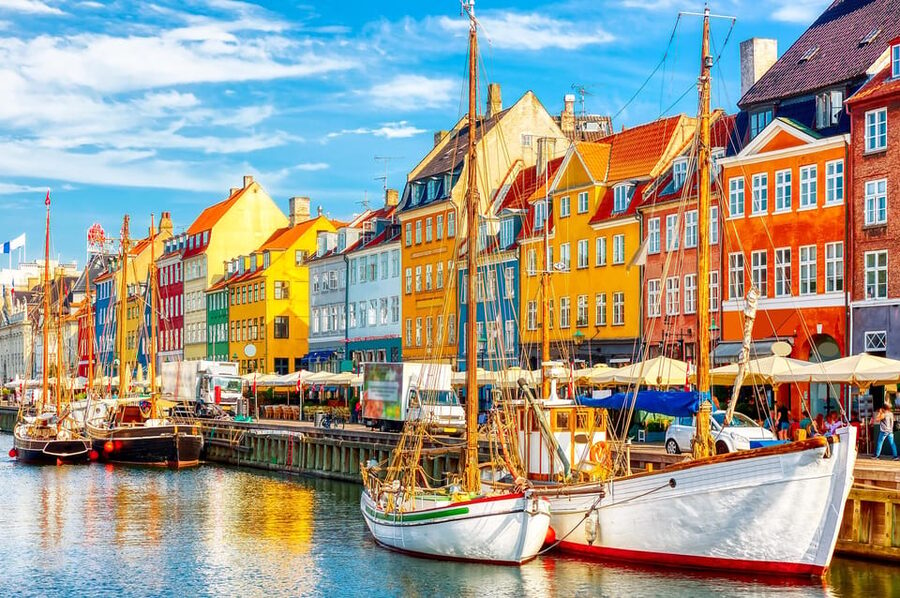
The walk from the Royal Danish Theatre to Nyhavn takes about 10 minutes. This is one of the most recognizable parts of Copenhagen, with the canal, old buildings, boats, and restaurants creating a very different mood from the government buildings near Christiansborg.
You do not take a canal cruise as part of this activity. You simply reach Nyhavn on foot and hear about the area. That is useful because the guide can point out how the harbor fits into the city, while you can later return for a drink, a meal, or a canal tour.
The activity specifically suggests Nyhavn as one option after the walk. That makes the finish of the route easy to use. You can continue independently instead of losing time figuring out where the harbor is or which direction leads back toward the center.
Nyhavn can also be one of the more crowded parts of a Copenhagen visit. The headset helps you keep up with the guide, but you should still expect to walk at the group’s pace and stay alert around other pedestrians.
Amalienborg completes the royal route
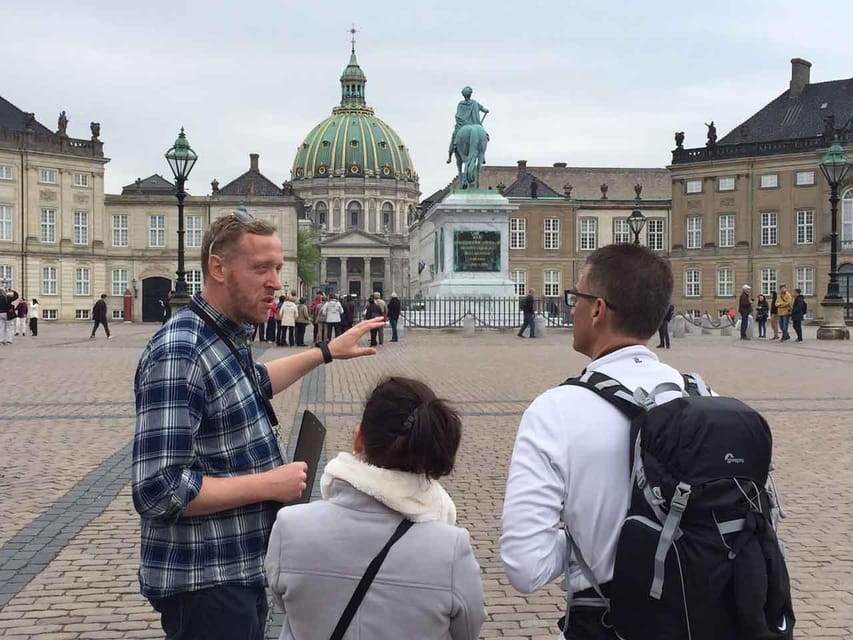
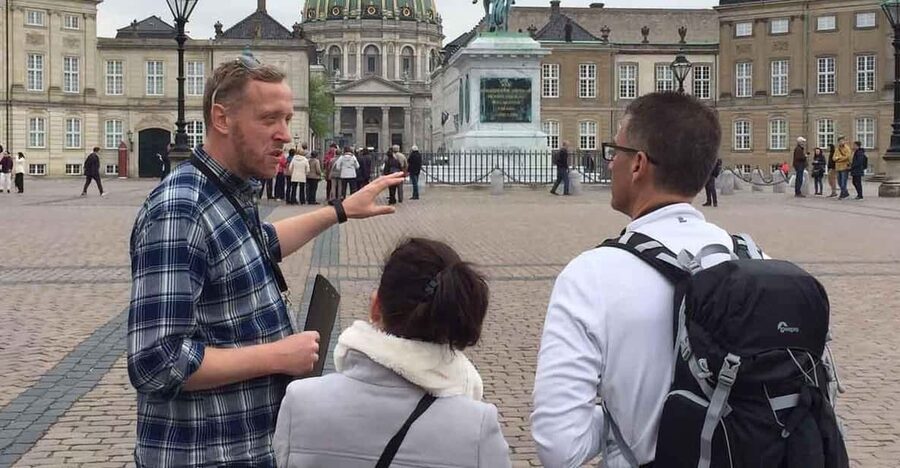
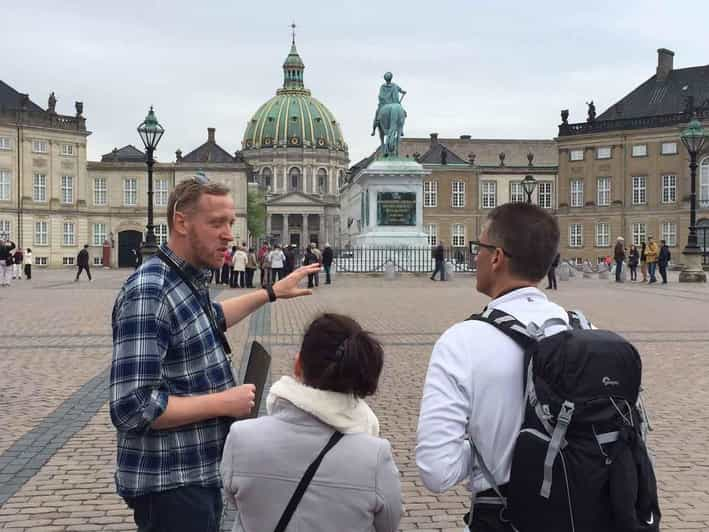
The final walk to Amalienborg takes about 15 minutes, the longest single walking stretch listed in the route. The palace is a fitting end because the tour moves from City Hall and civic Copenhagen through political and commercial landmarks, then finishes in the royal quarter.
You see Amalienborg from outside. The guide explains its place in Copenhagen’s royal story, but entry is not included. If you want to explore further, the end point is convenient for planning a separate visit or continuing around the nearby area.
Finishing here also gives you choices. You can return toward Nyhavn, use the map to follow another suggested route, or make your own way back to your hotel. The guide provides a map and ideas for continuing independently, which adds real value to a short orientation tour.
What the two hours feel like
The schedule includes many stops, but most are short. You should expect a moving overview with explanations at key points, not long breaks at each sight. The walking distance is manageable for many people who are used to city walking, but the tour is not a good fit if you need frequent sitting breaks or have difficulty covering three kilometers.
The small group is another useful feature. The stated group size is limited to 10 participants, while the highlights describe no more than 16. Since those figures differ, confirm the current maximum when you book. Either way, this is intended to be a small-group walk rather than a large crowd.
A headset is included. I consider that more than a minor convenience. It means you can hear the guide while crossing between sights, and the guide does not need to shout. It also makes it easier to ask questions without interrupting the whole group.
The walk is offered in English. If English is not comfortable for you, this may affect how much you gain from the historical explanations.
The guide makes the difference
The strongest comments focus on the guides and the stories. Jens is praised for making a thorough explanation of central Copenhagen feel enjoyable. Thomas is described as an excellent guide who combines city history with personal stories. Other praise points to a friendly, well-prepared guide who explains the city with enthusiasm.
That matters because many of the stops are viewed from the street. A palace exterior or an old exchange building can seem like a quick photo stop unless someone explains its role. The guide supplies the context that turns separate buildings into a story about Copenhagen’s development.
The information covers subjects such as why bicycles are so common, how Copenhagen held power in Scandinavia during the Middle Ages, and how the old city relates to the modern capital. Those topics are useful because they connect what you see with the way the city works today.
There is one fair warning. One participant found that the route did not cover as many historical landmarks as expected and later saw more independently. That suggests you should treat the tour’s list of places as a route through central Copenhagen, not a promise of detailed coverage at every named landmark. If a specific church, palace, or building is your main goal, ask the guide about it during the walk and plan a separate visit if needed.
Is the $46 price fair?
At $46 per person, this is not the cheapest way to walk around Copenhagen. You can explore the streets without paying anything, and a map or guidebook can give you basic background.
The value comes from the guide’s time, the small group, the headset, and the structure. In two hours, you move between several major areas without having to work out the route yourself. You also receive suggestions for what to do next, which can save time during a short city break.
I would consider the price fair if you are visiting Copenhagen for the first time, want historical context, and prefer asking questions as you go. It is less useful if you already know the city well, have researched each sight, or want to enter several attractions during the same outing.
The map improves the value because the experience does not simply end at Amalienborg. You leave with a route framework for further exploration rather than only a set of photographs.
Who should book this walk?
This suits first-time visitors who want to get their bearings quickly. It also works well for anyone who likes history but does not want a long indoor lecture or a full-day commitment.
Book it if you want:
- A guided introduction to central Copenhagen
- A short route linking royal, civic, commercial, and modern sights
- The chance to ask an English-speaking guide questions
- A small group rather than a large sightseeing crowd
- Ideas for what to visit after the walk
Think twice if you want interior access, extensive time at every landmark, or a slow pace with frequent rests. You should also reconsider it if a wheelchair is required, since the activity is not suitable for wheelchair users.
Cancellation is free up to 24 hours before the start, and you can reserve now and pay later. Those terms are useful if your schedule is still changing, but the main booking decision should come down to the walking distance and the outdoor-only format.
Should you book the Copenhagen first-timers walk?
I would book this as an early activity, especially if you have only a short stay. The route gives you a clear introduction to the city’s center, and the guides appear to be the main strength. Jens and Thomas are both praised for making the history personal and easy to follow.
Do not book it expecting a palace tour or a detailed visit to every building. Book it for the connections between places: City Hall to Christiansborg, old trade buildings to the Black Diamond, Nyhavn to Amalienborg.
At $46, it offers good value when you want a human guide, a small group, and a useful plan for the rest of your time. If you prefer to wander alone or need a fully accessible route, save the money and explore independently instead.
FAQ
Where does the Copenhagen walking tour start?
The tour starts at the Andersen statue near Copenhagen City Hall. The guide will be waiting there when the walk begins.
Where does the tour finish?
The walk finishes at Amalienborg Palace.
How long is the walking route?
The route covers about 3 kilometers, or 1.8 US miles, and lasts two hours.
What sights are included?
The route includes Copenhagen City Hall, Christiansborg Palace, Biskop Absalon, Børsen, the Church of Holmen, Christian IV’s Brewhouse, the Black Diamond, King’s New Square, the Royal Danish Theatre, Nyhavn, and Amalienborg Palace.
Do you enter the palaces, churches, or other sights?
No. The activity includes sightseeing from outside, but admission to the sights is not included.
What language is the tour offered in?
The live tour guide speaks English.
Is the tour suitable for wheelchair users?
No. The activity is listed as unsuitable for wheelchair users and people with a low level of fitness.
Just added around Copenhagen
- a day at North Zealand Castle Tour★ 4.5 · 19 reviews
- Copenhagen Walking Tour with Food Testing (smorrebrod dish & snap)★ 4.5 · 10 reviews
- walking tour – Copenhagen and Christiansborg 3 hours★ 4.0 · 7 reviews
- Small Group Guided Food Tour and Street Art Visit to Norrebro★ 5.0 · 9 reviews
- The Philosopher’s Last Walk: An audio tour on the life of Søren Kierkegaard★ 4.5 · 5 reviews
- The Six Forgotten Giants Trolls Hunt with Minibus★ 4.5 · 27 reviews
- The Foodie Tour of Copenhagen★ 5.0 · 14 reviews
- The Forgotten Giants Private Tour★ 5.0 · 3 reviews
City Tours, compared.
Group Walking Tour – City Highlights – 2 Hours
Read our review →
City Sightseeing Copenhagen Hop-On Hop-Off Bus Tour
Read our review →

Browse the lists this tour appears in