

Reviewed · HISTORICAL TOURS
Copenhagen: Danish-Jewish History Tour
The most striking fact on this Copenhagen Jewish history tour is the survival rate: 97 percent of Danish Jews escaped the Nazi occupation. Over 2.5 hours, you follow the community from its arrival in Denmark in 1622 through wartime rescue and into modern Copenhagen. I like the clear focus on people and places, not just dates. I also like the private format, which gives you room to ask questions and adjust the pace.
The tour brings together synagogues, former Jewish quarters, artists, scientists, and family stories. Guide Gitta is especially well regarded for her calm, passionate presentation and careful handling of painful subjects. The main drawback is that entry to the Great Synagogue is not included, so you should not assume the tour includes a full interior visit.
Key points to know before booking

- The 1943 rescue is the emotional center: Learn how most Danish Jews were hidden and moved to safety within a few weeks.
- Central Copenhagen becomes the classroom: Former Jewish neighborhoods, prayer rooms, and synagogue sites give the story a physical shape.
- The Great Synagogue is a major highlight: Its Egyptian Revival design is worth seeing, though admission is not included.
- This is a private walking tour: Your guide can respond to questions and tailor the discussion more easily than on a large group tour.
- The story reaches beyond wartime: Meet figures such as Niels Bohr, Victor Borge, Georg Brandes, and the Hirschsprung family.
- Plan for city walking: Wear comfortable shoes, bring water, and dress for Copenhagen’s weather.
Why 97 percent survival matters in Copenhagen
Many history tours end with tragedy. This one gives equal weight to rescue, cooperation, and the long life of a community before and after the war. The figure of 97 percent survival is not a minor detail. It shapes the whole visit and helps explain why Danish-Jewish history is so closely tied to the wider story of Denmark.
You learn how Jewish residents became part of Danish society after arriving in 1622. The tour also shows how their work influenced business, science, music, literature, design, and the arts. That wider view matters. It keeps the Jewish community from being presented only through the lens of persecution.
The wartime section remains serious. In October 1943, over a few short weeks, Danish Jews were hidden and smuggled away from the German occupiers. The tour focuses on how this happened and why the rescue was so effective. I find this approach useful because it places the event in human and civic terms, rather than reducing it to a single heroic story.
Expect sensitive material. You will hear about fear, concealment, flight, and the dangers faced by people who helped. The guide’s role matters here. Gitta has been praised for presenting difficult subjects in a balanced way, without turning the tour into either a lecture or a sentimental performance.
More history walks in Copenhagen:
- Afternoon Hamlet Castle Tour to a UNESCO World Heritage Site.
★ 4.5 · 7 reviews - Copenhagen’s Royal History: A Self-Guided Walking Tour
★ 4.5 · 7 reviews - Private E-Biking Copenhagen History and Nature Adventures
★ 5.0 · 5 reviews
A walking route through Copenhagen’s Jewish quarters
This is a private historical walking tour, so the city itself provides the setting. Rather than moving between distant attractions by bus, you trace Jewish life through central Copenhagen on foot. The route includes former Jewish ghettos, old prayer rooms, synagogue sites, and the Great Synagogue of Copenhagen.
The walking format suits this subject. Addresses and streets can reveal changes that a museum display cannot. A former Jewish quarter is not just a point on a map. It helps you picture where people lived, worshipped, traded, and built community. The guide can connect those places to larger events as you move through the city.
The exact starting time is selected when you check availability. That gives you some flexibility, but it also means you should confirm the meeting details before you set your day around the tour. Hotel pickup is offered, which can be useful if you want help getting to the start.
You should wear comfortable shoes. The tour lasts 2.5 hours, long enough to cover substantial ground but short enough to fit beside another Copenhagen activity. Bring water and clothing suited to the weather. Copenhagen can be cool, wet, or windy, and a walking tour is less enjoyable if you are underdressed.
The Great Synagogue and its Egyptian Revival design

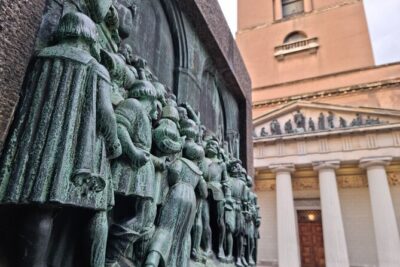
The Great Synagogue of Copenhagen is one of the tour’s most recognizable sights. Its Egyptian Revival style gives it a distinct appearance, and the building provides a strong visual link to the community’s religious life in the city.
The tour does not include entrance to the synagogue. That is the main point to clarify before you pay. You may see and discuss the building from outside, but admission is a separate matter, and an interior visit should not be treated as part of the package.
Even without entry, the synagogue adds weight to the route. It is not simply an attractive building to photograph. It helps you understand the place of Jewish worship in Copenhagen and gives the historical discussion a clear center.
If seeing the inside is important to you, ask about current access when booking. The supplied information confirms that entrance is not included, but it does not promise interior access or provide a separate admission schedule.
From H.C. Andersen to the Hirschsprungs
One strength of this tour is the way it links Jewish history with familiar Danish cultural figures. You hear about H.C. Andersen’s close friendship with the Melchior family, with whom he stayed and who cared for him near the end of his life.
This story gives the tour a personal scale. Instead of hearing only about institutions, you see how relationships crossed religious and social lines. It also adds a welcome literary thread to a route otherwise shaped by political and wartime events.
The tour also introduces Heinrich and Pauline Hirschsprung, art patrons who helped support the Danish Impressionist movement. Their story shows how Jewish contributions reached into Copenhagen’s cultural life and shaped what Denmark became known for.
These details are valuable because they widen the subject. You are not only learning where Jewish people worshipped or how they survived occupation. You are also seeing how individuals helped shape Danish art, literature, and public life.
A few more Copenhagen half-days to weigh up
- Copenhagen: Canal Cruise with Guide
★ 4.6 · 9,115 reviews - Copenhagen: Hop-On Hop-Off Bus Tour with Boat Tour Option
★ 3.9 · 4,122 reviews - Private Walking Grand Tour of Copenhagen
★ 5.0 · 3,953 reviews - From Copenhagen: Lund and Malmö 2-Country Tour
★ 4.7 · 2,772 reviews
Science, music, design, and everyday Denmark
The tour points to Jewish influence in several parts of Danish life. Niels Bohr is included among the scientists, while Victor Borge represents music and performance. Georg Brandes adds a literary and intellectual connection.
You also hear about products and companies associated with Danish life, including Tuborg Beer and Bang & Olufsen porcelain. These examples help connect a historical community with objects and names you might already recognize from Denmark.
The point is not that every product or achievement belongs to one group. Rather, the tour shows how Danish society was built by people with different backgrounds, beliefs, and family stories. That makes the experience more useful than a narrow sequence of dates.
I especially like this approach for anyone who has already seen Copenhagen’s major royal and architectural sights. You get a different way to read the city, one based on the people who lived and worked here rather than only on palaces, canals, and famous squares.
A serious look at the October 1943 rescue
The wartime portion is likely to be the most memorable part of the tour. In October 1943, Danish Jews faced arrest and deportation under the German occupation. Over the course of a few weeks, the vast majority were hidden and moved to safety.
The tour examines how this rescue unfolded under the noses of the German occupiers. The story involves the Jewish community, Danish citizens, and networks that helped people escape. It is a powerful reminder that survival depended on many acts of courage and practical cooperation.
You should expect a serious discussion rather than a light sightseeing stop. The guide needs to explain the danger without simplifying the choices people faced. Gitta’s strength, according to the information provided, is her ability to keep the presentation balanced and remain open to questions.
That flexibility is especially useful here. You may want to ask how the rescue relates to daily life in Copenhagen, what happened to those who fled, or how the community rebuilt afterward. A private group makes those questions easier to raise than they might be on a crowded scheduled walk.
What the private format adds
At $129 per person, this tour costs more than a standard large-group city walk. The value comes from the private guide, the focused subject, and the chance to ask questions as the story unfolds.
If you are booking for one or two people, the per-person price may feel high. For a family group or a small party of friends, the cost can make more sense because you are paying for a dedicated guide rather than a seat on a broad sightseeing route.
The guide can also respond to your interests. You might want more time on the wartime rescue, more detail on synagogue history, or greater attention to art and literature. The tour description does not promise a custom route, but the private setup and direct feedback about Gitta suggest a more personal conversation than a fixed large-group tour.
One practical benefit is the ability to ask about relatives or historical records. You should tell the provider if this is your purpose before the visit. The tour may offer historical context, but the information specifically asks you to identify this need in advance, so do not treat the walk as a guaranteed genealogy service.
What the 2.5-hour schedule feels like
Two and a half hours is a useful middle length. It gives the guide time to explain the community’s origins, visit several central sites, cover the war years, and discuss modern Copenhagen without taking up an entire day.
The pace will be shaped by walking and conversation. You should expect stops around former Jewish areas, synagogue and prayer-room sites, and the Great Synagogue. The tour is not presented as an interior museum visit, so most of the value comes from the guide’s interpretation of the city.
You can pair it with other central Copenhagen plans, but leave a little breathing room around the start and finish. Hotel pickup is offered, yet the exact pickup arrangement and meeting time should be confirmed when you book.
The tour is wheelchair accessible, which is useful information for anyone planning a private city walk. It is not suitable for children under six. Older children may follow the subject differently depending on their interest and maturity, but the wartime material is serious.
Who will get the most from this tour
I would choose this tour if you want to understand Copenhagen through a particular community’s experience. It is a good fit for anyone interested in Jewish history, World War II, Danish society, architecture, literature, science, or the arts.
It also suits people who prefer conversation to a recorded audio guide. The available languages are English, German, Danish, Swedish, and French. A live guide can answer questions in the moment and explain connections that are easy to miss when you walk alone.
The experience may be less suitable if you want a general introduction to Copenhagen or a tour packed with interior visits. It has a clear subject, and the synagogue entrance is not included. You should also reconsider it if you dislike walking or prefer a quick, purely visual sightseeing loop.
If you have family ties to Danish Jews, tell the provider before the tour. That gives the guide a chance to understand what you hope to learn and explain what can realistically be covered during the visit.
Small practical details that matter
The booking terms are traveler-friendly. You can cancel up to 24 hours before the tour for a full refund, and you can reserve now and pay later. That is useful when your Copenhagen schedule is still changing.
The tour has a rating of 5 from nine reviews, with particular praise for Gitta’s preparation, warmth, and ability to explain Copenhagen’s Jewish past in a logical way. One useful side benefit from the guide’s local advice was a bakery and a nearby sausage food truck, including a vegetarian sausage sandwich with all the toppings.
That food tip is not the reason to book the tour, but it tells you something about the experience’s tone. You get serious history along with practical Copenhagen suggestions. If you do eat meat-free, the vegetarian sausage sandwich is a specific option worth keeping in mind.
The tour is offered by Delicious Denmark. Its private format, multiple language choices, hotel pickup, and wheelchair accessibility make it easier to fit into different itineraries. Still, you should confirm the meeting point, pickup details, and synagogue access before the day of the tour.
Should you book the Copenhagen Jewish History Tour?
Book it if you want a focused, personal look at Copenhagen that connects 1622, the 1943 rescue, and modern Danish life. The strongest reasons are the private format, the broad range of stories, and the careful treatment of difficult wartime material.
At $129 per person, it is not a bargain city walk. It earns its price best for couples, families, or small groups who will ask questions and take advantage of the private guide. If you only want to see the Great Synagogue from inside, remember that admission is not included.
For a thoughtful introduction to Danish-Jewish history, I would choose this tour. Wear good shoes, tell the provider if you are researching family records, and go ready for both hard history and the ordinary human stories that make Copenhagen easier to understand.
FAQ
How long is the Danish-Jewish History Tour?
The tour lasts 2.5 hours. Starting times depend on availability when you book.
How much does the tour cost?
The listed price is $129 per person.
Is this a private tour?
Yes. It is offered as a private group tour with a private guide.
Which languages are available?
The live tour guide is available in English, German, Danish, Swedish, and French.
Is hotel pickup available?
Yes. Hotel pickup is offered.
Is entrance to the Great Synagogue included?
No. Entrance to the Great Synagogue of Copenhagen is not included in the tour price.
Is the tour wheelchair accessible?
Yes. The activity is listed as wheelchair accessible.
Can I cancel the tour for a refund?
Yes. You can cancel up to 24 hours in advance for a full refund. You can also reserve now and pay later.
Just added around Copenhagen
- Copenhagen Walking Tour with Food Testing (smorrebrod dish & snap)★ 4.5 · 10 reviews
- a day at North Zealand Castle Tour★ 4.5 · 19 reviews
- walking tour – Copenhagen and Christiansborg 3 hours★ 4.0 · 7 reviews
- Small Group Guided Food Tour and Street Art Visit to Norrebro★ 5.0 · 9 reviews
- The Philosopher’s Last Walk: An audio tour on the life of Søren Kierkegaard★ 4.5 · 5 reviews
- The Six Forgotten Giants Trolls Hunt with Minibus★ 4.5 · 27 reviews
- The Foodie Tour of Copenhagen★ 5.0 · 14 reviews
- The Forgotten Giants Private Tour★ 5.0 · 3 reviews
Historical Tours, compared.
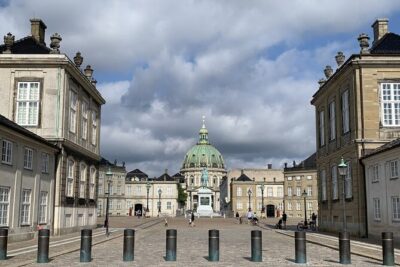
Copenhagen’s Royal History: A Self-Guided Walking Tour
Read our review →
Afternoon Hamlet Castle Tour to a UNESCO World Heritage Site.
Read our review →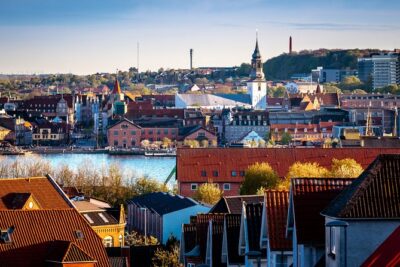
Private E-Biking Copenhagen History and Nature Adventures
Read our review →Browse the lists this tour appears in