
Reviewed · CASTLE & PALACE TOURS
Copenhagen: Amalienborg Palace Museum Entry Ticket
At Copenhagen’s Amalienborg Museum, the Danish monarchy feels close enough to inspect. You walk through rooms left almost exactly as their occupants used them, from Christian X’s dark study to Queen Louise’s private salon. The grand Gala Hall adds the ceremonial splendor, while the Fabergé Chamber brings in a more personal link between Danish and Russian royalty.
I like the museum for two clear reasons: the preserved private rooms make royal history personal, and the route is easy to follow in about 45 minutes to an hour. Families also get useful help from child-friendly audio content. The main consideration is value. At $19 per person, this is not a large museum, and you may find the admission high if you expect a full palace tour.
Key points to know before you go
- Royal rooms preserved in place: See the dining room and study used by Christian X and Queen Alexandrine.
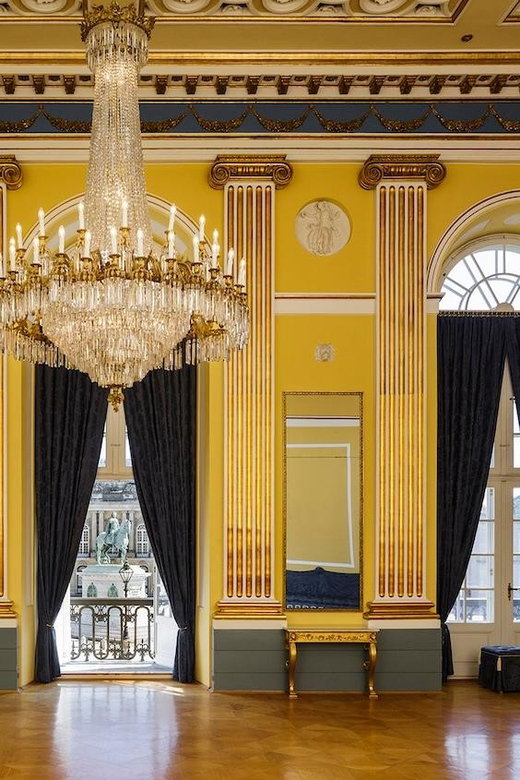
- The eight-meter Gala Hall: Look for lavish gilding, a grand ceiling, and sculptures by Bertel Thorvaldsen.
- Fabergé jewelry with a royal connection: The chamber focuses on Russian pieces from 1860 to 1917.
- A short, focused visit: Plan on roughly 45 minutes to one hour inside, with extra time for Amalienborg Square.
- Good for families: Child-friendly audio content is available in the museum route.
- Plan your arrival carefully: Exchange and scan your online ticket downstairs, and arriving more than 20 minutes late makes it invalid.
What the Amalienborg Museum actually offers
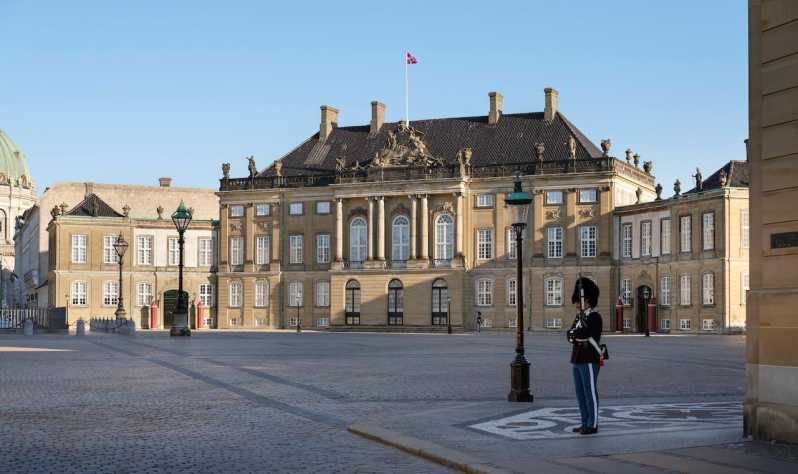
Amalienborg is not one single palace building. The complex has four palaces arranged around a central square, and the museum occupies part of Christian VIII’s Palace. The Danish Royal Family still uses Amalienborg, so this is both a working royal setting and a museum.
Your ticket gives access to the Amalienborg Palace Museum and its exhibitions for one day. It is a self-guided visit, not a guided tour. That matters if you prefer to move at your own pace, but you should not expect a guide to explain each room or answer questions as you go.
The museum covers roughly the last 150 years of royal life. Instead of presenting only portraits and formal state objects, it shows the people behind the crown through personal belongings, furniture, photographs, and rooms arranged as they were during royal occupancy.
That approach gives the visit a domestic feel. You are not simply looking at grand halls. You are also seeing where a king worked, where a queen received visitors, and where a royal family ate together.
More castles and royal palaces around Copenhagen:
- Hamlet and Sweden Tour – Two Countries in one day !
★ 5.0 · 2,223 reviews - Copenhagen: Kronborg, Frederiksborg Castle and Roskilde Tour
★ 4.9 · 1,763 reviews - Copenhagen: Rosenborg Castle Entry Ticket
★ 4.6 · 381 reviews
Finding the entrance in Amalienborg Square

The museum entrance can be easy to miss if you arrive in the middle of the square. Enter Amalienborg Square from Frederiksgade or from the direction of the Marble Church. The entrance is in the first building on your left.
There is one practical step that can catch you off guard. Before going upstairs to the exhibition, you need to go downstairs to the cashier and present and scan your online ticket. A QR code on your phone is not necessarily the final museum ticket, so allow time for this exchange.
Arrive on time. If you are more than 20 minutes late, the ticket is no longer valid. This is especially important if you are fitting the museum between other Copenhagen sights or booking around a scheduled activity.
Large bags, large purses, backpacks, oversize luggage, food, and drinks are not allowed inside. Baby strollers are also not allowed. Assistance dogs are permitted, but other pets are not.
The museum is wheelchair accessible. For a smoother visit, leave bulky belongings elsewhere before arriving rather than hoping they can be stored at the entrance.
Christian X’s study and the royal dining room
The most effective part of the museum is the set of rooms connected to Christian X and Queen Alexandrine. Their dining room appears much as it did during their years at Amalienborg, from 1899 until their deaths in 1947 and 1952.
That long span gives the room more weight than a standard palace dining chamber. You can picture it as a place used over decades, not a set arranged for one royal ceremony. The furniture and setting help you think about the monarchy as a family institution, with daily routines as well as public duties.
Christian X’s study has a different mood. The dark walls and heavy furnishings reflect the style of a gentleman’s study around 1900. The room also reflects the king’s background as an officer, giving you a visual clue about his identity beyond his title.
I like this contrast. The dining room suggests family life, while the study feels more private and formal. Together, the two rooms make the royal story easier to understand than a long sequence of official portraits would.
Take your time with the details rather than rushing toward the larger Gala Hall. Smaller objects can explain a royal personality more clearly than the grand decoration. The museum’s strength is the way these rooms preserve atmosphere and use.
Queen Louise’s salon and a family spread across Europe
Queen Louise’s private salon dates from around 1895 and reflects the more modern interior style of that period. It is lighter in character than Christian X’s study, with paintings and framed family photographs placed around the room.
Those photographs point to the wide family connections of European royalty. Queen Louise’s life was tied to relatives and royal houses across the continent, and the salon presents that network through personal images rather than only through political facts.
This room is worth attention if you enjoy social history. It shows how a royal interior could function as a family space, a receiving room, and a display of connections. You get a sense of relationships and household life without needing a long lecture.
The salon is also a useful stop for children. The museum is family-friendly, and child-oriented audio material can help younger visitors follow the route. A seven-year-old may not care about every date, but a room filled with photographs, personal belongings, and a clear story gives them something concrete to notice.
More museums in Copenhagen:
- Copenhagen: National Museum of Denmark Entry Ticket
★ 4.5 · 960 reviews - Exhibition – Home of Carlsberg
★ 4.5 · 281 reviews - Copenhagen: Danish War Museum Entry Ticket
★ 4.7 · 106 reviews - Copenhagen: MACA Art Museum Entry Ticket
★ 4.7 · 77 reviews
The Fabergé Chamber and the Danish Russian connection
The Fabergé Chamber shifts the focus from rooms to objects. It presents handmade Russian jewelry created between 1860 and 1917, with special attention to the close links between the Danish and Russian monarchies.
The most notable object mentioned here is a Fabergé coronation brooch made for the coronation of Tsar Nicholas II. That detail gives the collection a direct connection to a major royal event rather than leaving the jewelry as decoration without context.
You will not need a long visit to understand the point of this chamber. Look closely at the workmanship, then consider what the pieces represent: family ties, ceremonial life, and the movement of royal objects between courts.
This is one of the better stops for visitors who like decorative arts. It also breaks up the room-by-room story with smaller items that reward close viewing. If you are mainly interested in architecture, it may hold your attention for less time than the Gala Hall.
The Gala Hall and Amalienborg’s grandest interior
The Gala Hall provides the museum’s big visual moment. The ceiling rises eight meters above the floor, with lavish gilding and a view toward the palace square.
The Royal Family commissioned the interior in 1794 from artist Nicolai Abildgaard. Sculptor Bertel Thorvaldsen created the sculptures. Even if you know little about Danish art, the room gives you a clear idea of how a monarchy presented power, ceremony, and taste.
The hall feels very different from Christian X’s study and the family rooms. Those spaces ask you to look at private life. The Gala Hall asks you to look upward and outward, toward state occasions and public display.
Give yourself a few minutes here. Notice how the scale changes your sense of the palace. After the intimate rooms, the high ceiling and gilded decoration make the monarchy feel grand again. This contrast is one reason the museum route works well.
The Frederik X exhibition and changing displays
The museum presented FREDERIK X: King of Tomorrow from March 22 through September 8, 2024, marking the succession of the Danish throne on January 14 of that year. That exhibition used photographs, objects, video clips, paintings, and sound to introduce the new king.
Because the exhibition dates ended on September 8, 2024, you should check the current program before booking if this particular display interests you. The permanent museum rooms remain the main reason to visit, but temporary exhibitions can change the balance of the experience.
The exhibition format also shows how Amalienborg can connect older royal rooms with the present monarchy. A display about a new king gives the palace a living context, while the preserved rooms show how earlier generations lived and worked.
How long should you allow?
The museum itself takes about 45 minutes to one hour for many visitors. That is enough time to follow the route, listen to audio material, and pause in the principal rooms without racing.
You should allow longer if you read every label, use the audio guide fully, or visit with children. The museum’s compact size can be an advantage in a busy Copenhagen day. You can see the main rooms without giving up half a day.
The palace square outside deserves extra time. One visitor spent about an hour inside and longer exploring outside, and that is a sensible plan. Amalienborg is close enough to Copenhagen’s center for a walk of about 15 minutes, so you can pair the museum with nearby sights rather than treating it as an isolated trip.
Do not confuse the ticket’s one-day validity with an all-day palace pass. The museum visit is short, and the ticket covers the museum and its exhibitions, not a guided tour of every part of the Amalienborg complex.
Is $19 a fair price?
At $19 per person, the price is reasonable if you value royal interiors, decorative arts, and a focused museum visit. The Fabergé jewelry, Thorvaldsen sculptures, Abildgaard-designed Gala Hall, and preserved royal rooms give the ticket several distinct points of interest.
The value is weaker if you expect a huge palace with many wings open to the public. This is a compact museum, and you may finish in under an hour. One useful way to judge the cost is to combine it with time in Amalienborg Square and nearby central Copenhagen, rather than making the museum your only activity.
I would choose this ticket for visitors who want context about Denmark’s monarchy without committing to a long tour. It is also a practical option for families, since the route is manageable and child-friendly audio material can keep younger visitors involved.
If you are mainly interested in grand architecture, you may feel the price is high for the number of rooms. The Gala Hall delivers scale, but much of the museum focuses on furniture, photographs, and personal objects. That is a strength for some people and a limitation for others.
Who will enjoy this museum most?
I would recommend Amalienborg to:
- First-time Copenhagen visitors who want a clear introduction to the Danish monarchy.
- Families with children, especially those who can use the child-friendly audio content.
- Decorative-arts fans interested in Fabergé jewelry, royal furniture, and period interiors.
- History-minded visitors who prefer personal rooms and family stories to a long list of dates.
- Short-stay visitors who need a museum that can fit into a one-hour schedule.
- Visitors already near the Marble Church, since the entrance is easy to reach from that direction.
I would think twice if you dislike royal collections or prefer large art museums. The museum is focused, and there is no guided tour included. You will get the most from it if you are willing to look closely at rooms and objects rather than expecting constant spectacle.
Helpful booking and visit advice
Reserve ahead if you need a particular entry time, since the ticket is tied to availability and late arrival can cancel its validity. The booking allows cancellation up to 24 hours in advance for a full refund, and you can reserve now and pay later.
Carry your ticket on your phone, but remember that you must still go downstairs to the cashier to present and scan it before heading upstairs. Arrive early enough to complete that step.
Wear or bring only what you need inside. Large bags, backpacks, food, and drinks are not allowed, and baby strollers cannot enter. Wheelchair access is available, but the restrictions on bags still apply.
There is no included guide, so use the museum’s audio material if you want more explanation. Families should ask about child-friendly audio content, since it can make the rooms easier for younger visitors to follow.
Should you book the Amalienborg Palace Museum?
Book it if you want a short, well-organized look at Danish royal life, with preserved rooms, Russian jewelry, and one grand ceremonial hall. It is especially useful on a first Copenhagen visit, for families, and for anyone who enjoys seeing how historical figures actually lived.
Skip it if $19 feels high for a visit of roughly one hour, or if you want a much larger palace experience. The museum is compact, but its best rooms are memorable. Plan it alongside Amalienborg Square and nearby central Copenhagen, and the price makes more sense.
FAQ
Where is the Amalienborg Museum entrance?
The entrance is in the first building on your left when you enter Amalienborg Square from Frederiksgade or from the direction of the Marble Church.
How long is the museum ticket valid?
The ticket is valid for one day. Check availability for the available starting times.
How long does a visit usually take?
Plan on about 45 minutes to one hour inside the museum. You may want longer if you use the audio material or explore the area outside.
Is a guided tour included?
No. The ticket includes entry to the Amalienborg Palace Museum and access to all exhibitions, but not a guided tour.
Do I need to exchange my online ticket?
Yes. Go downstairs to the cashier before your visit to present and scan the online ticket. You then proceed upstairs to the exhibition.
What happens if I arrive late?
If you arrive more than 20 minutes late, your ticket is no longer valid.
Are large bags and strollers allowed?
No. Oversize luggage, large bags, large purses, backpacks, and baby strollers are not allowed inside. Food and drinks are also prohibited.
Is the museum wheelchair accessible?
Yes, the museum is wheelchair accessible. Assistance dogs are allowed, but other pets are not.
Just added around Copenhagen
- Copenhagen Walking Tour with Food Testing (smorrebrod dish & snap)★ 4.5 · 10 reviews
- a day at North Zealand Castle Tour★ 4.5 · 19 reviews
- walking tour – Copenhagen and Christiansborg 3 hours★ 4.0 · 7 reviews
- Small Group Guided Food Tour and Street Art Visit to Norrebro★ 5.0 · 9 reviews
- The Philosopher’s Last Walk: An audio tour on the life of Søren Kierkegaard★ 4.5 · 5 reviews
- The Six Forgotten Giants Trolls Hunt with Minibus★ 4.5 · 27 reviews
- The Foodie Tour of Copenhagen★ 5.0 · 14 reviews
- The Forgotten Giants Private Tour★ 5.0 · 3 reviews
Castle & Palace Tours, compared.

Hamlet and Sweden Tour – Two Countries in one day !
Read our review →
Kronborg, Frederiksborg Castle and Roskilde Tour
Read our review →

Full-Day; Castle, Palace, Cathedral & Viking ships Tour
Read our review →


Kronborg (Hamlet Castle) & Frederiksborg Castles: PRIVATE TOUR
Read our review →Browse the lists this tour appears in