
Reviewed · MUSEUMS
Copenhagen: Danish War Museum Entry Ticket
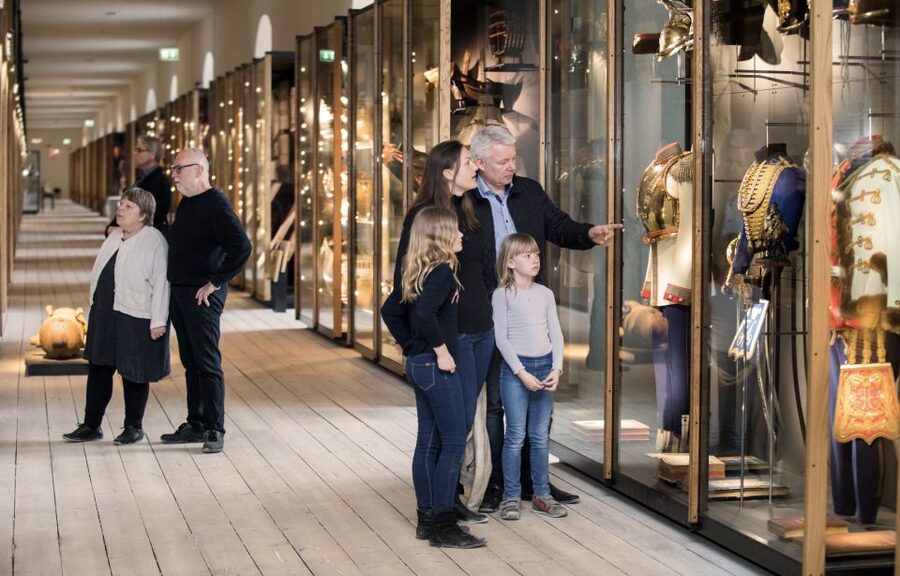
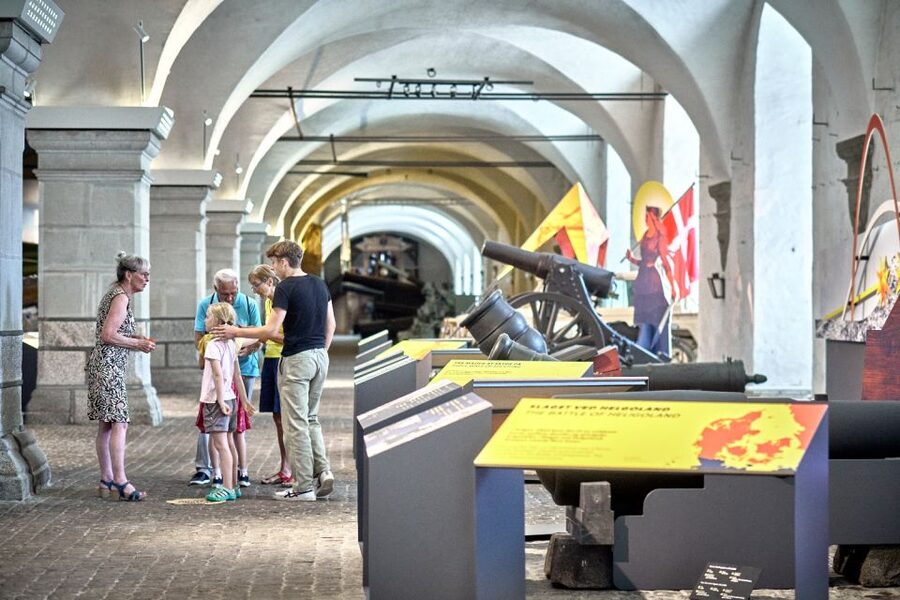
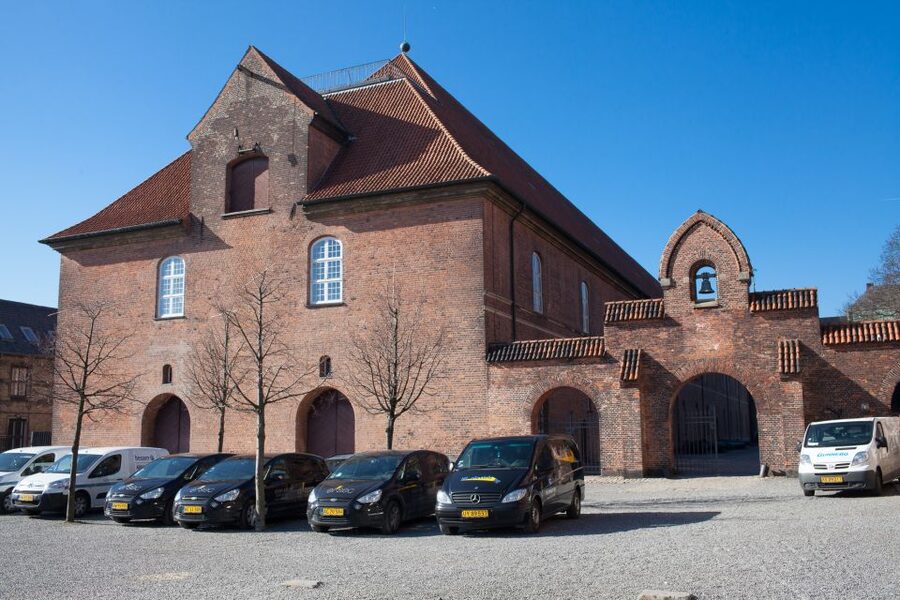
The Danish War Museum gives you a rare look at Denmark through the tools and conflicts that shaped it. Its home, the 1604 Tøjhus Arsenal built under Christian IV, is part of the experience. Inside, the 163-meter first-floor hall is the longest room in the Nordic countries, with armor, weapons, vehicles, and military stories arranged along its great length.
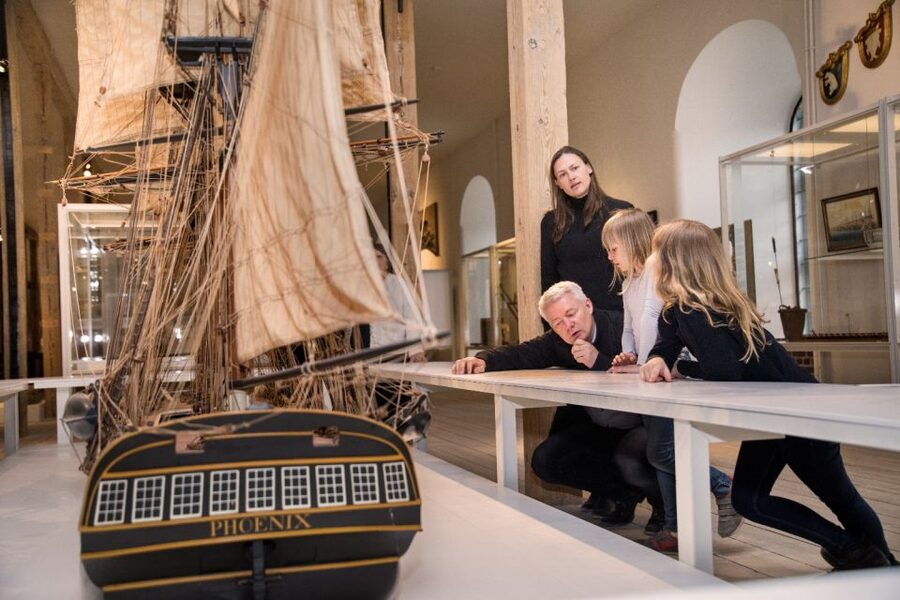
I like the mix of grand and oddly personal objects here. You can admire shining armor worn by 15th-century Danish knights, then pause over a 150-year-old biscuit or a ship model made from bones. I also like the hammock station, where Danish stories from the seven seas offer a welcome break from weapons and battles.
The main drawback is practical: there is currently no elevator to the first-floor exhibitions. You may bring your own wheelchair or baby carriage, but reaching that upper level requires stairs. At $20 per person, the ticket offers good value for anyone who plans to spend several hours exploring, though it may feel costly if you only want a quick look.
Key points to know before you go
- A 1604 arsenal forms the museum’s setting: Christian IV’s former armory gives the visit a direct link to Denmark’s military past.
- The first-floor hall stretches 163 meters: Expect a long, dramatic gallery rather than a collection of small rooms.
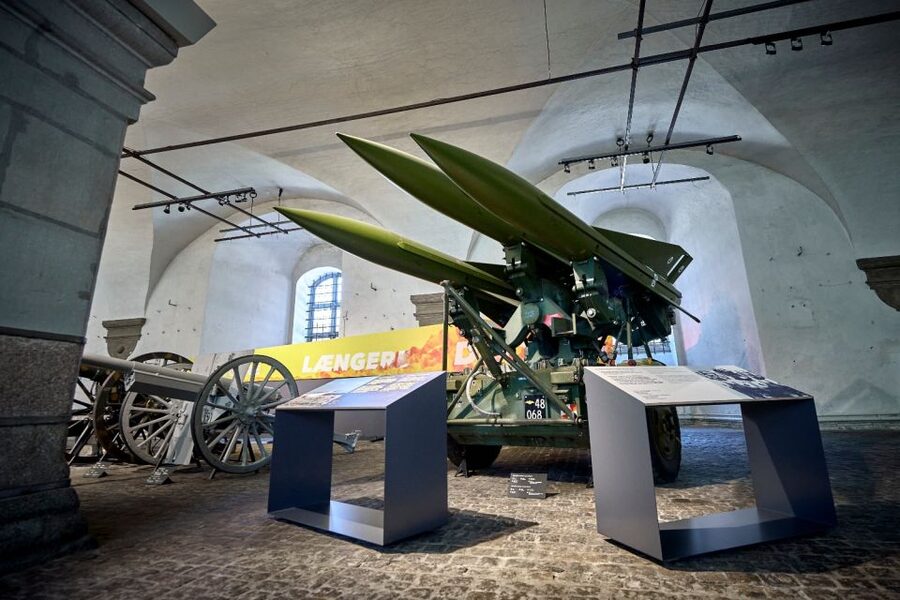
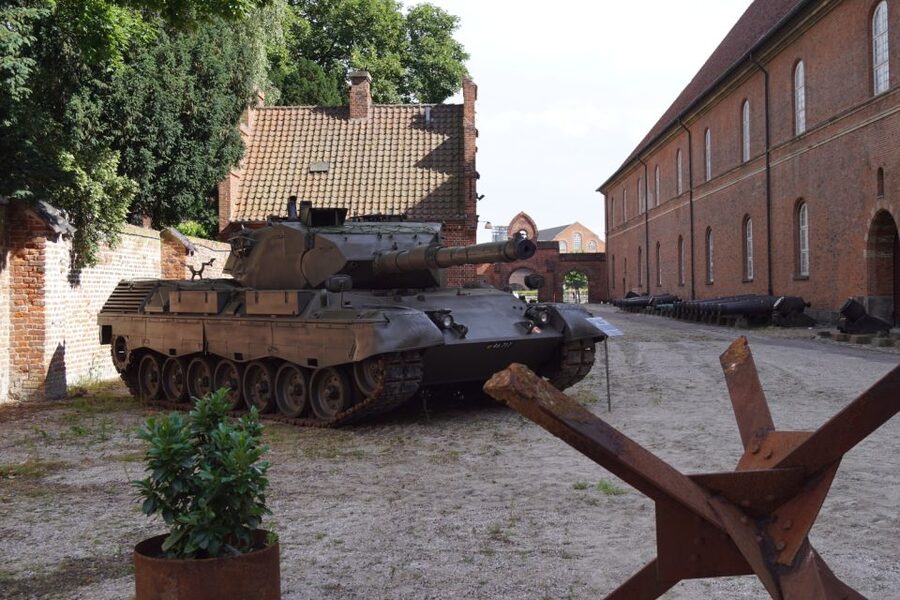
- The collection covers the 1500s to the present: Displays include Danish wars, World War II, the Cold War, and the war in Afghanistan.
- Unusual objects break up the military displays: Look for a bone ship model, a 150-year-old biscuit, and a complete American Civil War uniform.
- A new exhibition asks hard questions about drones: It connects current warfare with the future of unmanned weapons.
- Plan around the stairs: There is no elevator to the first-floor exhibitions, although personal wheelchairs and baby carriages are allowed.
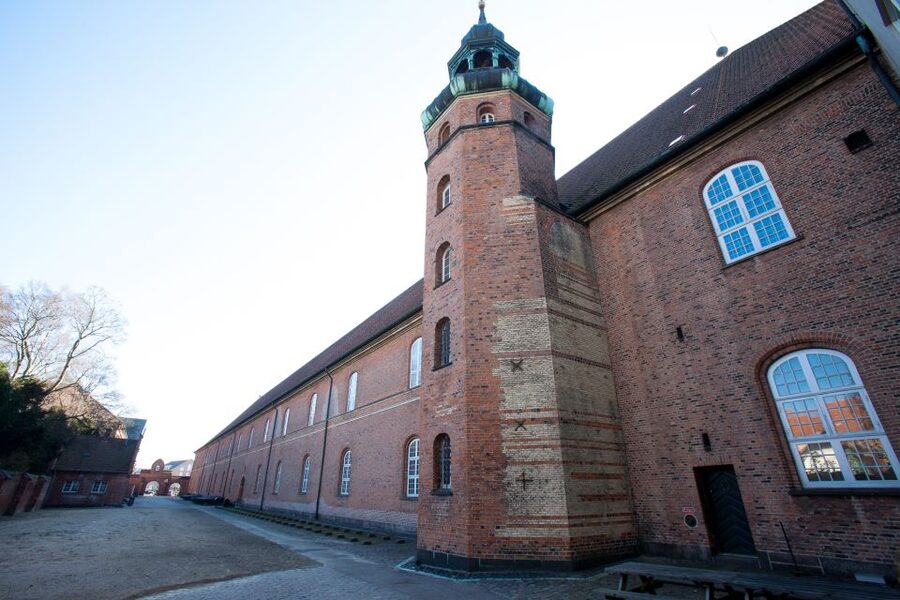
Entering Christian IV’s 1604 Arsenal
The museum begins with its building. The Tøjhus, or Arsenal, was built by Christian IV in 1604 and once functioned as a military armory. That makes the setting more than a container for exhibits. You are walking through a place designed for weapons and military storage from the start.
The building also helps you understand the scale of the museum. The first floor contains a 163-meter-long hall, described as the longest room in the Nordic countries. It is not a quick corridor with a few cases. You get a long visual sweep through centuries of Danish military life.
I would give yourself time to look up, slow down, and notice how the old building shapes the visit. A historic arsenal is especially useful here because the objects do not feel entirely removed from their original purpose. You are seeing arms and equipment in a place built for that world.
The ticket is valid for one day, so you do not need to rush through every display. That matters because the museum covers a wide period, from the 1500s to Denmark’s role in 21st-century conflicts. You can make a short visit, but the ticket makes more sense if you plan a steady, several-hour visit.
More museums in Copenhagen:
- Copenhagen: National Museum of Denmark Entry Ticket
★ 4.5 · 960 reviews - Copenhagen: Amalienborg Palace Museum Entry Ticket
★ 4.3 · 291 reviews - Exhibition – Home of Carlsberg
★ 4.5 · 281 reviews
Armor and weapons from Denmark’s early wars
One of the first major draws is the collection of armor and weapons. The 15th-century Danish knights’ armor gives you a clear, physical sense of medieval warfare. Shining metal can look impressive in a case, but it also raises practical questions about weight, movement, protection, and the people who had to wear it.
The displays then carry you into later centuries. You can learn about Denmark’s 17th-century war with Sweden and its 19th-century conflict with England. These episodes are not presented as isolated dates. Together, they show how Denmark’s military concerns changed as European powers fought for territory, trade, and influence.
For you, the value is in seeing the equipment alongside the wider story. A weapon tells you how people fought, but an exhibition can also show why a conflict mattered to Denmark. If you enjoy military objects but want more than a line-up of guns and swords, this chronological approach gives the collection useful shape.
The museum’s focus is Danish, which helps keep the visit specific. You are not simply walking through a general European weapons collection. The material is tied to Denmark’s own wars, defenses, and changing place in international conflicts.
The 163-meter hall and its unusual objects
The great first-floor hall is the museum’s visual centerpiece. Its length can make the collection feel almost like a timeline laid out in one continuous sweep. That is useful if you like to compare periods, since armor, uniforms, weapons, and modern equipment appear within the same broad route.
Do not hurry past the smaller objects. The museum includes a ship model made of bones, a 150-year-old biscuit, and a military car that ran over a roadside bomb in Afghanistan while everyone inside survived. These details bring military life down from strategy and battle plans to craft, food, danger, and survival.
The biscuit sounds modest, but that is exactly why it earns attention. A preserved food item can tell you more about daily military conditions than another polished weapon. It points toward the practical side of service: what people carried, ate, and relied on over long periods.
The bone ship model offers a different kind of story. It shows how military and maritime themes can overlap with patience, improvisation, and personal skill. The Afghan vehicle, meanwhile, connects the museum’s older displays to recent events and the risks faced by service members.
Another unusual highlight is the world’s only complete example of a uniform from the American Civil War. Its importance comes from its completeness. Rather than seeing only a fragment or a single garment, you can consider how a full uniform presented a soldier and functioned in real use.
From World War II to the Cold War
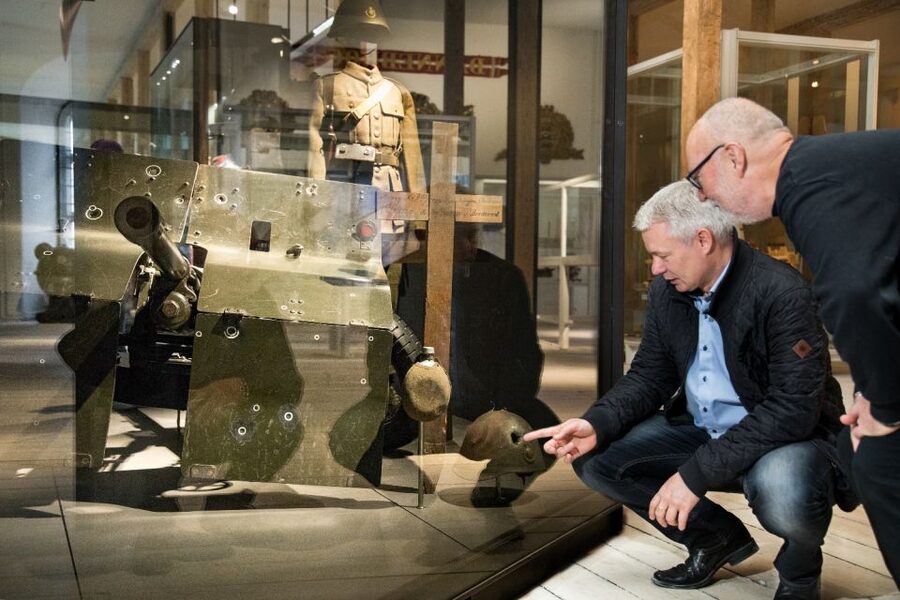
The museum continues into the 20th century with displays on World War II and the Cold War. These sections matter because Denmark’s military story did not end with earlier battles against neighboring powers. Modern warfare changed the country’s security concerns, alliances, and public life.
World War II gives you a chance to consider Denmark in a broader European conflict. The Cold War then shifts the focus toward prolonged tension, military readiness, and the possibility of a conflict that might never fully arrive. Those subjects can be less visually dramatic than medieval armor, but they are important for understanding how defense works in the modern era.
I appreciate the presence of these sections because they keep the museum from becoming a purely nostalgic look at old weapons. The visit moves from visible armor to modern systems, planning, and international pressure. That change helps you see that warfare is not only about what happens on a battlefield.
Give these displays more time than a quick glance. The older objects may catch your eye first, but the 20th-century sections explain why Denmark’s military role had to adapt. They also prepare you for the final sections on Afghanistan and drone warfare.
A few more Copenhagen half-days to weigh up
- Copenhagen: Canal Cruise with Guide
★ 4.6 · 9,115 reviews - Copenhagen: Hop-On Hop-Off Bus Tour with Boat Tour Option
★ 3.9 · 4,122 reviews - Private Walking Grand Tour of Copenhagen
★ 5.0 · 3,953 reviews - From Copenhagen: Lund and Malmö 2-Country Tour
★ 4.7 · 2,772 reviews
A hammock, sea stories, and a pause from battle
The hammock station adds a gentler note to the visit. You can sit back and listen to Danish stories from the seven seas. It is a clever change of pace in a museum filled with armor, weapons, and accounts of conflict.
This is especially useful if you are visiting with children or if you need a quiet pause between dense displays. The hammock gives you a physical break, while the sea stories connect Denmark’s military past with its maritime identity.
Do not treat this as a separate entertainment attraction. It is best understood as a small storytelling feature within the museum. The supplied information does not specify the length or format of the stories, so you should think of it as an optional listening stop rather than a scheduled performance.
Still, it helps the museum feel less rigid. Military museums can become a long sequence of technical facts. A hammock and a Danish sea tale give the visit a human rhythm, with room for memory, travel, and storytelling as well as battle.
Afghanistan and Denmark’s modern military role
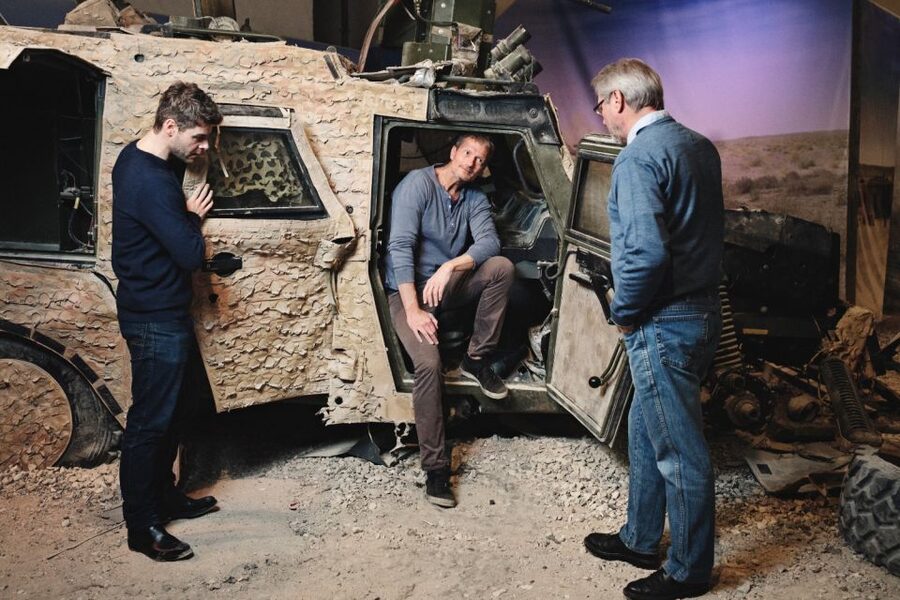
The museum’s coverage reaches the war in Afghanistan and Denmark’s role in 21st-century conflicts. This gives you a direct link between the historical collection and recent military service.
The military car that survived a roadside bomb is a particularly strong object in this section. Its story is simple and striking: the vehicle was hit, but everyone survived. Seeing the damaged or affected vehicle, if displayed as described, gives you a more immediate sense of modern military risk than a general account can provide.
This section may feel more serious than the displays of armor and weapons. The events are closer to the present, and the questions about Denmark’s international role remain current. You can consider not just what equipment soldiers used, but why Denmark took part and what service in a modern conflict involved.
The museum does not limit itself to victories or polished presentation. The Afghanistan material introduces danger, technology, and human consequences. That balance is important if you want a museum visit that treats military history as more than a parade of impressive objects.
The new drone warfare exhibition
A new spot exhibition asks whether drones have changed the way wars are fought. It focuses on a subject you are likely to have encountered in current news from Ukraine and other battlefields, as well as in videos shared online.
The exhibition examines what drones mean for present wars and how they may affect future battlefields. Cameras and sensors allow unmanned aircraft to monitor people across wide areas. The displays raise the difficult point that soldiers and civilians may both feel exposed when surveillance can reach almost anywhere.
The questions are deliberately uncomfortable. Could drones become killing machines that operate on their own? Can current Danish defense systems stop a drone attack? These are not simple museum-label questions. They connect military technology to law, responsibility, fear, and the limits of human control.
I would make this a priority if you have an interest in current affairs or technology. It also gives the museum a clear present-day edge. You are not only looking backward at weapons used centuries ago. You are being asked to consider how warfare may change next.
Because this is a new spot exhibition, its presentation may be more focused than the broad chronological displays. That can help you spend meaningful time with the subject without needing to absorb another entire century of background.
How much time should you allow?

The ticket is valid for one day, and that flexibility suits the museum’s range. You can make a compact visit focused on the long hall and major objects, or give yourself enough time to read about the wars, listen to the sea stories, and consider the Afghanistan and drone sections.
I would avoid treating this as a 30-minute stop unless you only want a quick look at the building. The 163-meter hall alone gives you a lot to see, and the dates stretch from the 1500s to the present. A slower pace is also kinder to your attention, since military displays can become tiring when read too quickly.
The museum’s arrangement appears to offer both large visual moments and smaller objects. Plan to alternate between the two. Look at the armor and vehicles from a distance, then move closer to the biscuit, bone ship model, uniforms, and other details.
The rating information supplied for this experience is 4.7 out of 5 from 106 ratings. That fits the museum’s strongest feature: the exhibits are arranged in a way that gives you plenty to see, with a clear range of periods and some memorable objects rather than a single narrow subject.
Is the $20 ticket good value?
At $20 per person, the ticket is not the cheapest museum admission, but it can be good value for a full day. You get access to a large collection, the historic Arsenal building, the long first-floor hall, modern conflict displays, and the drone exhibition.
The price works best for people who enjoy reading, comparing objects, and spending time with a subject. If you are interested in Danish wars, military technology, or the way ordinary objects connect to service life, you can easily find enough material to justify the cost.
It may be less useful if you are looking for a short, light attraction. The museum asks for attention, and parts of the subject are serious. Children may enjoy the armor, vehicle, hammock, and unusual objects, but adults should be ready to help explain the harder subjects.
Free cancellation up to 24 hours before the visit and the option to reserve now and pay later make the booking less risky. Those terms are useful when your Copenhagen plans are still moving, though the core value still depends on how much time you intend to spend inside.
Access, stairs, and who will enjoy this museum
The most important practical issue is the lack of an elevator to the first-floor exhibitions. The museum is working on access problems, but the current situation means that people who cannot use stairs will not have the same access to the upper displays.
You may bring your own wheelchair or baby carriage. That is helpful, but it does not remove the first-floor limitation. If upper-floor access is essential for your visit, contact the museum before booking so you can understand the current arrangements.
I would recommend this experience to:
- Anyone interested in Danish military history from the 1500s onward
- Visitors who enjoy armor, weapons, uniforms, vehicles, and unusual historical objects
- Families looking for a museum with visual displays and a hammock storytelling stop
- People interested in World War II, the Cold War, Afghanistan, or drone warfare
- Anyone who wants to see a historic arsenal rather than a modern purpose-built museum
I would think twice if stairs are a serious barrier or if you prefer a short, highly interactive attraction. The subject matter also includes war, surveillance, and civilian danger, so it may not suit every child or every mood.
Should you book the Danish War Museum?
Book it if you want a substantial museum visit with a strong setting and a wide time span. The 1604 Arsenal, 163-meter hall, knightly armor, unusual personal objects, Afghan vehicle, complete Civil War uniform, and current drone exhibition give you several good reasons to go.
The best way to use the ticket is to allow plenty of time and resist rushing from one weapon to the next. Pause for the small objects, use the hammock as a reset, and give the modern displays the same attention as the older armor.
Skip it if you need step-free access to the first floor or only have time for a quick attraction. For everyone else, $20 buys a thoughtful, unusually broad look at how Denmark has fought, prepared, served, and adapted across five centuries.
FAQ
Where is the Danish War Museum located?
The museum is in the Zealand Region of Denmark, inside the historic Tøjhus Arsenal built by Christian IV in 1604.
How long is the ticket valid?
The museum ticket is valid for one day.
How much does admission cost?
The listed price is $20 per person.
What time period does the museum cover?
The exhibitions cover Danish military history from the 1500s to the present, including the war in Afghanistan.
Is there an exhibition about drones?
Yes. A new spot exhibition examines how drones affect present wars and how they may change future battlefields.
Can I bring a wheelchair or baby carriage?
Yes. You may bring your own wheelchair or baby carriage. However, there is currently no elevator to the first-floor exhibitions.
Can I cancel the booking?
Yes. You can cancel up to 24 hours in advance for a full refund. You can also reserve now and pay later.
Just added around Copenhagen
- Copenhagen Walking Tour with Food Testing (smorrebrod dish & snap)★ 4.5 · 10 reviews
- a day at North Zealand Castle Tour★ 4.5 · 19 reviews
- walking tour – Copenhagen and Christiansborg 3 hours★ 4.0 · 7 reviews
- Small Group Guided Food Tour and Street Art Visit to Norrebro★ 5.0 · 9 reviews
- The Philosopher’s Last Walk: An audio tour on the life of Søren Kierkegaard★ 4.5 · 5 reviews
- The Six Forgotten Giants Trolls Hunt with Minibus★ 4.5 · 27 reviews
- The Foodie Tour of Copenhagen★ 5.0 · 14 reviews
- The Forgotten Giants Private Tour★ 5.0 · 3 reviews
Museums, compared.




MACA Museum ‘Banksy & Street Art: The Early Years’ Art Exhibition
Read our review →
Jewish Walking Tour of Copenhagen and Danish Jewish Museum
Read our review →Browse the lists this tour appears in