
Reviewed · ARCHITECTURE & DESIGN TOURS
Copenhagen: Guided Architecture and Sustainability Tour
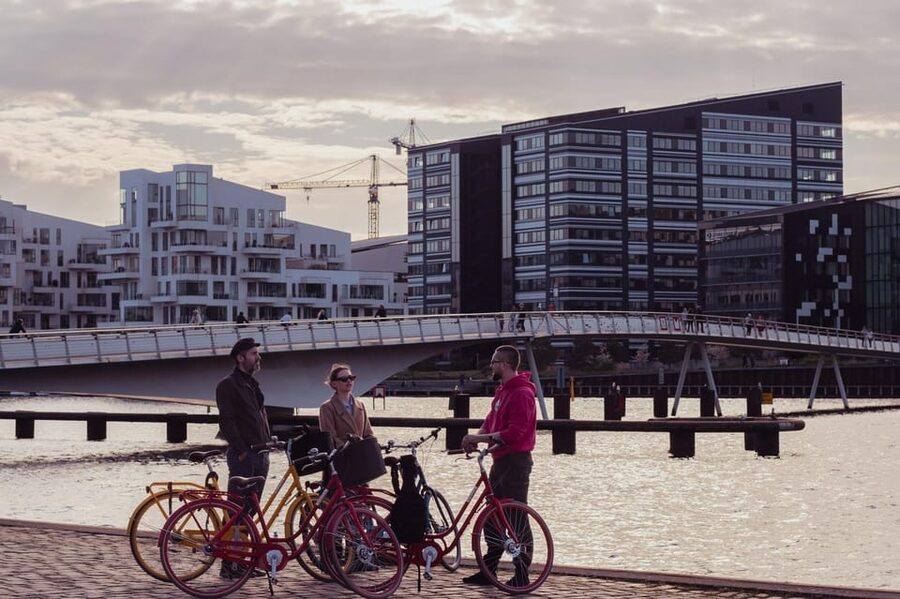
Copenhagen’s best architecture tour may be the one that keeps you moving. Over three hours and roughly 17 kilometers, you’ll pedal from old city streets to harbor projects, Ørestad’s bold new buildings, and bike routes that show how urban design shapes everyday life. I especially like the ride through places many first-time visitors skip, and the way guides such as René, Jörn, John, and Josephine connect buildings to Copenhagen’s social choices. The bikes, helmets, ponchos, and comfortable pre- and post-tour lounge also make this easy to join.
The main drawback is simple: this is a serious bike ride, not a gentle sightseeing loop. One rider reported some group-management trouble, and the tour gives far more attention to 21st-century architecture than earlier periods. If you cannot ride confidently or want only central Copenhagen landmarks, choose another outing.
What makes this Copenhagen bike tour worth your time
- 17 kilometers of city planning in motion: You see how harbor renewal, bike routes, housing, parks, and public spaces fit together.
- A useful look at modern Copenhagen: The route focuses on Blox, Ørestad, Kaktus Towers, Tietgen Residence Hall, and other recent projects.
- Local guides add the human story: René is praised for safety and clear explanations, while Jörn, John, and Josephine bring their own personal angles and humor.
- A route beyond the usual center: Amager Fælled, Islands Brygge, and Ørestad show a less familiar side of the city.
- Practical gear is covered: Bikes, helmets, rain ponchos, luggage storage, and children’s bikes by advance request are included.
- Good flexibility for a paid activity: You can cancel up to 24 hours before departure for a full refund, and reserve now while paying later.
Why Copenhagen is best understood from a bike
Copenhagen’s architecture is not only about striking shapes. It is also about how people get to work, where children play, how former industrial land is reused, and how the harbor becomes part of daily life.
A bike lets you connect those ideas in a way a bus cannot. You pass from one district to another at street level, with enough time to notice bridges, paths, courtyards, waterfront spaces, and changing building styles. The route also gives you a useful sense of distance. A building that looks close on a map can feel very different when you cycle to it.
The pace is active but not rushed. Stops usually last about five to ten minutes, giving your guide time to explain a building or public space before you ride on. That format works well for people who want more than a photo stop but do not want a full architecture lecture.
You should still arrive ready to cycle. The route covers about 17 kilometers, and the tour goes ahead in any weather. Comfortable shoes and suitable clothing matter more here than they would on a walking tour.
More architecture and design walks in Copenhagen:
- Copenhagen: Danish Architecture Center Entrance Ticket
★ 4.4 · 169 reviews - Copenhagen Architecture and Sustainability Tour with local Guide
★ 5.0 · 39 reviews - Copenhagen: Harbor Architecture Private Walking Tour
★ 4.8 · 4 reviews
Starting at Tropical Bikes near Vester Voldgade
The listed starting point is Tropical Bikes at Vester Voldgade 2A, though your exact meeting point can vary with the option you book. The shop provides bikes in 48, 51, and 56 centimeter frame sizes, plus children’s bikes with 24-inch and 26-inch frames if reserved ahead of time.
A helmet is included, as is luggage storage. You can also use the lounge before and after the ride, with toilets available. That is a small but useful advantage, especially if you are fitting the tour between hotel checkout and another activity.
Baskets and phone holders cost 49 DKK each on site. I would consider a phone holder if you plan to use your phone for directions before or after the tour, but neither is part of the base price.
Special bikes require advance booking and an extra charge. An e-bike costs 249 DKK, a cargo or tandem bike costs 449 DKK, an e-cargo bike costs 649 DKK, and a child seat costs 119 DKK. Ask for the right setup before arrival rather than assuming it will be available at the shop.
Blox, Lille Langebro, and the harbor’s public side
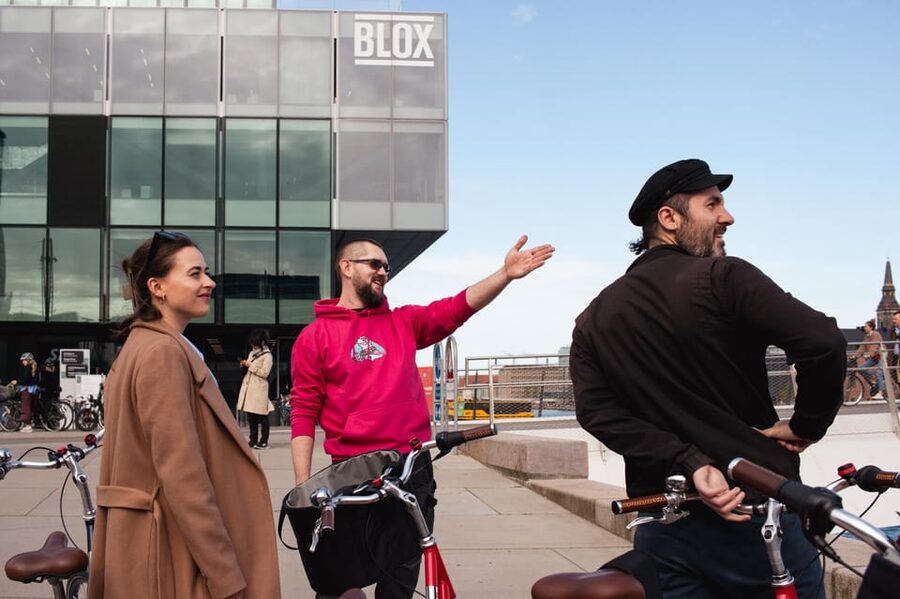
The first major stop is Blox, a contemporary center for architecture and urban development. It is a fitting place to begin because the tour is not simply about admiring buildings. It asks you to consider how architecture can affect movement, work, culture, and public life.
From Blox, you continue to Lille Langebro, a graceful bridge across the harbor. The guide has about five minutes here, so expect a concise explanation rather than a long stop. The bridge also gives you a good early lesson in the tour’s method: the city’s design is best read through connections, not isolated structures.
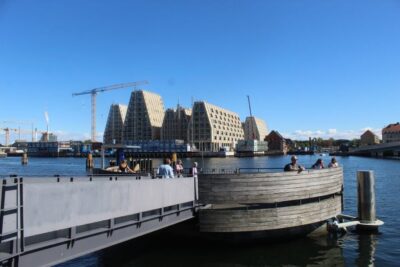
At Havnebadet Islands Brygge, the focus shifts from buildings to the water. This public harbor bath shows how the waterfront has become a place for everyday recreation rather than a closed-off industrial edge. The stop lasts about ten minutes, enough to discuss the change and look across the harbor.
This is one of the route’s most useful sections because it links architecture with civic life. You are not just looking at a new building. You are seeing how a former working waterfront can become a place people use.
Ørestad and Tietgen Residence Hall
The ride then heads toward Ørestad, where the newer Copenhagen can feel more experimental. The route includes scenic views as you travel, followed by a stop at Karen Blixens Plads. The broad public space gives the guide room to explain how modern districts are planned around buildings, open areas, and movement through the city.
Ørestad is a major reason to book this tour if you care about current architecture. It offers a clear contrast with the compact older center, and you get to see how newer construction handles housing, public space, and transport.
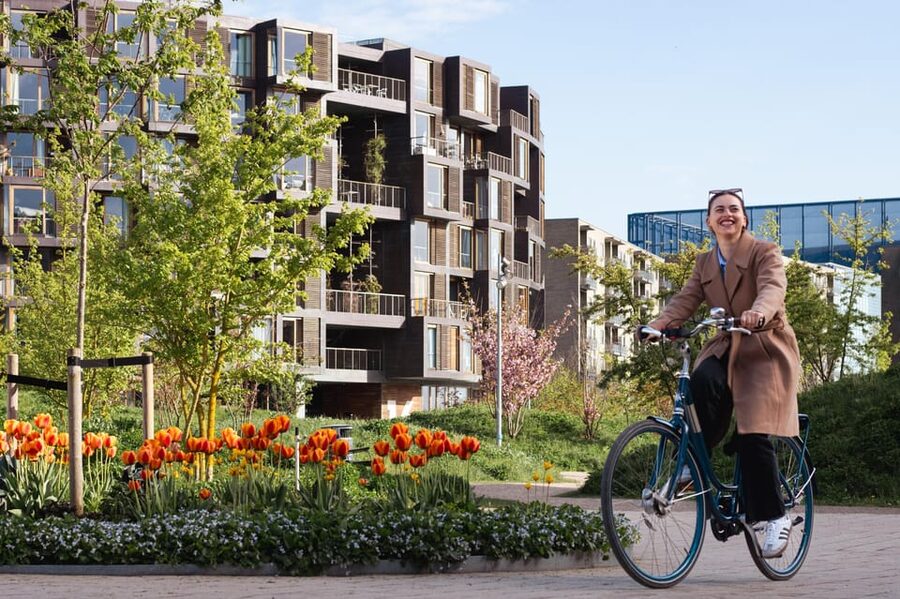
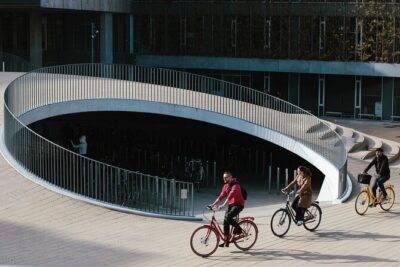
The route continues to Tietgen Residence Hall, one of the tour’s more memorable architectural stops. Its circular form makes it easy to recognize, but the useful question is how a student residence can be both practical and visually ambitious. Your guide can place the building within Copenhagen’s wider effort to create attractive, functional places for daily life.
The stop is scheduled for about ten minutes. That is enough to understand the main design ideas, though architecture fans who want detailed technical discussion may want more time. This tour gives you a broad city view rather than a specialist seminar on every building.
A few more Copenhagen half-days to weigh up
- Copenhagen: Canal Cruise with Guide
★ 4.6 · 9,115 reviews - Copenhagen: Hop-On Hop-Off Bus Tour with Boat Tour Option
★ 3.9 · 4,122 reviews - Private Walking Grand Tour of Copenhagen
★ 5.0 · 3,953 reviews - From Copenhagen: Lund and Malmö 2-Country Tour
★ 4.7 · 2,772 reviews
Amager Fælled and the Gemini Residence
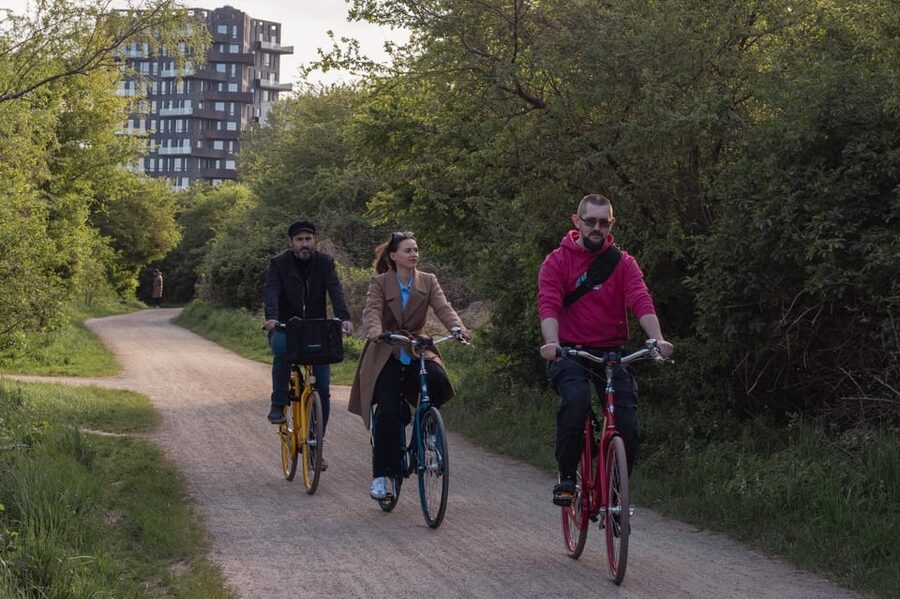
Amager Fælled changes the mood again. After the hard lines and new construction of Ørestad, this part of the route introduces open natural space within the city. The tour uses the area to show that sustainable planning is not only about energy-efficient buildings. It also concerns access to outdoor space and the balance between development and nature.
The stop lasts around ten minutes. You might find this especially helpful if you want to understand Copenhagen as a whole city rather than as a collection of design objects.
Next comes E/F Gemini Residence, a striking example of housing created through the reuse of industrial structures. The building helps explain how Copenhagen has adapted older infrastructure for new residential use. It is a practical lesson in how preservation and modern living can work together.
This is also where the tour’s attention to urban change becomes clear. You are moving through districts that have not all been designed at once. The guide shows how the city has made choices over time, with successes and tensions along the way.
Cykelslangen and Kaktus Towers
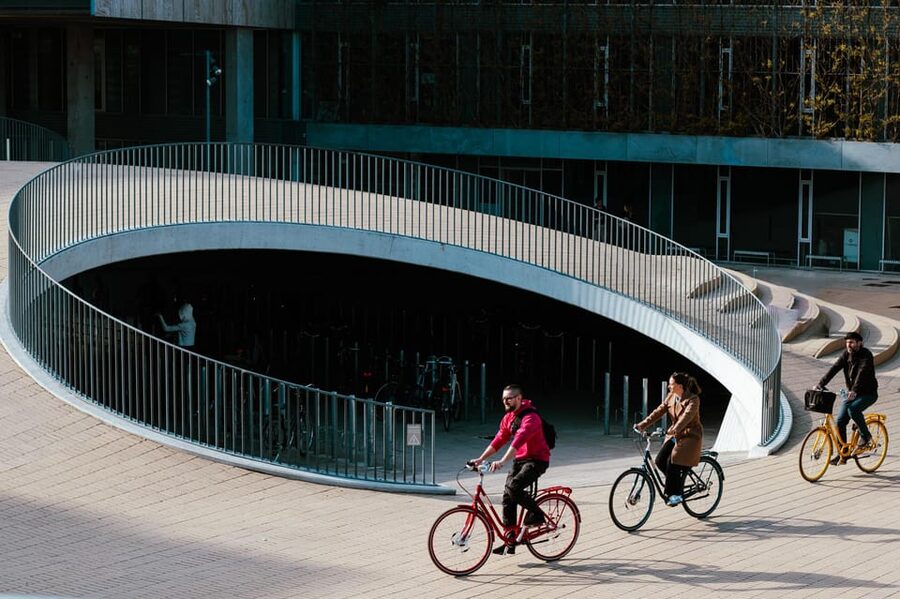
Cykelslangen is one of the ride’s most enjoyable sections because you experience the city’s cycling design directly. Rather than merely hearing that Copenhagen prioritizes bikes, you travel on a purpose-built cycling route and feel how it helps people move through busy areas.
The ride through Cykelslangen is short, listed at about five minutes, but it gives you a practical reference point. Bike infrastructure here is not just painted lines added to a road. It can be a separate piece of city design with its own shape and rhythm.
Kaktus Towers follows with another look at recent housing. The towers are hard to miss, and the guide uses them to discuss modern residential design and the changing look of Copenhagen. Expect about ten minutes at the stop.
Some architecture will appeal to you more than other architecture. That is part of the fun here. The tour gives you enough context to form your own opinion, instead of telling you that every unusual building is automatically successful.
Enghave Plads and Israels Plads
Enghave Plads brings the ride back toward a more established urban setting. Its public-space design shows how a neighborhood square can support local life while still reflecting modern environmental goals. The tour’s attention to plazas is important because sustainability is easier to understand when you see where people gather, rest, and move without needing a car.
The final listed stop is Israels Plads, where the guide continues the discussion of public space, city renewal, and Copenhagen’s older urban fabric. This is a useful closing point because it brings together several themes from the ride: heritage, new design, public use, and greener city planning.
The route finishes with drop-off options that return you to Tropical Bikes at Vester Voldgade 2A. Since the tour covers a wide area, you should allow extra time afterward before booking a timed museum entry or restaurant reservation.
What the guides add to the ride
The guide can make or break an architecture tour, and this experience has several named guides who bring different strengths. René is noted for keeping riders comfortable and safe while explaining Copenhagen’s sustainability choices. Jörn is praised for going beyond basic facts and adding personal detail. John focuses on the difficult choices the city made while changing direction.
Josephine brings architectural knowledge and humor, which can help keep a subject that sounds technical feeling relaxed. The tour is available in English or German, and a private group option is available if you want a more personal pace.
The feedback is not perfect. One rider reported that some people became separated from the group and felt that organization could have been stronger. That is worth taking seriously on a 17-kilometer ride. Stay alert at turns, keep the guide in sight, and ask about regrouping points at the start.
The overall rating is 4.8 from 73 reviews, with repeated praise for the guides’ warmth, clear explanations, and ability to make less familiar parts of Copenhagen interesting. I would give those human details real weight. Buildings are easier to remember when someone explains why they matter to local people.
Is $70 a fair price?
At $70 per person, the tour is not the cheapest way to rent a bike and wander around. But you are paying for more than three hours of bike use. The price includes a local guide, a fitted bike, helmet, rain poncho if needed, luggage storage, and access to the lounge.
The bigger value is the route and the interpretation. You could cycle to some of these places alone, but you would need to plan the route, understand the bike paths, and research why the buildings matter. The guide brings those pieces together while handling the navigation.
The value is strongest for you if modern architecture, urban planning, and sustainability are central interests. It is less compelling if you mainly want palace interiors, old churches, or the classic central sights. The route intentionally spends much of its time on newer districts and repurposed spaces.
A private group can make the price feel more worthwhile if you want to ask many questions or set a slower pace. Families should reserve children’s bikes in advance. Riders who prefer less effort can request an e-bike, but the extra 249 DKK changes the total cost.
Who should book this ride?
I would recommend it to confident cyclists, architecture fans, repeat visitors, and anyone who wants to understand why Copenhagen functions as it does. It also suits people who enjoy seeing places that are not usually first on a sightseeing list.
It may work well early in a Copenhagen stay. The ride gives you a useful map of several districts, and you can return later to the areas that catch your interest.
I would not choose it for anyone who cannot ride a bike, dislikes changing weather, or wants a slow trip with long indoor visits. The tour starts in any weather, covers substantial ground, and keeps moving between stops.
FAQ
How long is the Copenhagen architecture and sustainability tour?
The tour lasts three hours.
How far will I cycle?
You will cycle roughly 17 kilometers in total.
Which languages are available?
The live guide is available in English or German.
What type of bike is included?
Bikes are available in 48, 51, and 56 centimeter frame sizes. Children’s bikes with 24-inch and 26-inch frames can be arranged in advance.
Is a helmet included?
Yes. A helmet is included with the tour.
Can I bring luggage?
Yes. Luggage storage is included at the starting facility.
Does the tour operate in rain?
The tour starts in any weather. A rain poncho is included in case of rain, and you should wear suitable clothing and comfortable shoes.
Can I cancel for a refund?
Yes. You can cancel up to 24 hours in advance for a full refund. You can also reserve now and pay later.
Should you book it?
Book this tour if you want Copenhagen explained through bikes, buildings, and public life, not just viewed from a city-center sidewalk. The harbor baths, Ørestad, Tietgen Residence Hall, Cykelslangen, and Kaktus Towers create a strong route, and the local guides add the context that makes the ride stick.
Skip it if you want only historic sights or are not comfortable cycling 17 kilometers. For the right rider, $70 buys a practical look at how Copenhagen has tried to build a greener, more people-focused city, with enough movement and variety to keep the three hours lively.
Just added around Copenhagen
- Copenhagen Walking Tour with Food Testing (smorrebrod dish & snap)★ 4.5 · 10 reviews
- a day at North Zealand Castle Tour★ 4.5 · 19 reviews
- walking tour – Copenhagen and Christiansborg 3 hours★ 4.0 · 7 reviews
- Small Group Guided Food Tour and Street Art Visit to Norrebro★ 5.0 · 9 reviews
- The Philosopher’s Last Walk: An audio tour on the life of Søren Kierkegaard★ 4.5 · 5 reviews
- The Six Forgotten Giants Trolls Hunt with Minibus★ 4.5 · 27 reviews
- The Foodie Tour of Copenhagen★ 5.0 · 14 reviews
- The Forgotten Giants Private Tour★ 5.0 · 3 reviews
Architecture & Design Tours, compared.
Copenhagen Architecture and Sustainability Tour with local Guide
Read our review →
Browse the lists this tour appears in