
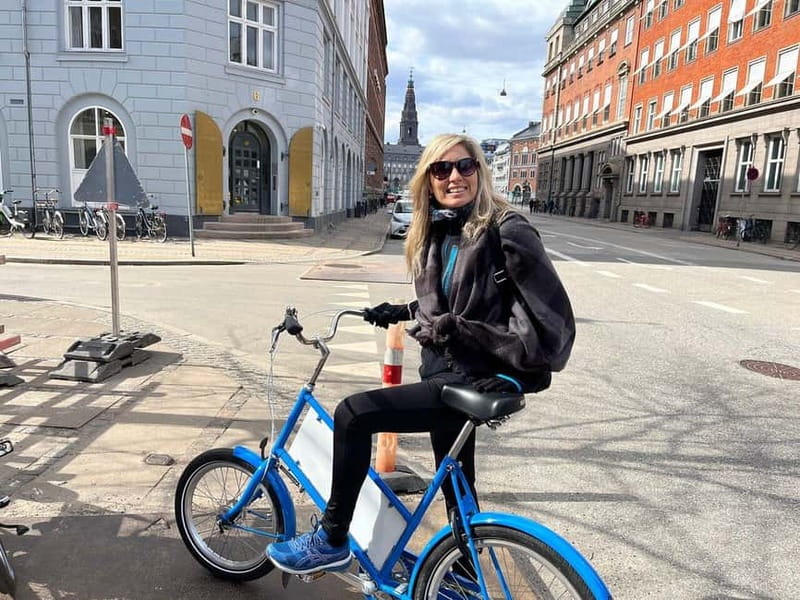
Reviewed · ARCHITECTURE & DESIGN TOURS
Urban Design and Livability E-bike Tour
Copenhagen’s best story is not locked inside a museum. It is out on the streets, where bikes, footpaths, public spaces, old buildings, and new architecture show how the city works. This three-hour e-bike ride takes you beyond the postcard center and explains why Copenhagen is known for healthy, sustainable urban living.
I like the small group, limited to 10 people, and the easy-to-ride electric bikes. I also like the subject matter: you are not simply ticking off monuments, but looking at how design affects daily life, social contact, comfort, and the Danish idea of hygge. The main caution is that this is still a real bike tour. One rider found the pace too fast and several people became separated after a technical problem, so you should be confident handling a bicycle in town.
Key points to know before you book
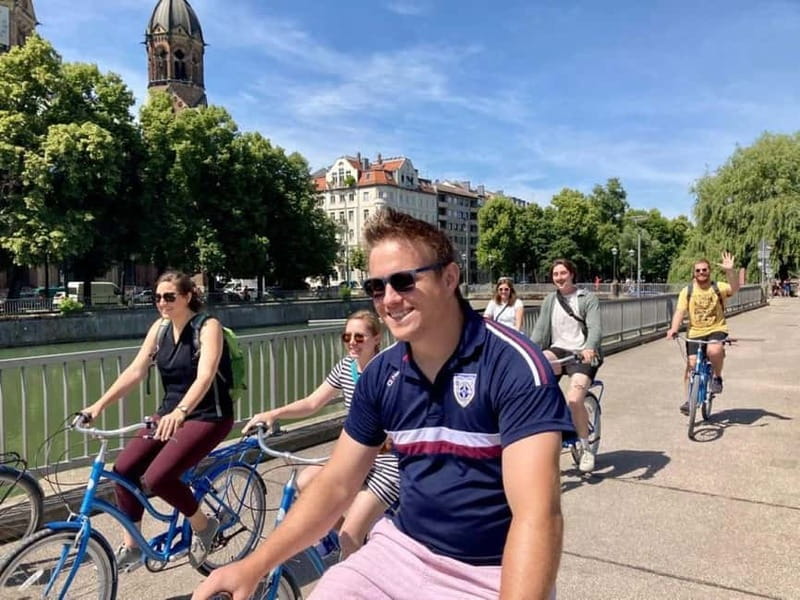
- A city-planning tour on two wheels: Learn how Copenhagen uses streets, buildings, public areas, and cycling routes to support everyday life.
- A route beyond central Copenhagen: See historic landmarks, modern developments, and places you might not reach on a standard sightseeing walk.
- Electric bikes reduce the effort: The bikes are designed to be easy to ride, though you still need basic cycling ability and awareness.
- A small group of no more than 10: This gives you a better chance to ask questions and stay involved in the guide’s explanations.
- A practical meeting point near Nyhavn: Check in inside the shop at the corner of Holbergsgade and Peder Skrams Gade.
- A few limits matter: The tour is in English, does not suit children under 10 or people over 70, and food, drinks, and venue entry fees are not included.
Why this tour looks at Copenhagen differently
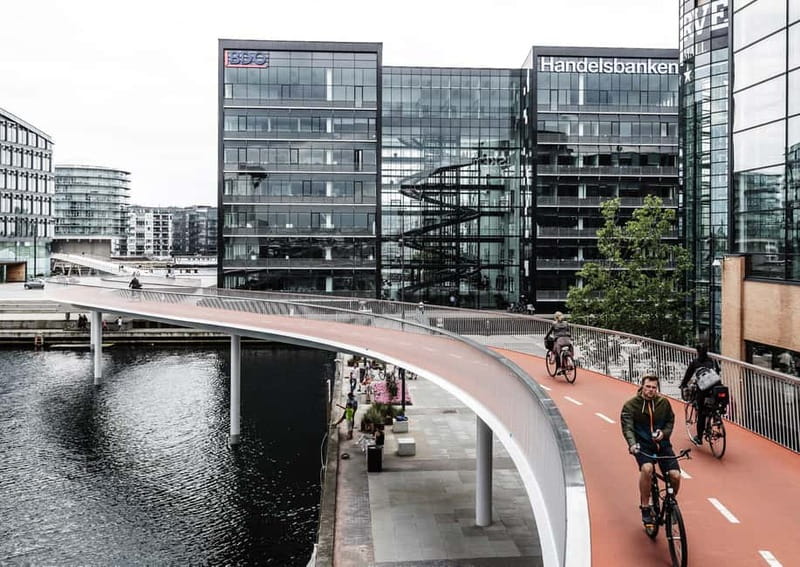
Most first-time visits to Copenhagen focus on the obvious sights in the center. That makes sense, but it can leave you with only half the story. Copenhagen’s appeal comes just as much from the way people move through the city as from its royal buildings, canals, and historic streets.
This tour uses the bicycle as a moving classroom. You will see how urban planning shapes daily habits, how public places encourage people to spend time outdoors, and how architecture can affect your sense of ease and connection. The guide’s subject is not only what a building looks like. It is what that building and its surroundings allow people to do.
You will ride through areas outside the central sightseeing zone, with the route bringing together old landmarks and newer development. The exact stops are not specified in advance, so you should think of this as a guided look at Copenhagen’s urban character rather than a fixed list of famous attractions.
That is the real value. You are learning how to read the city. A square becomes more than a place to cross. A bike lane becomes part of a wider policy. A new building becomes part of a conversation about how people live, meet, work, and relax.
More architecture and design walks in Copenhagen:
- Copenhagen: Danish Architecture Center Entrance Ticket
★ 4.4 · 169 reviews - Copenhagen: Guided Architecture and Sustainability Tour
★ 4.8 · 73 reviews - Copenhagen Architecture and Sustainability Tour with local Guide
★ 5.0 · 39 reviews
Starting near Nyhavn, then leaving the postcard center
The meeting point is inside the shop on the corner of Holbergsgade and Peder Skrams Gade, close to Nyhavn. You should arrive at least 10 minutes before departure for check-in and bike preparation.
Starting near Nyhavn is convenient if you are already sightseeing in the center. It also creates a useful contrast. Nyhavn is one of Copenhagen’s most photographed areas, while this experience quickly turns your attention toward the less familiar parts of the city.
The tour ends back at the same meeting point. That makes it easy to continue your day in central Copenhagen, return to your accommodation, or make a nearby lunch plan. Since food and drinks are not included, I would eat beforehand or carry what you need, provided the operator allows it.
Your guide leads in English. The guide is central to the experience because the route itself is only part of the lesson. A guide such as Aitik can add context through storytelling, while the quality of the explanations and the pace of the ride will shape how much you take away.
What the e-bike changes after three hours

Copenhagen is well suited to cycling, but three hours in the saddle can still feel like work. The electric bikes help reduce that strain and make it easier to cover several areas beyond the center without spending all your energy on pedaling.
You should not mistake an e-bike for an automatic ride. You still steer, brake, balance, and pay attention to other people using the streets. The bike simply makes the physical part less demanding. That is useful when your main goal is to listen, look around, and notice how the city is arranged.
Helmets are optional, and rain ponchos are supplied if the weather turns wet. Those details matter in Copenhagen, where a change in weather can affect your comfort quickly. Wear clothing you can move in and shoes suitable for cycling rather than treating this as a sit-down sightseeing trip.
The tour is not suitable for children under 10, babies under one year, or people over 70. The age rule is unusually specific, so check it carefully before booking. You also need to be able to handle the bike confidently. The electric assistance does not remove the need for basic cycling control.
Reading old landmarks and modern buildings together
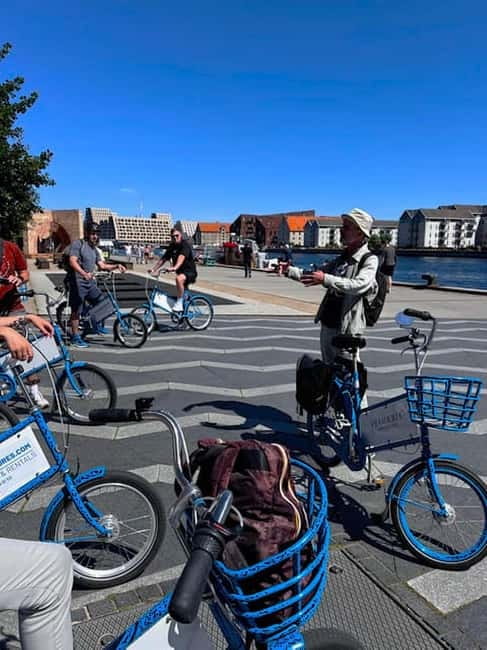
One of the tour’s strongest ideas is the pairing of old and new. Historic landmarks show how Copenhagen developed over time. Modern projects show how the city is trying to meet current needs, including movement, social contact, environmental concerns, and pleasant public space.
You will not simply pause for a photograph and move on. The guide’s explanations focus on the choices behind the built environment. You might consider why a street has been arranged in a particular way, how a public area supports activity, or how architecture affects the way people meet one another.
The tour also includes places described as lesser-known corners. Since the exact route can vary with conditions and the guide’s judgment, I would not book it expecting a precise set of named attractions. Book it if you like the idea of seeing parts of Copenhagen you might not find on your own.
That difference is important. A classic city tour gives you a reliable list of major sights. This ride gives you a framework for understanding the city. If you have already seen the main center, the approach can add far more than another circuit of familiar landmarks.
More days on two wheels in Copenhagen:
- Copenhagen: Highlights 3 Hour Bike Tour with a Local Guide
★ 4.8 · 2,312 reviews - Copenhagen: 3-Hour City Highlights Bike Tour with Guide
★ 4.7 · 1,239 reviews - Copenhagen Highlights 3 Hour Bike Tour with local Guide
★ 5.0 · 1,125 reviews - 3-hour Copenhagen City Highlights Bike Tour
★ 5.0 · 757 reviews
Copenhagen’s cycling culture in daily use
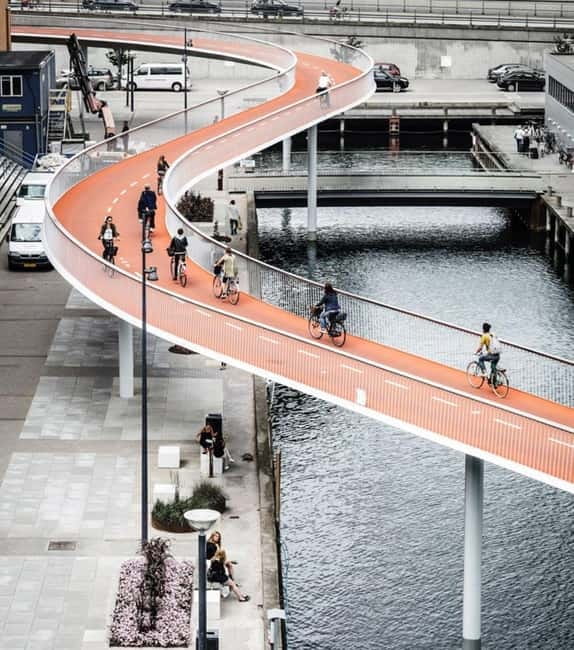
The bicycle is not a prop on this tour. It is how the experience moves, and it is also the subject. Copenhagen’s cycling culture helps explain why the city is often associated with practical, healthy, and sustainable urban living.
You will see the city from the same general level as people moving through it by bike. That can make streets and neighborhoods feel more connected than they do from a tour bus. You also become part of the city’s rhythm for a few hours, rather than only looking at it from the edge.
The ride introduces the idea that public spaces can support contact between people. Copenhagen’s urban design aims to make walking and cycling realistic parts of everyday life, not merely leisure activities. The guide connects those choices with comfort, wellbeing, and the feeling that people can easily encounter one another.
This is also where you should keep your expectations realistic. The ride includes explanations, but it is not a formal architecture seminar. The experience depends on the guide’s storytelling, the route, and how many stops are made. Ask questions. The guides are encouraged to answer them, and your questions can help steer the discussion toward the parts of city life that interest you most.
The human side of design, including hygge
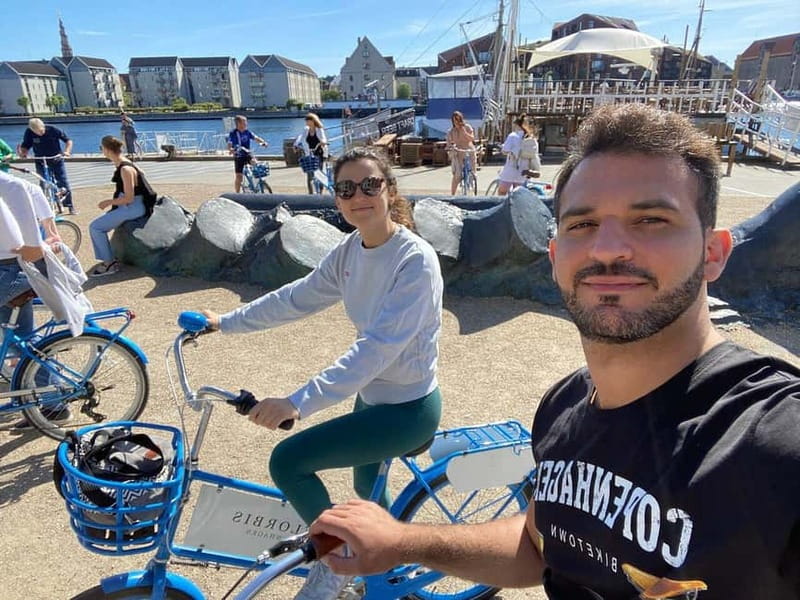
The Danish word hygge is often reduced to candles and cozy interiors. Here, it is treated as part of a wider discussion about comfort, atmosphere, and the way surroundings influence everyday contentment.
That makes the concept more useful. You will consider how a city can make it pleasant to pause, meet someone, walk, cycle, or spend time outside. The built environment is not presented as decoration alone. It becomes part of the social life of the city.
I like this focus because it gives you something to notice after the tour ends. You may start looking at benches, paths, open areas, building edges, and the relationship between private buildings and public space. Those details can tell you a great deal about a city’s priorities.
The discussion also brings Copenhagen closer to daily life. You are not only hearing about policies or design theory. You are seeing how the city’s physical form supports the habits of people who live there. That connection between planning and ordinary routines is what makes this more than a standard sightseeing ride.
Group size, guide pace, and the main practical concern
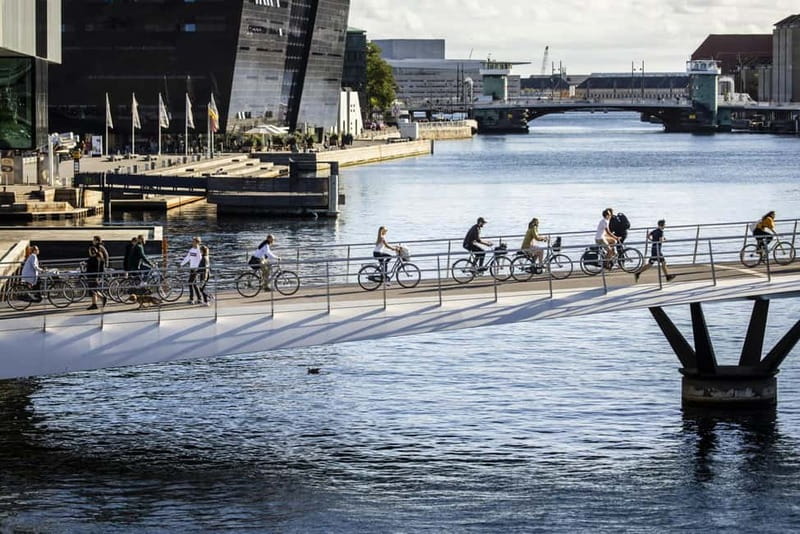
A maximum of 10 participants is a strong feature. The group is small enough for the guide to keep conversations personal, and you should have a better chance of asking questions than on a large coach or bike tour.
Small groups do not guarantee a perfect pace, though. One experience was affected by a guide, Alex, riding too quickly and not stopping often enough for photographs or time to enjoy the surroundings. A technical issue also caused more than half the group to become separated before the problem was noticed.
The operator sorted out the situation, but the lesson is clear: stay alert, keep the group in sight, and speak up if the pace feels uncomfortable. If you want long photo stops at every point, this may not be the best fit. The tour has a lot to cover in three hours, and the guide may keep things moving.
At the same time, the criticism should be balanced. A fast pace can be a guide-specific issue rather than a permanent feature of every departure. A different guide, such as Aitik, may offer a more relaxed experience with stronger storytelling. Your best approach is to arrive ready to communicate. Ask for a pause when you need one, and make sure you understand how the group will regroup if you fall behind.
Is $84 a fair price?
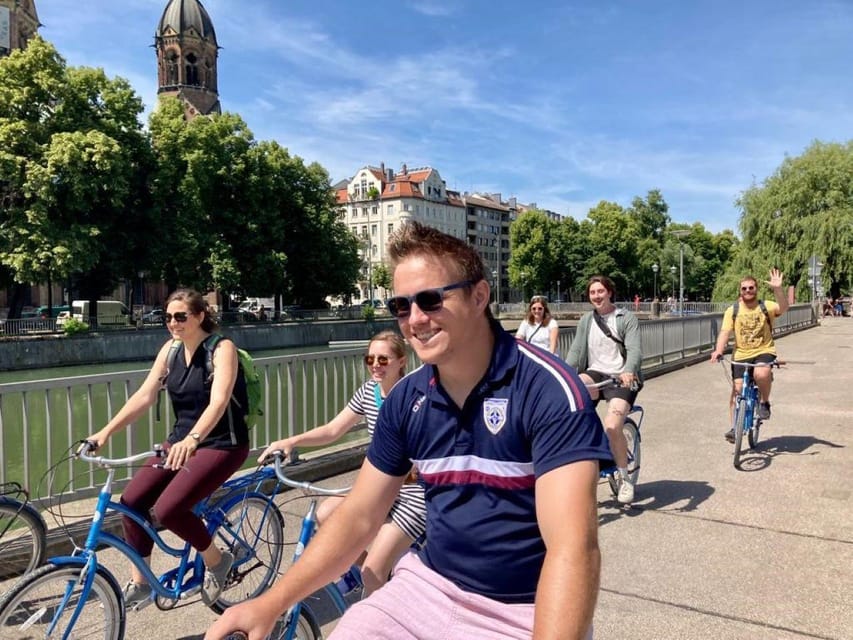
At $84 per person, this is not the cheapest way to see Copenhagen. You are paying for three hours, an electric bike, an English-speaking guide, a small group, and a theme that goes beyond the usual central highlights.
The value depends on what you want from a city tour. If your priority is a short list of famous attractions, you may find a cheaper walking tour more suitable. If you want to understand how Copenhagen functions, the price is easier to justify because the guide adds interpretation that you would not get by renting a bike alone.
The small group also matters. A 10-person limit is more personal than a large organized ride, and the e-bike lets you cover more ground than walking. Food, drinks, and entry tickets are not included, but the experience is primarily outdoors and does not appear to rely on paid admissions.
You can reserve now and pay later, which helps if your schedule is still taking shape. Free cancellation is available up to 24 hours before the start for a full refund. Check the available departure times when booking, since the duration is fixed at three hours but the starting time is not given here.
Who will enjoy this ride most?
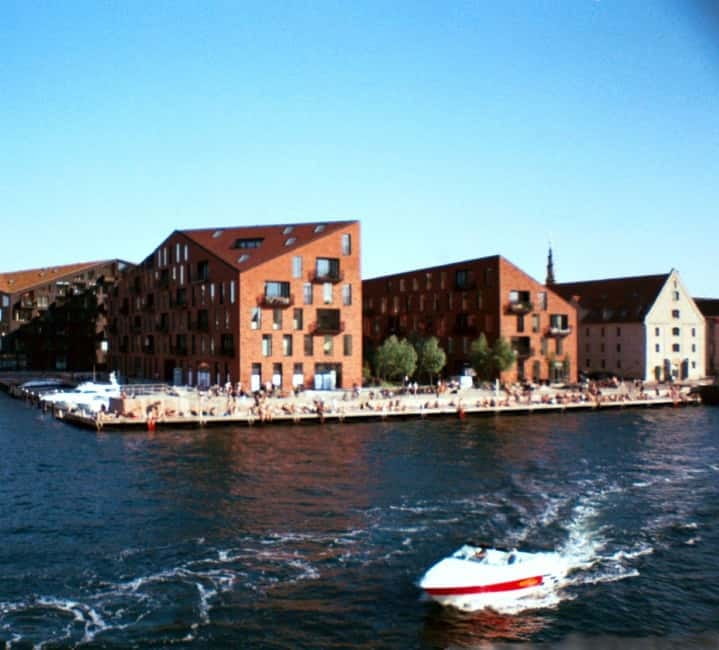
I would recommend this tour to you if you like architecture, public spaces, environmental planning, cycling culture, or the practical side of city life. It is especially useful after you have seen Copenhagen’s central sights and want a broader understanding of the city.
It also suits an active visitor who wants to cover more ground without the effort of a standard bicycle. The e-bike makes the ride more approachable, but you should still be comfortable steering and braking in an urban setting.
You may want to choose another activity if you dislike cycling, need frequent long breaks, or want a slow photo tour. The route includes movement between areas, and the available feedback shows that pace can affect the experience. The age limits also rule it out for some families and older participants.
Should you book the Urban Design and Livability E-bike Tour?
Book it if you want to see Copenhagen as a living city rather than a row of attractions. The combination of e-bike travel, small-group conversation, urban planning, architecture, cycling culture, and hygge gives you a useful way to understand why the city feels the way it does.
I especially like the chance to get beyond the center while still having a guide explain what you are seeing. The comfortable bikes and strong storytelling can make this a memorable introduction to Copenhagen’s daily life.
Go in prepared for a moving tour, not a leisurely series of long stops. Arrive early, know how to handle the bike, keep an eye on the group, and tell the guide if you need the pace adjusted. If that sounds comfortable, $84 is reasonable for three focused hours with equipment and a small group.
FAQ
How long is the Urban Design and Livability E-bike Tour?
The tour lasts three hours. Starting times vary, so you need to check availability when booking.
Where does the tour start?
It starts inside the shop on the corner of Holbergsgade and Peder Skrams Gade, near Nyhavn. Go inside the store for check-in.
Where does the tour finish?
The activity ends back at the same meeting point where it begins.
What language is the tour in?
The live tour guide speaks English.
Are e-bikes and helmets included?
Easy-to-ride e-bikes are included. Helmets are available but optional.
Is the tour suitable for children?
The tour is not suitable for children under 10 years old or babies under one year old.
What happens if it rains or I need to cancel?
Rain ponchos are provided in case of rain. You can cancel up to 24 hours before the tour for a full refund. You can also reserve now and pay later.
More E-Bike Rides Around Copenhagen
- 2 Hours Copenhagen E-Bike Guided Tours
★ 5.0 · 276 reviews - Copenhagen: Guided E-Bike Tour
★ 4.8 · 94 reviews - E-biking Central Forgotten Giants’ s Adventure
★ 4.5 · 75 reviews - Copenhagen E-Bike Rental
★ 4.7 · 35 reviews
Just added around Copenhagen
- Copenhagen Walking Tour with Food Testing (smorrebrod dish & snap)★ 4.5 · 10 reviews
- a day at North Zealand Castle Tour★ 4.5 · 19 reviews
- walking tour – Copenhagen and Christiansborg 3 hours★ 4.0 · 7 reviews
- Small Group Guided Food Tour and Street Art Visit to Norrebro★ 5.0 · 9 reviews
- The Philosopher’s Last Walk: An audio tour on the life of Søren Kierkegaard★ 4.5 · 5 reviews
- The Six Forgotten Giants Trolls Hunt with Minibus★ 4.5 · 27 reviews
- The Foodie Tour of Copenhagen★ 5.0 · 14 reviews
- The Forgotten Giants Private Tour★ 5.0 · 3 reviews
Architecture & Design Tours, compared.

Copenhagen Architecture and Sustainability Tour with local Guide
Read our review →
Browse the lists this tour appears in