
Reviewed · ARCHITECTURE & DESIGN TOURS
Copenhagen Architecture and Sustainability Tour with local Guide
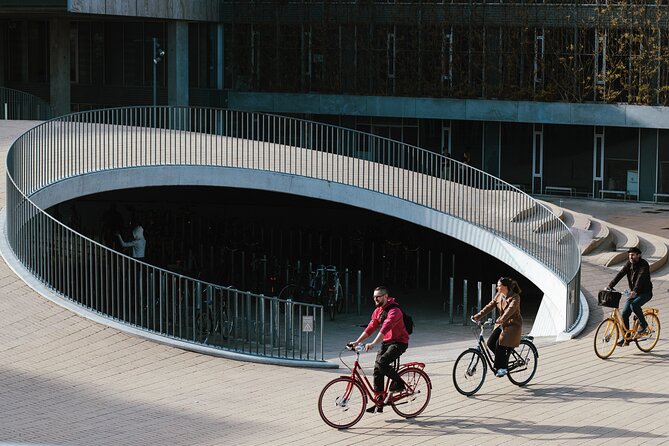
Copenhagen’s best story is not locked inside a museum. You see it on this three-hour architecture and sustainability bike tour, as former harbor edges become public spaces, old defenses turn into parks, and bridges give cyclists their own routes. The ride covers about 11 kilometers between stops, so you get a broad look at the city without spending the day on foot.
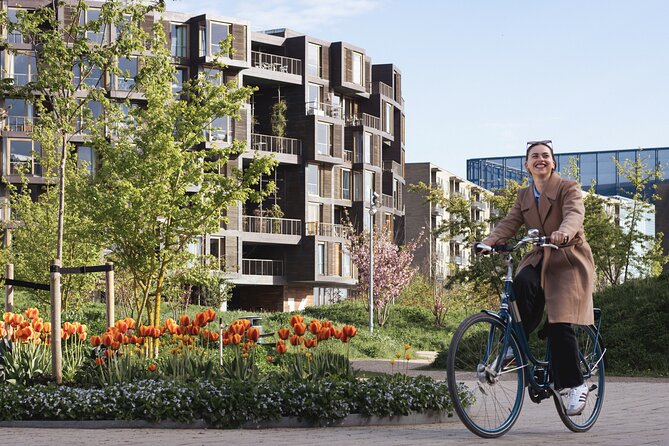
I like the way the tour links design with daily life. The Tietgen Residence Hall is not just a striking round building, it is an experiment in shared living. Enghave Park is not simply a pleasant green space, it also helps manage heavy rain. I also like the small group, capped at 15, and the chance to ride with guides such as Jörn and Julia, who explain recent city development in clear, practical terms.
The main drawback is that this is still a cycling tour, not a slow architecture walk. You spend about an hour and five minutes riding between locations, and busy summer areas around the harbor can feel crowded. You need moderate fitness, confidence on a bicycle, and a willingness to keep moving.
Key points before you book
- About 11 kilometers of riding connects 13 stops, making this a smart way to cover several parts of Copenhagen in one morning or afternoon.
- The focus is modern Copenhagen, with attention to harbor renewal, social housing, storm-water control, cycling routes, and reused industrial spaces.
- The group is limited to 15 people, so you should have a better chance of hearing the guide than on a large city ride.
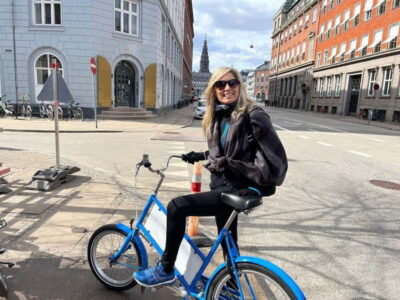
- Bikes are included, and children’s bikes are available in different sizes by prior request. Helmets are free when requested.
- The ride starts and ends at Vester Voldgade 2, close to public transportation, with toilets available at the bike shop.
- The tour suits active visitors, but rain can cancel the outing, and add-ons such as e-bikes, baskets, phone holders, and child seats cost extra.
Why this ride reveals a newer Copenhagen
Many city tours concentrate on old streets, royal buildings, and postcard views. This one takes a different route. You see Copenhagen as a city still being reshaped, especially around its harbor and former industrial zones.
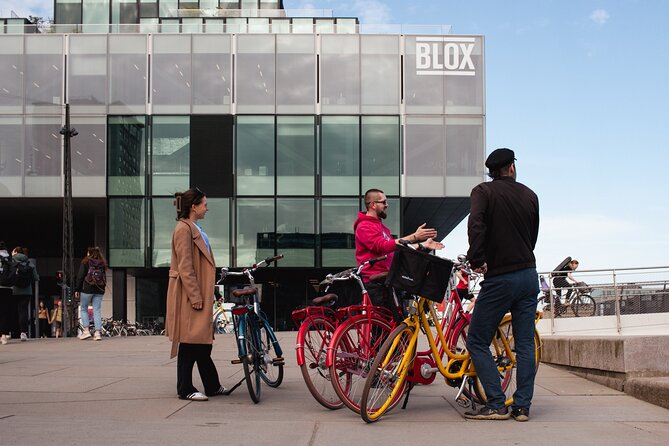
The guide’s job is important here. A building like Blox can look like a large modern block unless someone explains its technical and social goals. A bridge can seem like a convenient crossing unless you understand how it changes who gets access to the water.
The strongest part of the experience is the connection between each place. Cycling lets you watch the city change as you move from the historic center toward the harbor, university buildings, residential projects, open nature, and Vesterbro’s former meat district.
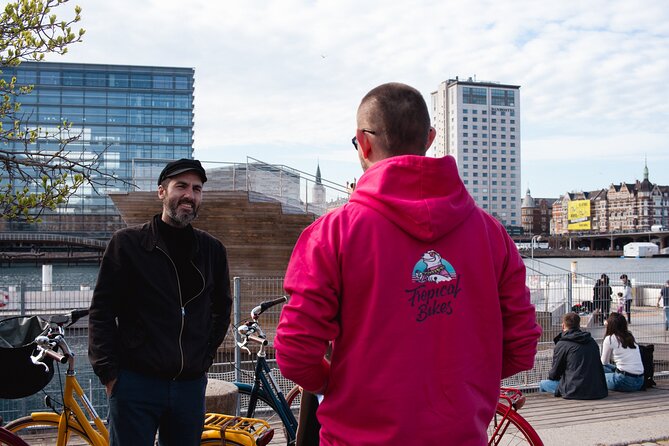
Guides including Jörn and Julia have been praised for making recent city development understandable and keeping the tour moving at a good pace. Do not expect a long lecture at each stop. Most visits last about 5 to 15 minutes, followed by the next ride.
More architecture and design walks in Copenhagen:
- Copenhagen: Danish Architecture Center Entrance Ticket
★ 4.4 · 169 reviews - Copenhagen: Guided Architecture and Sustainability Tour
★ 4.8 · 73 reviews - Copenhagen: Harbor Architecture Private Walking Tour
★ 4.8 · 4 reviews
Blox and Lille Langebro: architecture beside the harbor
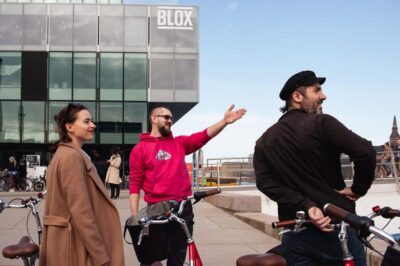
The tour begins at Blox, a mixed-use building developed with technical and social sustainability in mind. Its most prominent tenant is the Danish Architecture Center, which presents exhibitions about Copenhagen architecture.
You have about 10 minutes here, so the stop is mainly an introduction rather than a full museum visit. If you want to see a current exhibition, check what is showing before you book. Admission to the tour stop is free, but the schedule does not promise time for a full exhibition visit.
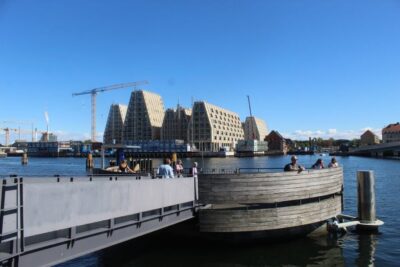
Next comes Lille Langebro, a bridge for pedestrians and cyclists. It is part of a larger effort to turn Copenhagen’s old merchant and naval harbor into a place for everyday recreation.
This is one of the more useful stops for understanding the city’s priorities. The bridge is not only about getting from one side to the other. It gives non-motorized traffic a direct connection and helps make the waterfront easier to reach.
The harbor can be especially crowded in summer, particularly around the first stops. You may enjoy the views, but this is also where you need to pay the most attention to other bikes, walkers, and general city traffic.
Islands Brygge and Tietgen Residence Hall
At Havnebadet Islands Brygge, you see one of the clearest signs of Copenhagen’s changing relationship with its water. The harbor bath opened in 2003 and marked a major shift from treating the harbor mainly as a working zone to treating it as a place for public recreation.
The stop lasts about 10 minutes. You may not have time for swimming, and swimming is not listed as part of the experience, so think of this as an urban design lesson rather than a water activity.
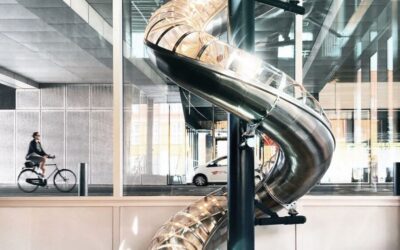
The ride then moves to Tietgen Residence Hall, one of the tour’s most memorable buildings. It houses about 400 people and is designed around a balance between private rooms and shared life.
The individual rooms are small and include a washroom. Kitchens, living rooms, and other facilities are shared by some or all residents. That arrangement makes the building a useful example of social sustainability, where the question is not only how much energy a building uses, but also how it supports community.
This is a good stop for anyone interested in student housing, compact living, or the way architecture shapes human contact. It also gives you a practical counterpoint to showpiece buildings. Sustainability here is built into the way people live, not just into the materials or mechanical systems.
DR Koncerthuset and Amager Fælled
DR Koncerthuset adds a cultural note to the route. Its main concert hall seats 1,800 people and serves as a home for the Royal Symphony Orchestra. Smaller stages and recording studios are also part of the complex.
You spend about 10 minutes here. The tour does not include a concert, so the value is in seeing how a large cultural building fits into the city’s modern development.
The next stop, Amager Fælled, changes the mood. This open area once served as military training grounds and a shooting range from the 1700s until the 1950s. It was later used as a garbage dump, a history reflected in the old local joke about Amager as shit island.
Today, Amager Fælled is a relatively untouched piece of nature within Copenhagen, much of it on land reclaimed artificially. That contrast makes it a useful stop: the area is neither untouched wilderness nor a traditional formal park.
You have about 15 minutes here, the longest stop on the route. It is a welcome pause after several buildings and bridges. Keep in mind that this is an outdoor stop, so your comfort will depend on the weather and the condition of the day.
A few more Copenhagen half-days to weigh up
- Copenhagen: Canal Cruise with Guide
★ 4.6 · 9,115 reviews - Copenhagen: Hop-On Hop-Off Bus Tour with Boat Tour Option
★ 3.9 · 4,122 reviews - Private Walking Grand Tour of Copenhagen
★ 5.0 · 3,953 reviews - From Copenhagen: Lund and Malmö 2-Country Tour
★ 4.7 · 2,772 reviews
Cykelslangen and the city built for bikes
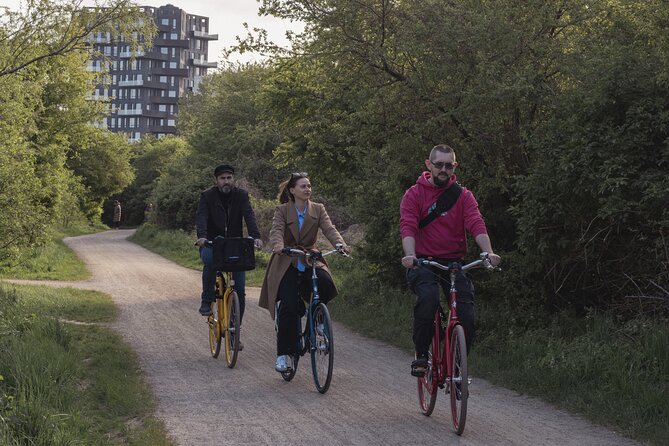
Cykelslangen, or the Bicycle Snake, is one of the clearest reasons to take this tour by bike rather than on foot. Together with Bryggebroen, it was among the first new harbor crossings built exclusively for cyclists.
The raised route gives cyclists a direct connection without forcing them to mix with cars. It also shows how Copenhagen’s cycling culture depends on infrastructure, not simply on people owning bicycles.
The ride itself is part of the lesson. You are not just hearing about bike-friendly planning. You are using it to reach places that would take much longer on foot. The guide helps you move through the city, but you should still be comfortable starting, stopping, and riding in an urban setting.
Bikes are included, and free helmets are available on request. Phone holders and baskets are not included, each costs 49 DKK. If you want an e-bike, the upgrade costs 249 DKK. Cargo bikes, tandem bikes, e-cargo bikes, and child seats are also available for additional fees, with advance reservation required.
Enghave Park and the rain problem
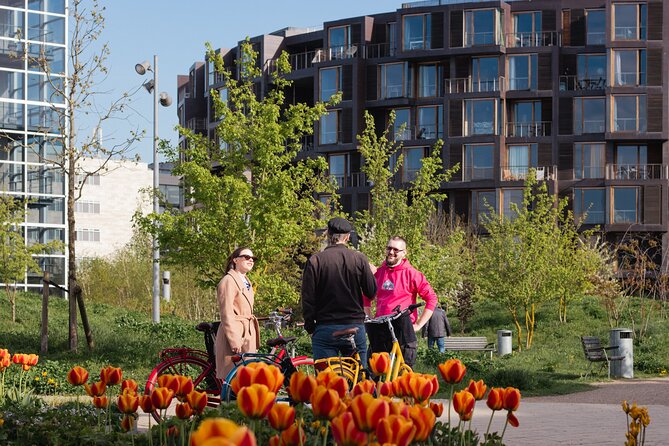
Enghave Park was created in the late 1920s on the site of former allotment gardens. Its original design followed a neoclassical plan, with a bandstand, playground, and sports fields.
Between 2017 and 2019, the park received a major redesign. Its newer purpose is especially practical: helping Copenhagen handle torrential rain.
This stop shows how climate planning can be added to a familiar public park without removing its everyday uses. You still have a place for sports and leisure, but the park also plays a role in controlling storm water.
I find this one of the tour’s most useful examples because it moves sustainability away from abstract promises. You can look at a public space and ask what it does during a cloudburst, not only how it looks on a sunny day.
The stop lasts about 10 minutes. If you want a detailed technical explanation, ask the guide specific questions about the water-control design. The schedule gives only a short time here.
Absalon and the Meatpacking District
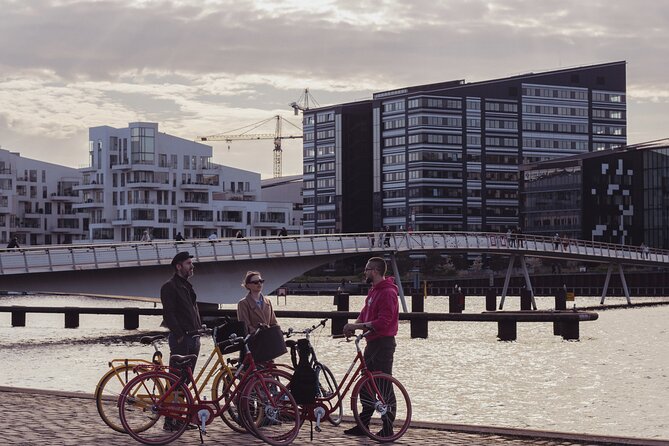
Folkehuset Absalon occupies a former church that has been converted into a privately run community center. It is a compact stop, around five minutes, but it adds another idea to the tour: old buildings can gain new public uses without being demolished.
The exact experience here depends on the timing of the ride and what is happening at the center. The tour does not promise a meal, event, or extended visit. You see the building as part of the city’s ongoing reuse of existing spaces.
The route then reaches Copenhagen’s Meatpacking District, known locally as Kødbyen. The city planned the district to create cleaner and healthier conditions for the meat trade as Copenhagen grew.
The area expanded through several additions and now shows how industrial architecture changed during the 19th and 20th centuries. It is a good place to think about the less glamorous side of city planning: sanitation, food production, work, and the need to move industrial businesses as urban populations increased.
You have about 10 minutes here. The district’s present-day character is only part of the story. The guide helps connect the surviving buildings to the practical reasons the area was created in the first place.
Israel’s Square and Ørstedsparken
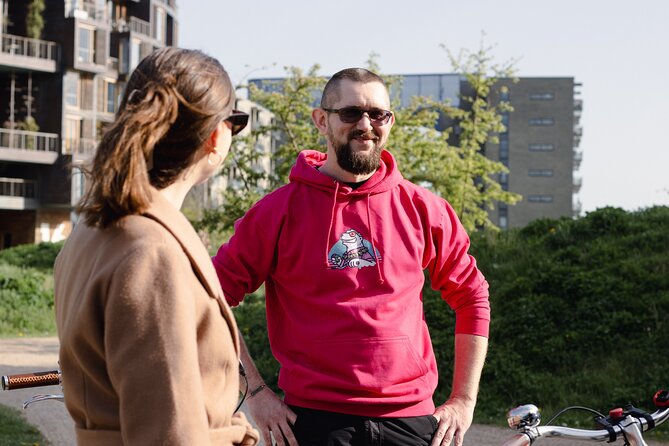
At Israel’s Square, the tour reaches a lively food and meeting area beside Torvehallerne. The square once hosted a farmer’s market, from the end of the walled city’s strict building restrictions in the 1890s until the 1950s.
Later, the entire area became a large parking lot. Its return as a public square shows how urban priorities can change again, from storing cars to creating a place for people and food.
The stop lasts about 10 minutes. Torvehallerne is nearby, but buying food is not listed as part of the tour, and the schedule may not allow time for a proper market visit. If you want to explore the food halls at leisure, save that for another time.
The final listed stop is Ørstedsparken, an early example of urban reuse. It was once part of Copenhagen’s defenses outside the city walls. After the walls were removed, the area became a park, retaining pieces of the old moat as a lake.
Its hills and winding paths differ from the formal lines of Enghave Park. You see how a defensive structure can become public recreation, with traces of the past still shaping the park’s form.
Is $72.57 a fair price?
At $72.57 per person, this is not the cheapest way to rent a bike in Copenhagen. You are paying for more than the bicycle, though. The price includes the bike, a local guide, a planned route, and explanations at 13 stops.
The value is strongest if you have limited time or want context for modern Copenhagen. Covering this route independently would require route planning, a suitable bike, and research into buildings that are easy to pass without understanding.
The value is weaker if you mainly want a relaxed ride with no fixed schedule. The tour covers a lot of ground, and the one-hour-five-minute total riding time leaves less room for long photo stops or spontaneous detours.
A small group of 15 is a fair middle ground. You get the efficiency of a group activity without the scale of a coach tour. The free helmet is useful, but remember that baskets, phone holders, and upgraded bikes cost extra.
Who should book this Copenhagen bike tour?
I would choose this ride if you have already seen the central sights, or if you want your first Copenhagen activity to explain how the city works today. It suits visitors interested in architecture, urban planning, cycling, public spaces, climate adaptation, and social housing.
It also works well for a short visit. The route reaches several districts in three hours, and the start and finish at Vester Voldgade 2 make it easy to fit into a wider day.
You should reconsider if you dislike cycling, have low fitness, or want an indoor activity. The tour needs good weather, and poor conditions can lead to a new date or a full refund. Children’s bikes are available in different sizes, but you need to contact the provider about availability.
Free cancellation is available up to 24 hours before the start. Changes or cancellations inside that window are not refunded, unless the provider cancels because of weather or too few bookings.
Should you book it?
Book this tour if you want to understand why Copenhagen looks and functions as it does, not just photograph its old center. The best stops are the ones where public policy becomes visible: the harbor bath, Cykelslangen, Tietgen Residence Hall, and Enghave Park.
Skip it if you want a slow, traditional sightseeing ride or if crowded harbor paths would frustrate you. For an active visitor with three hours to spare, the combination of cycling, modern architecture, and practical sustainability gives you a useful view of Copenhagen that a standard old-town tour will not.
FAQ
How long is the Copenhagen architecture and sustainability tour?
The tour lasts about three hours, including roughly one hour and five minutes of cycling between stops.
How far do you cycle?
You cycle approximately 11 kilometers between the stops.
How many people can join the tour?
The group has a maximum of 15 people.
Are bicycles and helmets included?
A bicycle is included. Free bike helmets are available upon request.
Can children join the bike tour?
Children’s bikes in different sizes are available, but you need to contact the provider to check availability.
What happens if the weather is poor?
The experience requires good weather. If it is canceled because of poor weather, you can choose a different date or receive a full refund.
Just added around Copenhagen
- Copenhagen Walking Tour with Food Testing (smorrebrod dish & snap)★ 4.5 · 10 reviews
- a day at North Zealand Castle Tour★ 4.5 · 19 reviews
- walking tour – Copenhagen and Christiansborg 3 hours★ 4.0 · 7 reviews
- Small Group Guided Food Tour and Street Art Visit to Norrebro★ 5.0 · 9 reviews
- The Philosopher’s Last Walk: An audio tour on the life of Søren Kierkegaard★ 4.5 · 5 reviews
- The Six Forgotten Giants Trolls Hunt with Minibus★ 4.5 · 27 reviews
- The Foodie Tour of Copenhagen★ 5.0 · 14 reviews
- The Forgotten Giants Private Tour★ 5.0 · 3 reviews
Architecture & Design Tours, compared.
Browse the lists this tour appears in