
Reviewed · ARCHITECTURE & DESIGN TOURS
Copenhagen: Harbor Architecture Private Walking Tour
Copenhagen’s harbor is a living design lesson. In two hours, this private walk links colorful Nyhavn with modern waterfront buildings, Cirkelbroen, the Royal Library, and the Danish Architecture Centre. It also helps explain why Copenhagen was named World Capital of Architecture in 2023.
I like the personal format, especially for a subject that can feel dry in a large group. I also like the route’s mix of old port character and newer projects, with good photo stops along the water. The main drawback is the price: at $394 for up to two people, this makes the most sense for a pair who cares deeply about architecture and wants a private guide.
Key points
- See old and new Copenhagen together: The route moves from 17th-century Nyhavn to new harbor projects.
- Private guiding for up to two people: You can ask questions and set the pace more easily than on a large group walk.
- A strong waterfront route: Ofelia Plads, Krøyers Plads, Cirkelbroen, the Royal Library, and the Danish Architecture Centre all connect the city to the water.
- The guide adds context: English and Spanish tours are available, and Dalit has led the experience with notable enthusiasm.
- Two hours keeps it focused: You get a useful introduction without giving up half a day.
- Plan for the weather: The tour runs rain or shine and is not suitable for wheelchair users or people with mobility impairments.
Why Copenhagen’s harbor is the right place for an architecture walk
Copenhagen’s waterfront gives you a clear view of how a city can reuse its old working edges. The harbor is not just a line of water with attractive buildings. It brings together former port areas, public squares, bridges, cultural buildings, and new neighborhoods.
That makes this route more useful than a simple photo walk. Your guide can explain how the city’s older port identity sits beside modern design, and you can see the changes from one stop to the next instead of viewing isolated buildings across town.
The tour is also a good introduction to Copenhagen’s architectural reputation. The World Capital of Architecture title is easier to understand when you are looking at public spaces such as Ofelia Plads and Cirkelbroen, then comparing them with landmarks such as Operaen and the Royal Library.
You should expect a walking tour, not an interior architecture class. The supplied route describes guided stops and a photo stop, but it does not include admissions, meals, or a visit inside every building. The value is in the route, the guide’s explanation, and the chance to ask questions as you go.
More architecture and design walks in Copenhagen:
- Copenhagen: Danish Architecture Center Entrance Ticket
★ 4.4 · 169 reviews - Copenhagen: Guided Architecture and Sustainability Tour
★ 4.8 · 73 reviews - Copenhagen Architecture and Sustainability Tour with local Guide
★ 5.0 · 39 reviews
Starting at Ofelia Plads beside Nyhavn
The meeting point is in front of the Scandic Hotel on Ofelia Plads, at Sankt Annæ Plads 21. This is a practical starting point because you are already close to Nyhavn, one of Copenhagen’s best-known waterfront districts.
Ofelia Plads gives the tour an immediate architectural subject. It is an open harbor-side setting, so you can begin by looking at the relationship between public space, water, and the surrounding buildings. Your guide will set the tone for the walk here and explain what to notice as the route continues.
The start is also convenient for anyone already sightseeing around the central harbor. Hotel pickup is not included, so you need to reach the meeting point yourself. Since the end point is at Islands Brygge 4, this is a one-way walk rather than a loop back to the hotel.
Bring water and wear comfortable clothes. The walk lasts two hours, and the route includes several waterfront areas where wind or rain may make the conditions feel cooler than expected.
Nyhavn: colorful houses and a working-port past
Nyhavn is the most familiar stop, but the guide gives you a reason to look beyond the colorful façades. This 17th-century waterfront district began as a port area, and its canals and buildings reflect Copenhagen’s long connection with shipping and trade.
You will hear about the artists and writers who lived here, along with the district’s earlier role as a working harbor. That background matters because Nyhavn can otherwise feel like a postcard strip of restaurants and bright houses. The tour places the attractive frontage inside a bigger story about the city’s development.
The guided portion here lasts about 15 minutes. That is enough time for an introduction and photographs, but not a long historical lecture. If you want extended time for restaurant browsing or your own pictures, plan to return later.
Nyhavn is also a useful comparison point. Its appeal comes from older buildings and a traditional harbor form. Later stops show how Copenhagen has handled new construction, public access, and cultural buildings along the same water system.
Krøyers Plads and the changing waterfront
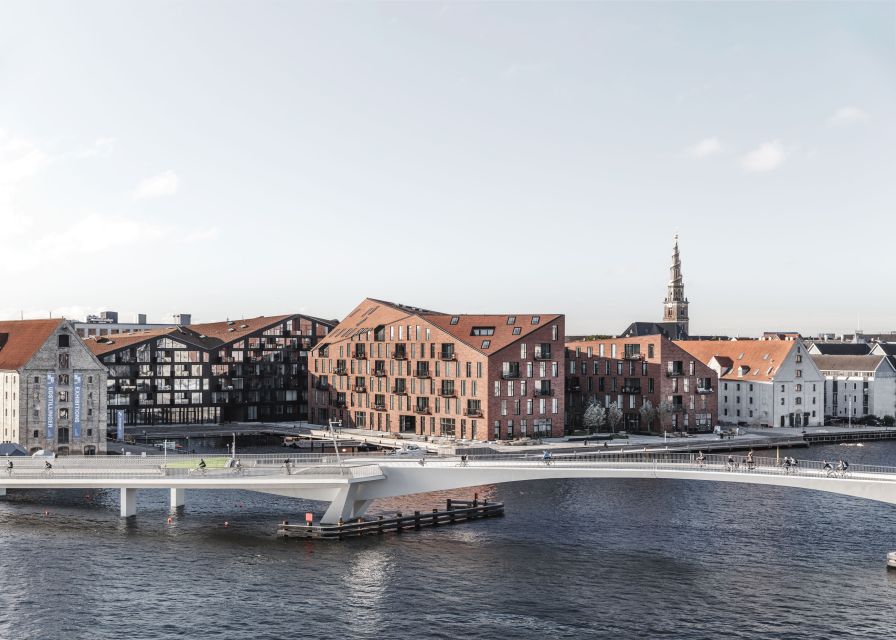
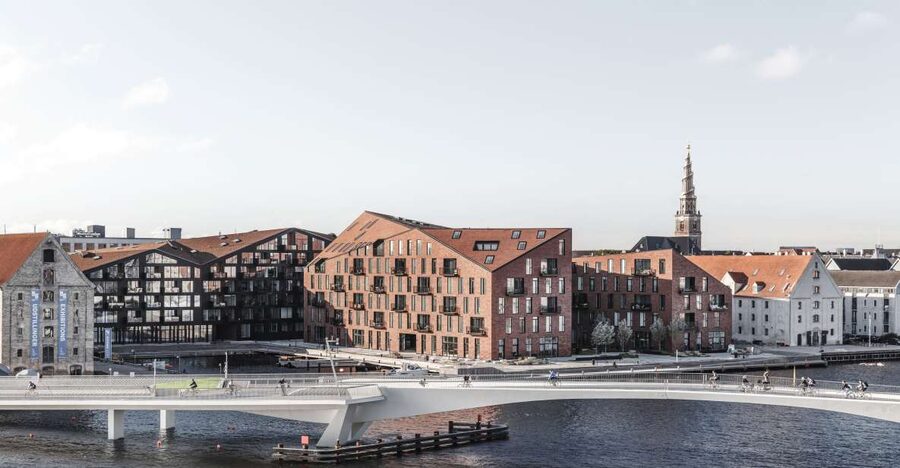
The route continues to Krøyers Plads, another place where the old harbor and newer design meet. The stop is scheduled for about 15 minutes, giving your guide time to discuss the area and point out the architectural choices around the waterfront.
This is where the private format becomes especially helpful. You can ask why the buildings look the way they do, how the public areas relate to the water, and what has changed as the harbor has shifted from an industrial working zone toward public and cultural use.
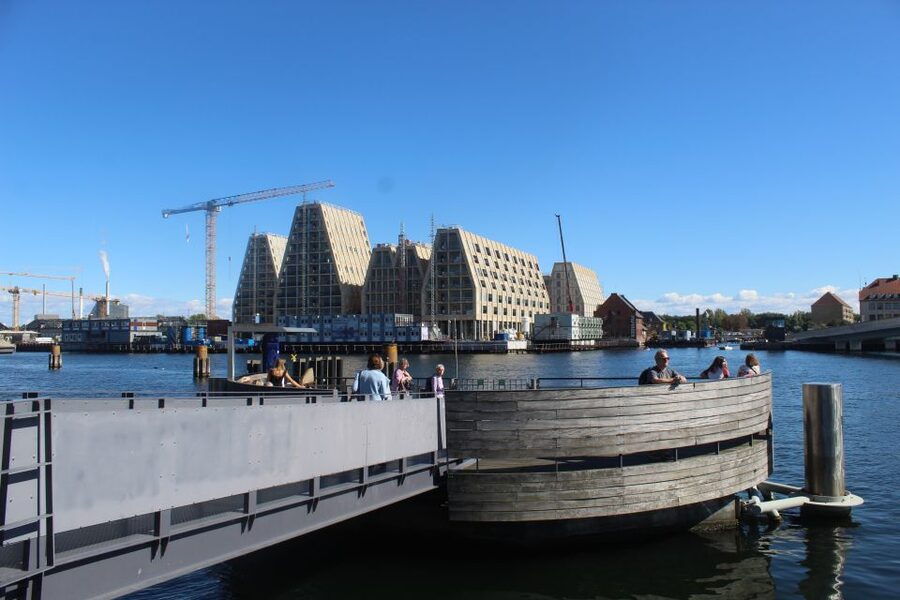
The tour description also highlights Papiroen, a former paper mill area transformed into a new neighborhood and public gathering place. Its design keeps a link to the site’s industrial past while adding a modern urban setting and harbor views. Depending on the exact path and timing, your guide can connect this area to the wider story of redevelopment.
Do not expect every part of the harbor to feel old or polished. That contrast is part of the point. Copenhagen’s waterfront is still a place where different periods of construction sit side by side, and the guide helps you read those changes.
More walking tours in Copenhagen:
- Private Walking Grand Tour of Copenhagen
★ 5.0 · 3,953 reviews - Copenhagen Highlights Walking Tour
★ 5.0 · 2,324 reviews - Politically Incorrect Private Highlights Walking Tour
★ 5.0 · 1,244 reviews - Copenhagen: Group Walking Tour – City Highlights – 2 Hours
★ 4.7 · 1,088 reviews
Cirkelbroen: a bridge designed for people
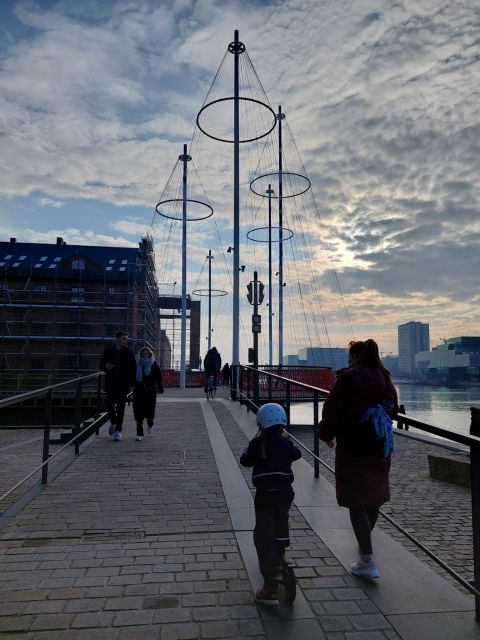
Cirkelbroen is one of the route’s most distinctive stops. This pedestrian bridge uses a circular design inspired by the circles of life. Its purpose is practical, connecting the two sides of the harbor, but the design also turns a short crossing into an architectural experience.
I like this stop because it shows how a bridge can do more than carry people from one bank to another. Its shape changes the way you move through the space, and its location gives you another view of the harbor and nearby buildings.
The route allows about 15 minutes here. That should give you time to cross, take photographs, and listen to the guide’s explanation. If you enjoy design details, this is a good place to ask about the difference between a structure that is merely functional and one that shapes public space.
The bridge can also be one of the more exposed parts of the walk. On a rainy or windy day, you will appreciate a jacket and shoes with a secure grip. The tour operates in all weather, so check the forecast before setting out.
The Royal Library and the view across the water
The Royal Library is listed as a photo stop, with about 15 minutes allocated here. It gives the route a strong cultural landmark and another chance to compare older civic traditions with Copenhagen’s more recent waterfront design.
Because this is a photo stop rather than a listed interior visit, plan to see the building from the outside. Your guide can still help you place it within the city’s architectural story and explain how this part of the harbor connects cultural institutions with public waterfront space.
This is a good point in the walk to pause and take stock of the route. You have moved from Nyhavn’s old port character through newer public areas and across a purpose-built pedestrian bridge. The Royal Library adds a different kind of presence, one tied to learning and national culture rather than restaurants, markets, or transport.
Keep your camera ready, but do not let photographs take over. The point of a guided architecture walk is learning what to look for, not simply collecting façades.
The Danish Architecture Centre at Islands Brygge
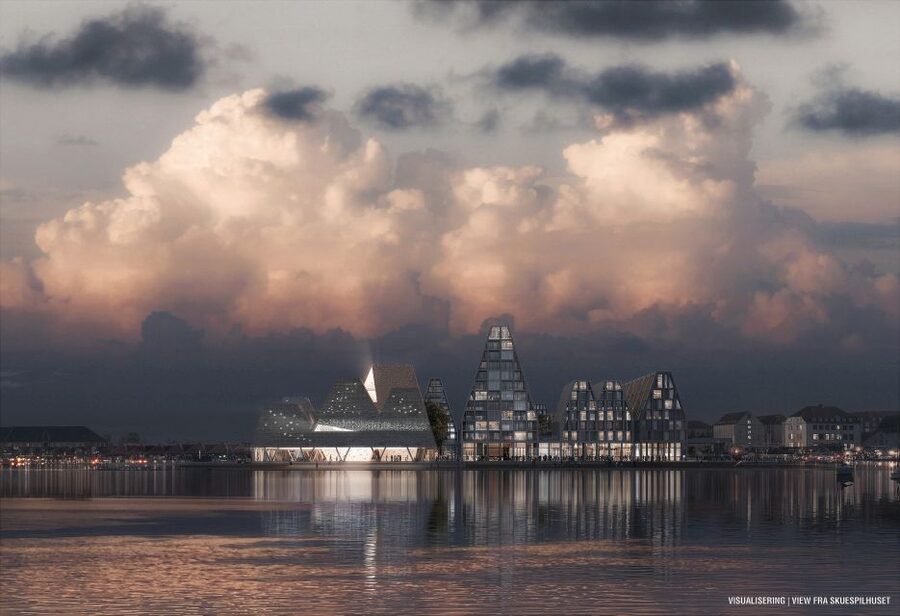
The tour finishes at the Danish Architecture Centre, at Islands Brygge 4. This is a fitting endpoint because the center gives the route a direct link to the subject you have been exploring.
The final guided stop lasts about 15 minutes. The available information does not say that admission is included or that you enter the center, so treat this as an exterior or meeting-area stop unless your guide confirms otherwise. Food, drinks, and hotel transportation are not included.
Ending at Islands Brygge also means you finish in a different part of Copenhagen from where you began. That is useful if you plan to continue exploring the harbor, but less convenient if you want to return immediately to Nyhavn. Ask your guide for directions at the end if you are unfamiliar with the area.
The route description also calls attention to Operaen, Copenhagen’s modern waterfront opera house. Completed in 2005, it has a distinctive design shaped by its harbor setting and Denmark’s cultural identity. Even if the walk does not give Operaen a separate scheduled stop, the building is part of the architectural story your guide is expected to explain.
What the private format adds
This is a private group tour for up to two people. That changes the experience in practical ways. You do not need to wait for a large group to gather, and you can ask questions about the buildings or public spaces that catch your eye.
A private guide is particularly useful for architecture because interest levels vary. You may want to discuss materials, the reuse of industrial sites, or the way a bridge changes pedestrian movement. Another person may care more about the history of Nyhavn or the best places to take photographs.
The tour is offered in English and Spanish. A guide named Dalit has led the walk, and the available feedback specifically points to Dalit’s enthusiasm as something that made Copenhagen feel brighter. Another assessment highlights the guide’s strong command of the subject and calls the harbor route a good way to learn about the city.
Those comments point to the tour’s greatest strength: the guide matters. Architecture can be hard to appreciate without context, and an energetic explanation can turn a row of buildings or a bridge into something worth studying.
Still, a private tour comes with a high cost. At $394 per group, the price is $197 each for two people. If you are alone, the per-person value is much lower. If you are traveling as a pair and would otherwise book two separate activities, the cost may feel more reasonable, especially if personal attention matters to you.
How the two-hour timing works
The listed stops allow roughly 15 minutes each at Ofelia Plads, Nyhavn, Krøyers Plads, Cirkelbroen, the Royal Library, and the Danish Architecture Centre. The remaining time is used for walking between them and for the guide’s broader explanations.
That schedule gives you a focused introduction rather than a leisurely day of architecture. You will see several places, but you may not have time to linger at each one or enter every building.
The pace should suit you if you like moving through a city and getting a clear overview. It may feel rushed if you want long photography sessions, detailed sketching time, or extended visits inside cultural buildings.
I would avoid booking this immediately before another fixed appointment unless you leave extra time. The advertised duration is two hours, but weather, walking speed, and questions can affect how precisely the tour reaches its endpoint.
Who should book this walk
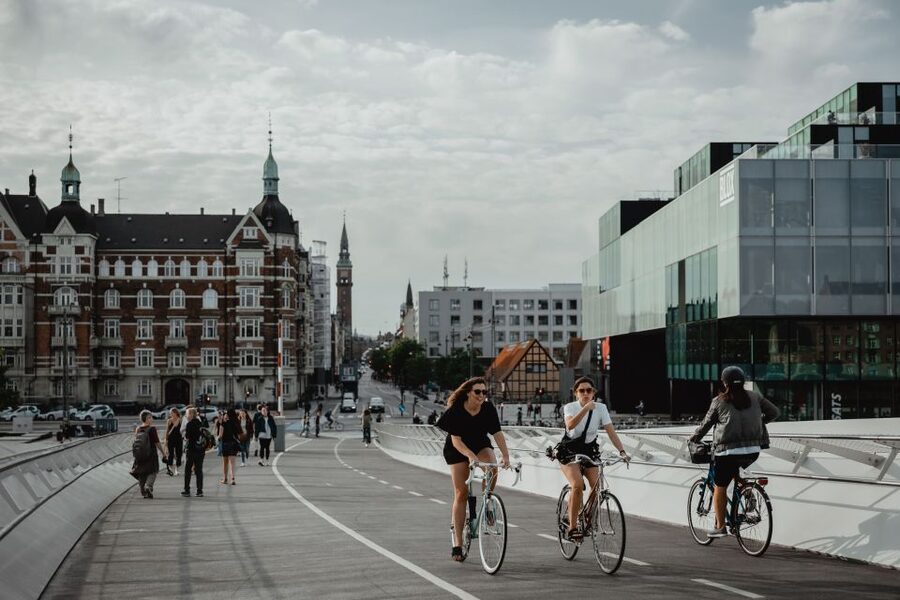
This tour suits you best if you have a real interest in architecture, urban design, public spaces, or the way Copenhagen has reshaped its harbor. It also works well as an orientation walk early in a stay, since it introduces several central waterfront areas and ends in a different part of the city.
History-minded visitors will enjoy the contrast between Nyhavn’s port origins and the newer harbor projects. Photographers will find plenty of material, especially around the canals, bridge, public squares, and waterfront buildings.
The experience is less suitable if you want a food tour, a boat ride, or a broad overview of all Copenhagen’s major sights. It is also not suitable for wheelchair users or people with mobility impairments. The information provided does not describe step-free access or seating along the route, so you should consider the walking requirements carefully.
Because the tour runs rain or shine, it is best for people willing to accept changing weather. Comfortable clothing and water are specifically recommended.
Is $394 good value for two people?
The price is high for a two-hour walk, but the comparison depends on what you want from the activity. You are paying for a private guide, a tailored conversation, and a route that covers several important harbor sites in a short time.
For two people who are serious about architecture, the private setup can justify the cost. You can ask questions freely, move at your own pace, and focus on the places that interest you most. The price is harder to defend if you mainly want attractive harbor photographs, since you can see many of these public areas without a guide.
The best value comes when you use the guide actively. Ask about why former industrial areas were changed, how public spaces are planned, and how old and new buildings are made to share the waterfront. If you simply follow along without questions, you may not get as much from the private price.
Free cancellation up to 24 hours before the tour and the option to reserve now and pay later provide useful flexibility. Those policies do not lower the cost, but they make planning easier when Copenhagen’s weather or your schedule is uncertain.
Should you book the Copenhagen harbor architecture tour?
Book it if you want a compact, private look at Copenhagen’s waterfront design and you value a guide who can connect buildings to the city’s past and future. The mix of Nyhavn, Cirkelbroen, the Royal Library, the Danish Architecture Centre, and newer harbor areas gives you a clear sense of why Copenhagen earned its architecture title.
Skip it if you want a cheaper general sightseeing walk, a boat trip, or substantial time inside museums and cultural buildings. At $394 for two people, this is a specialist tour, not a bargain introduction.
For the right pair, it is a thoughtful way to see Copenhagen beyond its famous colorful houses. Wear good walking shoes, bring water, prepare for rain, and arrive ready to ask questions. That is where this experience earns its keep.
FAQ
How long is the Copenhagen harbor architecture tour?
The walking tour lasts two hours.
Where does the tour begin?
It begins in front of the Scandic Hotel on Ofelia Plads, at Sankt Annæ Pl. 21.
Where does the tour finish?
It finishes at the Danish Architecture Centre, Islands Brygge 4, 2300 København, Denmark.
Which places are included on the route?
The route includes Ofelia Plads, Nyhavn, Krøyers Plads, Cirkelbroen, the Royal Library of Denmark, and the Danish Architecture Centre. The tour also highlights harbor architecture around Papiroen and Operaen.
What languages are available?
The live guide is available in English or Spanish.
Is the tour private?
Yes. It is a private group tour for up to two people.
Is the tour suitable for wheelchair users?
No. The activity is not suitable for wheelchair users or people with mobility impairments.
Just added around Copenhagen
- Copenhagen Walking Tour with Food Testing (smorrebrod dish & snap)★ 4.5 · 10 reviews
- a day at North Zealand Castle Tour★ 4.5 · 19 reviews
- walking tour – Copenhagen and Christiansborg 3 hours★ 4.0 · 7 reviews
- The Six Forgotten Giants Trolls Hunt with Minibus★ 4.5 · 27 reviews
- Small Group Guided Food Tour and Street Art Visit to Norrebro★ 5.0 · 9 reviews
- The Philosopher’s Last Walk: An audio tour on the life of Søren Kierkegaard★ 4.5 · 5 reviews
- The Foodie Tour of Copenhagen★ 5.0 · 14 reviews
- The Forgotten Giants Private Tour★ 5.0 · 3 reviews
Architecture & Design Tours, compared.


Copenhagen Architecture and Sustainability Tour with local Guide
Read our review →
Browse the lists this tour appears in